Sony runs six businesses: games, music, pictures, electronics, semiconductors, and financial services. It has not abandoned hardware; it is layering platform fees, copyright licensing, subscriptions, and B2B services on top. Entertainment's share of revenue rose from about a quarter in fiscal 2012 to more than half in fiscal 2022.
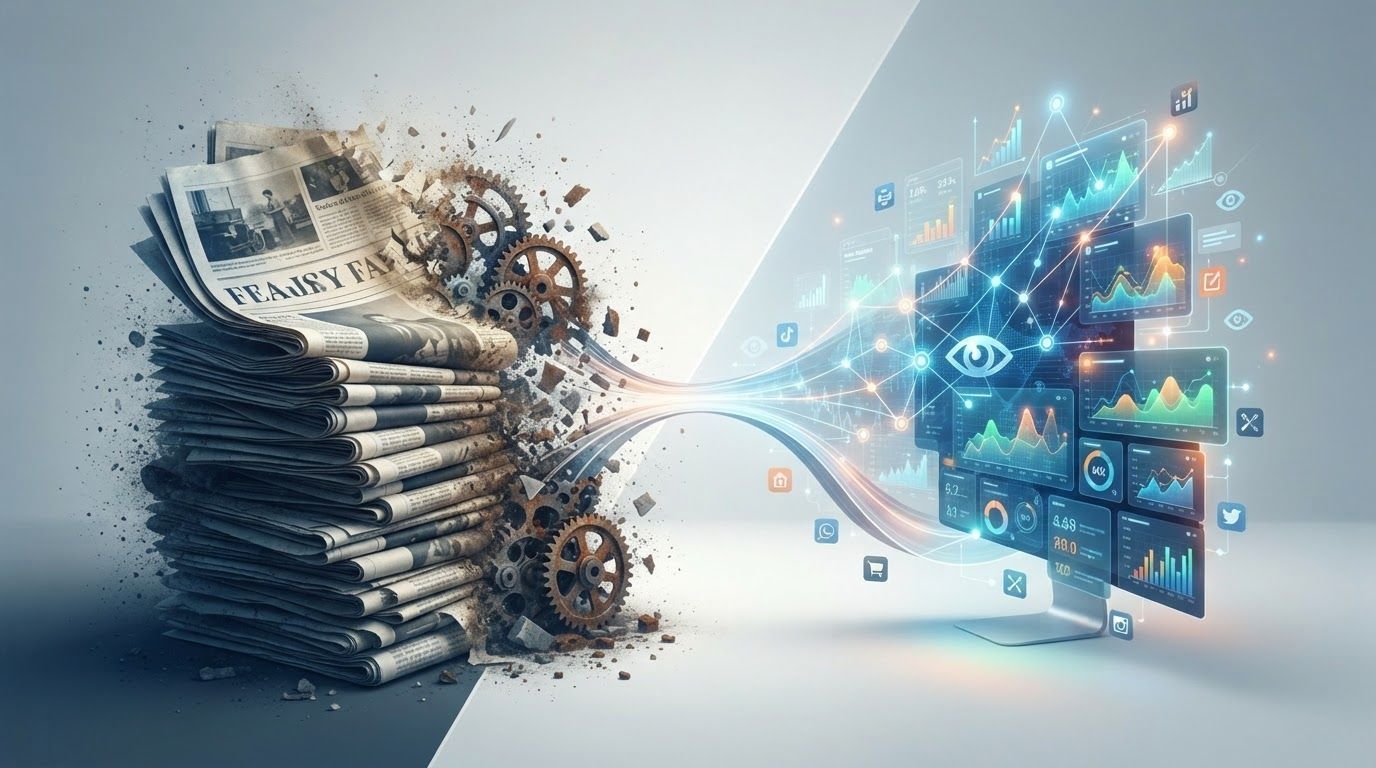
Japanese newspaper ad revenue fell from ¥755 billion to ¥242 billion, a 67.9% drop, while circulation declined 46%. Drawing on Nippon Television Holdings, Meta Platforms, and Kakaku.com's Tabelog, this article unpacks the advertising model as a three-party market: a medium gathers attention through its own appeal, then connects audiences with sponsors and takes a cut. It traces how the newspaper cycle—content, circulation, influence, ad rates—broke down, why online advertising wins on measurable effectiveness, and why media appeal and verifiable results are the model's two make-or-break conditions.
When agents do most of the work, critical thinking does not happen by default. It slides from cognitive offloading to cognitive surrender, accumulating debt in outputs that look clean and pass their tests. This essay offers six questions to ask before prompting, a way to make verification a habit rather than a green check, practices for actually reading what was generated, and a case for treating your prompt as a mirror of your understanding. The work can be delegated; the judgment and the accountability cannot.
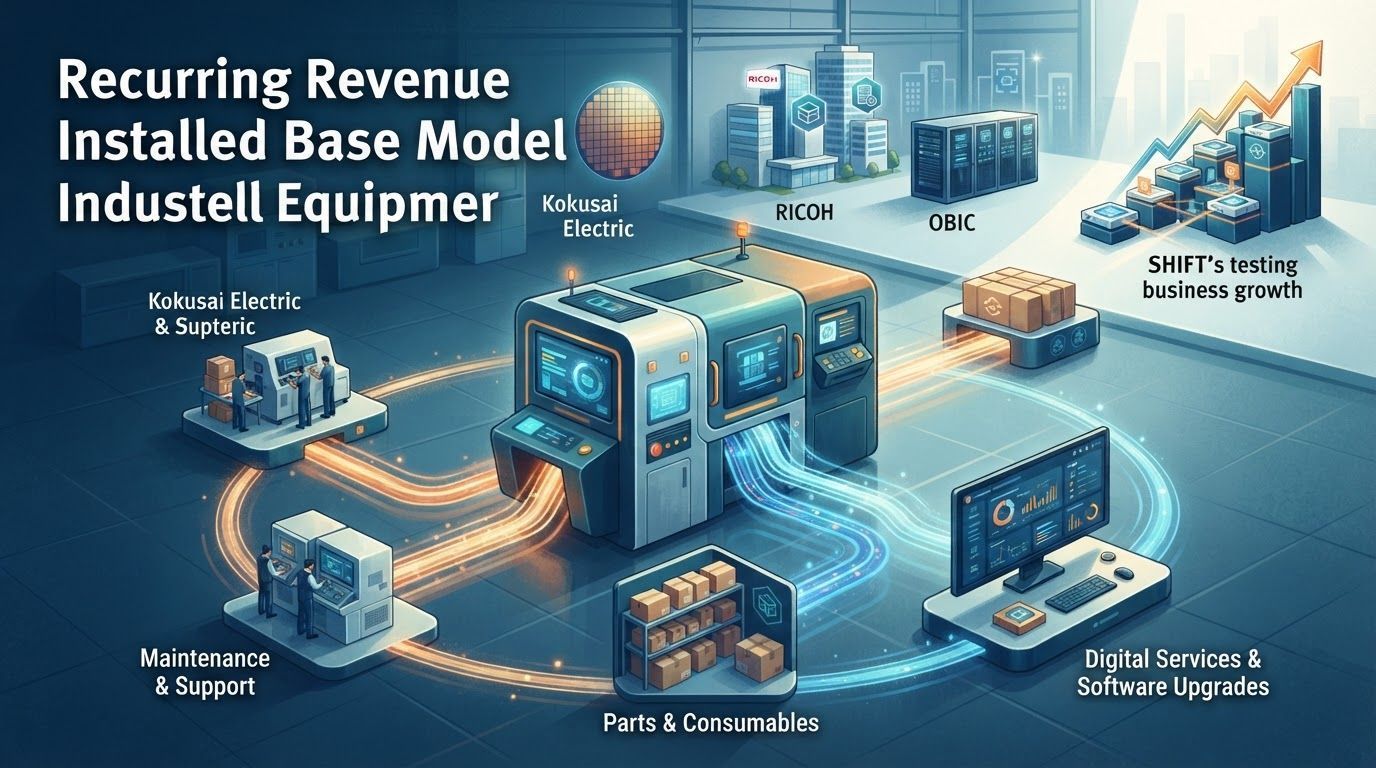
The sale of a machine is only the beginning. Drawing on Kokusai Electric, Ricoh, and OBIC, this article explains the installed-base model: earning recurring revenue from consumables, parts, maintenance, and services; using service to smooth semiconductor cycles; converting office-equipment relationships into digital services; and turning IT maintenance into a high-margin business through in-house work and standardization. SHIFT's testing business offers a contrast, along with the limits of stability.
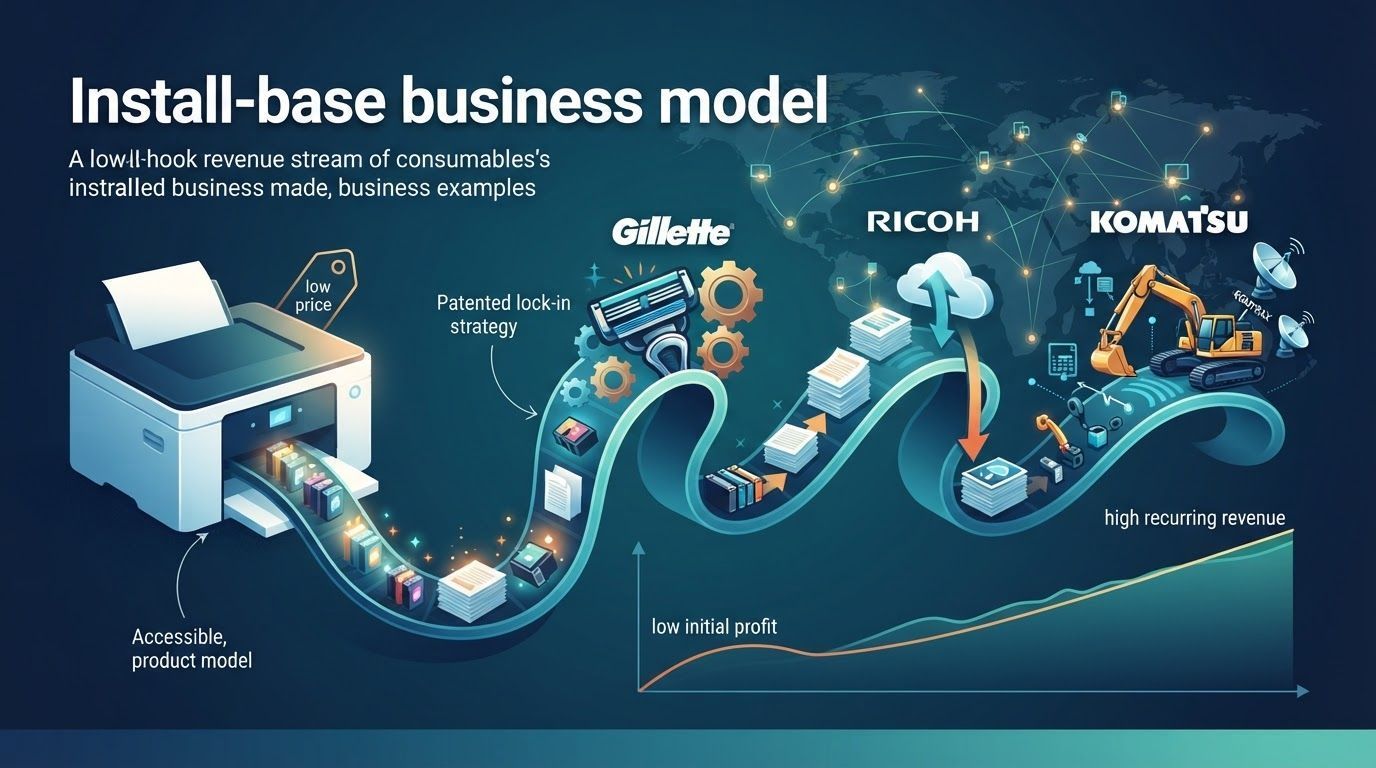
A copier's profit often comes not from the machine but from toner, consumables, and service contracts sold afterward. The installed-base model uses a cheap hook product to build an installed base, then recovers value through recurring consumption and service. Gillette patented the blade-to-handle connection; Ricoh is struggling amid paperless work; Komatsu's KOMTRAX turns parts sales into selling uptime. These cases show the conditions the model needs—and the limits that can break it.
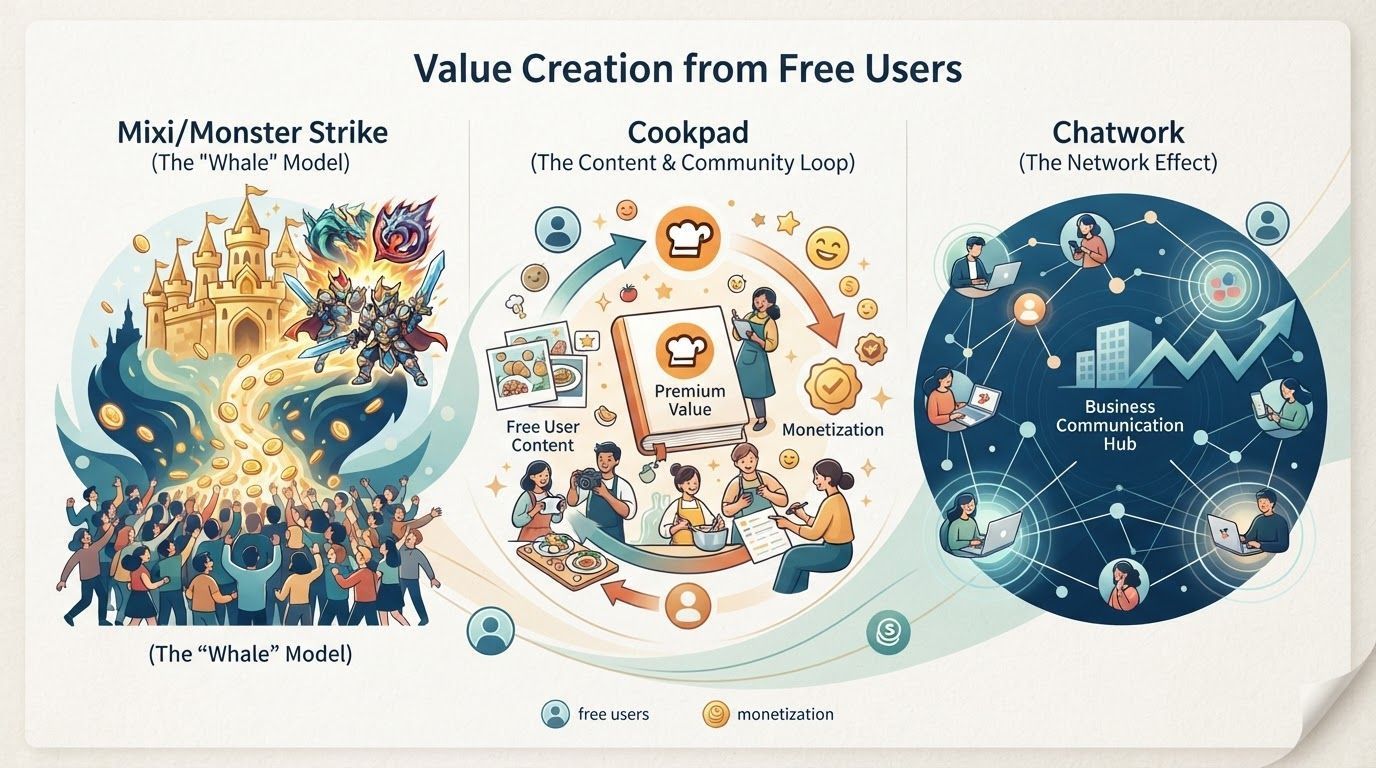
Freemium is often treated as a price list: attract people with a free tier, then convert some of them into payers. But what really decides whether it works is the value the free side produces. Through Mixi's reliance on a few heavy spenders, Cookpad's community of free recipe writers, and Chatwork's use of free users to build network scale, this article compares three revenue structures, their vulnerabilities, and why low marginal costs let SaaS growth eventually turn into profit.
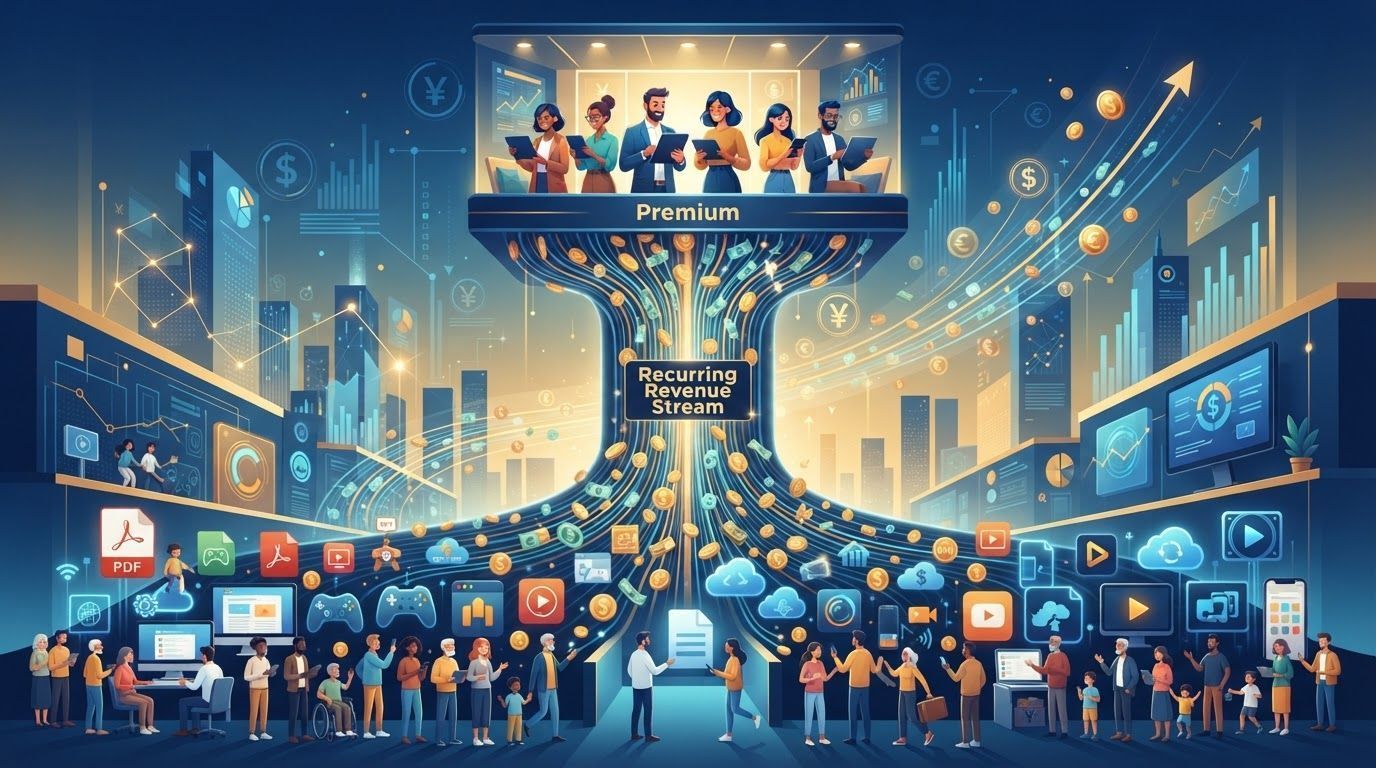
Freemium joins "free" and "premium" into one word: a minority of paying users supports a majority of free users. Chris Anderson's 2009 book Free helped the model spread. Adobe's free PDF reader and free-to-play mobile games are classic cases. The article argues that freemium is not a one-time sale: it depends on recurring revenue, and on gathering enough free users so that some of them will keep paying.
At forty and living in Tokyo, the author keeps running into the same problem during a career transition: when things don't go as planned, a sense of losing control pulls him into self-doubt. Psychology calls it intolerance of uncertainty, and having a name for it comes as a relief. Drawing on evolution, he explains why humans are wired to stay alert, how catastrophic thinking mistakes the worst case for fact, and how separating hypothesis from fact and returning attention to the present can help. He also examines how the AI era adds fuel to the fear of being replaced, arguing that the shift should be from competing with AI to harnessing it, and that this is not a burden individuals should carry alone.
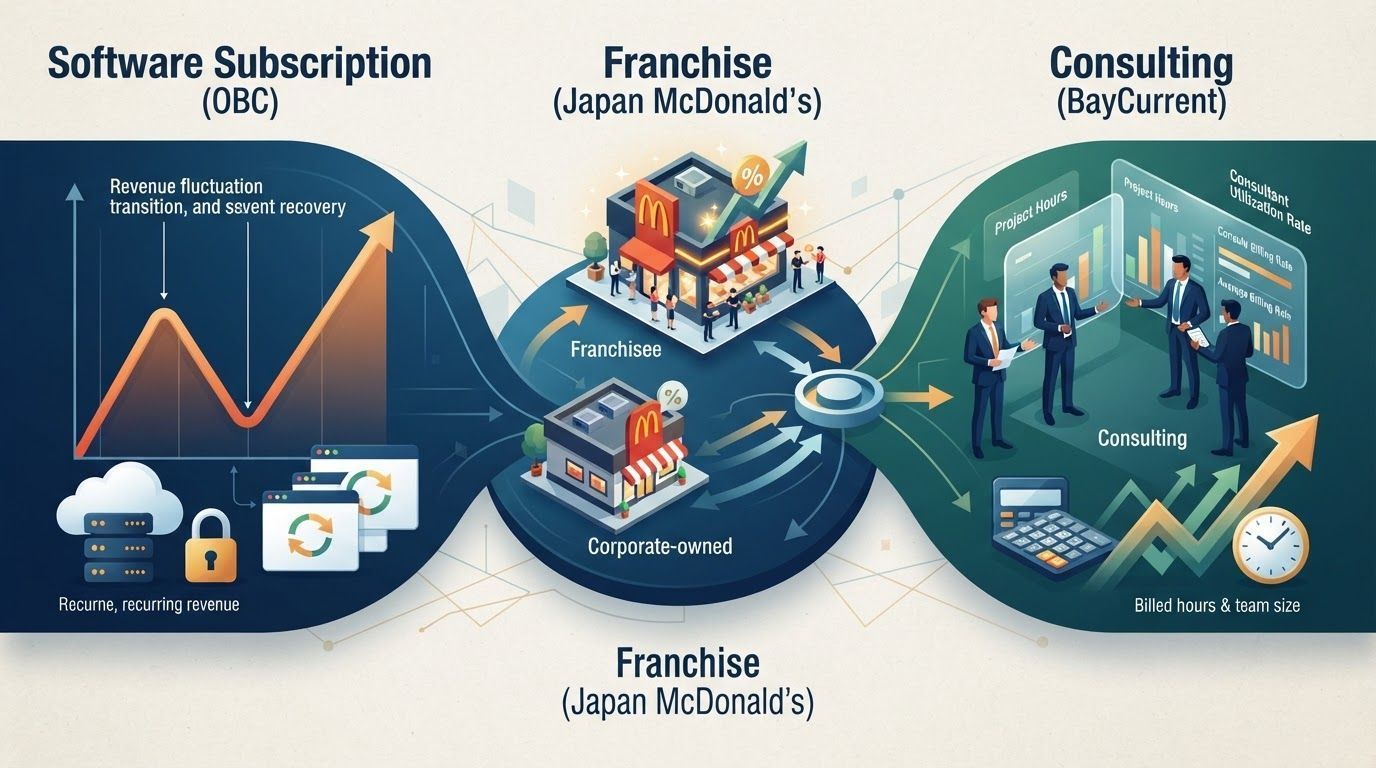
Three companies, three ways to turn one-off sales into recurring revenue. OBC weathered a volatile cloud transition before a V-shaped recovery; McDonald's Japan earns a higher gross margin from franchising than from company-owned stores; BayCurrent's revenue comes down to price, headcount, and utilization. The article breaks down the cost structures and risks behind each model.
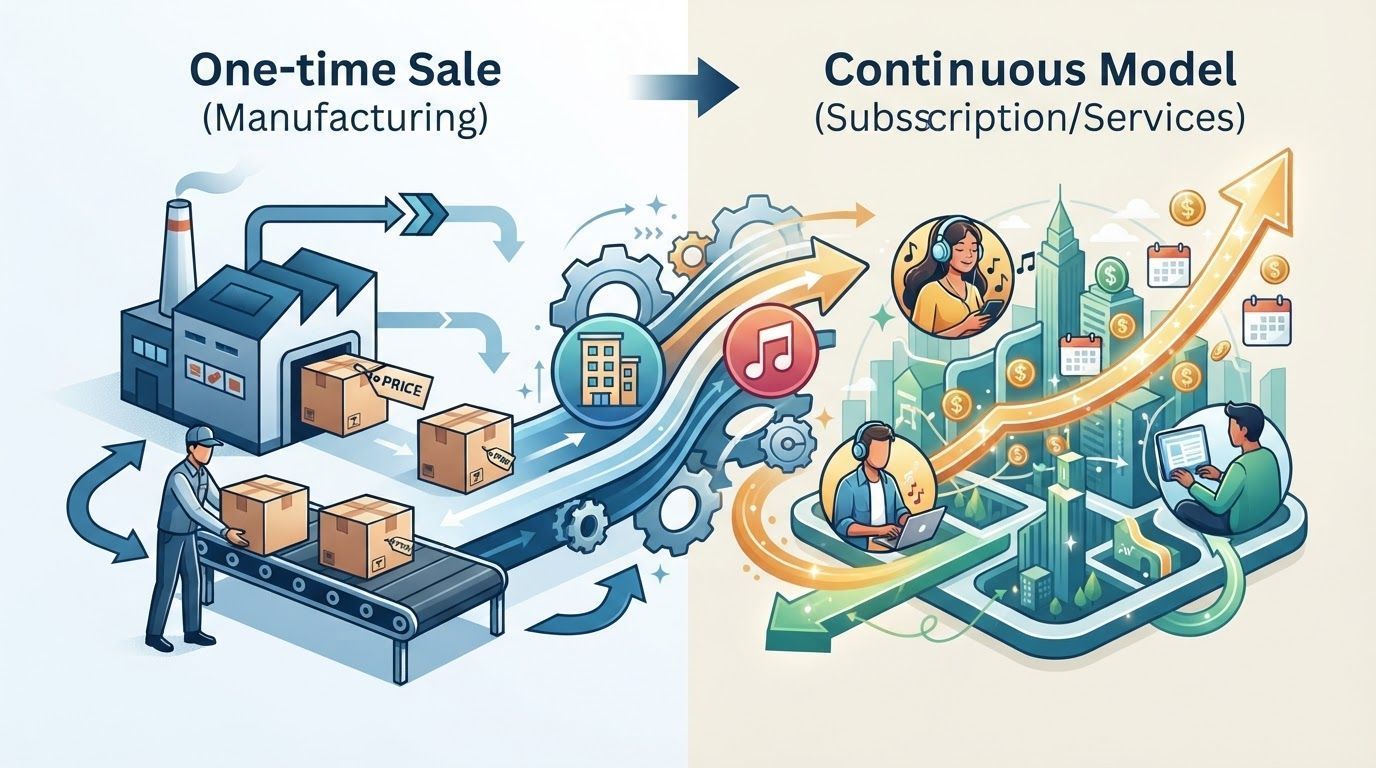
The recurring model charges for regular use of a product instead of a one-off sale. This article contrasts it with the sell-and-move-on manufacturing model, uses rental housing to explain why stable cash flow matters, and examines music streaming and convenience-store franchising—while noting that without a strong product, renewal stops.
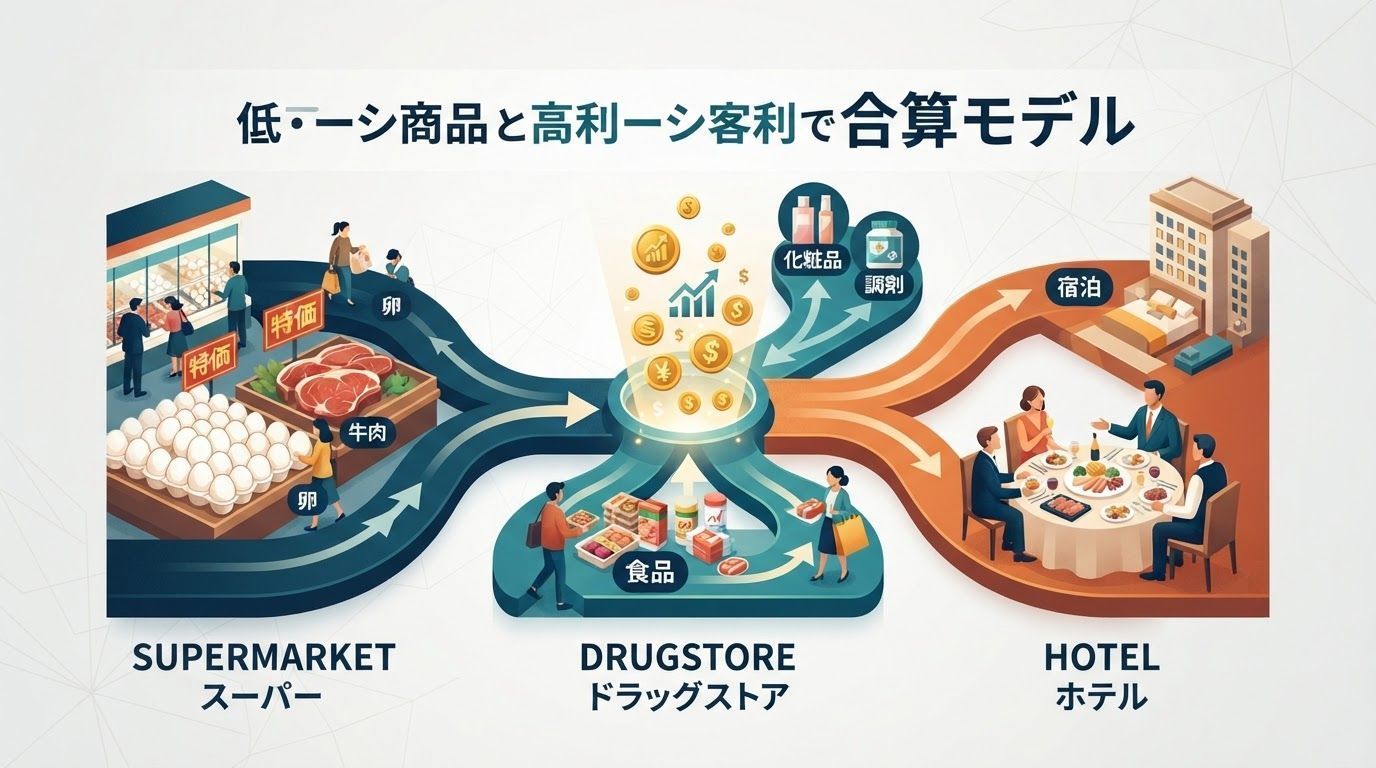
Supermarkets use eggs and beef as loss leaders, drugstores undercut supermarkets on food, and hotels keep restaurants and banquet halls even when they barely profit. The trick is the bundle: low-margin traffic drivers paired with high-margin profit engines. This piece unpacks that "combined model" through Welcia's food-and-pharmacy pairing, Life's shift from specials to private brands and prepared food, and the Imperial Hotel's use of banquets and restaurants to fill high-margin rooms—and lays out the conditions the model needs.