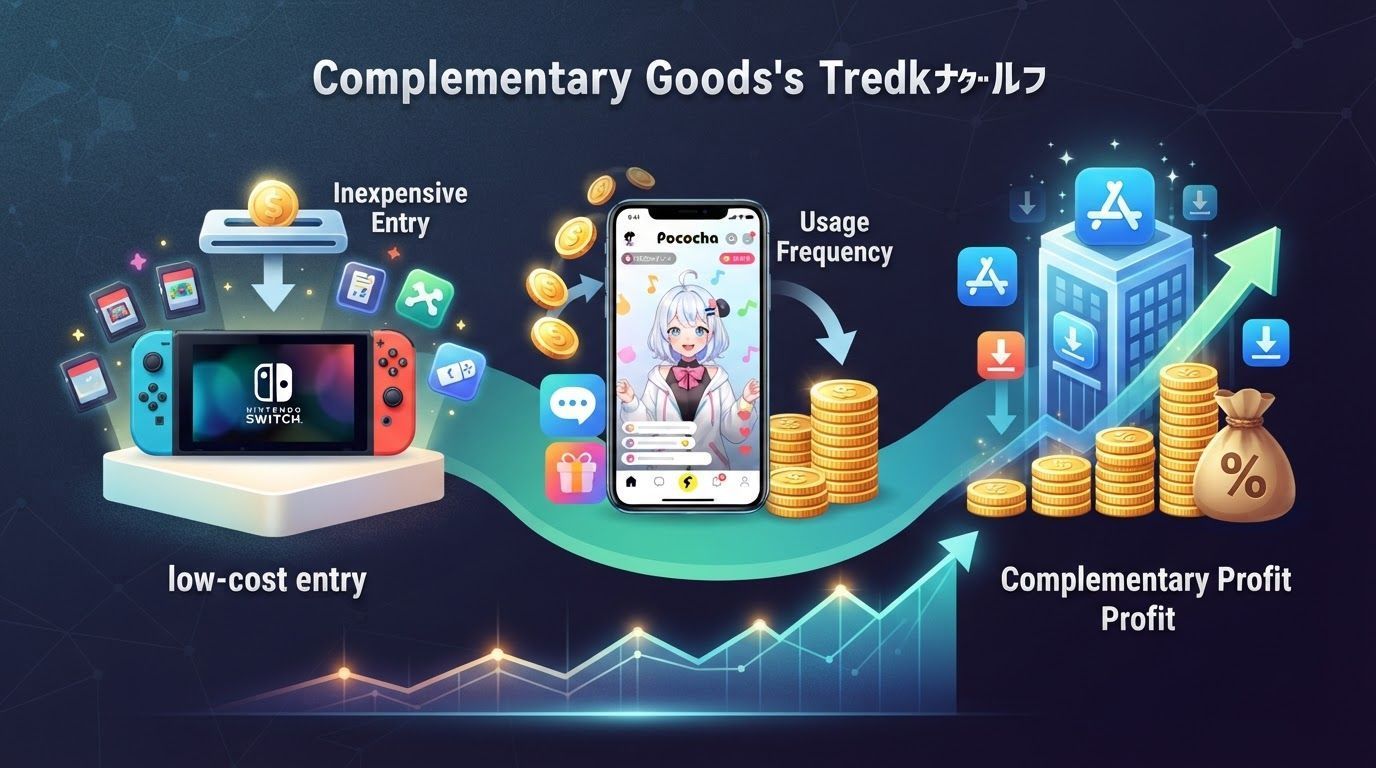
Nintendo's Switch, DeNA's Pococha, and Apple's App Store look unrelated, yet they share one structure: make the entrance cheap or free to gather scale, then charge on the complement, the side with high usage and low marginal cost. Drawing on the three companies' revenue and gross-profit figures, this piece examines Nintendo's three straight years of losses, Pococha's late but successful entry, and the high-margin toll booth of the App Store, then sets out the conditions the model needs and where it cracks.
Roughly two-thirds of Amazon's operating income comes from AWS, whose 27.1% margin dwarfs the 2.5% of the online store, its largest business by revenue. The gap is best explained by the complementary goods platform model: a company pairs its own base product with third-party complements and earns a share of a three-party market. Drawing on Nintendo, the iPhone, and Amazon's three business layers, this article shows where the high margin comes from—and why i-mode disappeared once it lost a platform war.
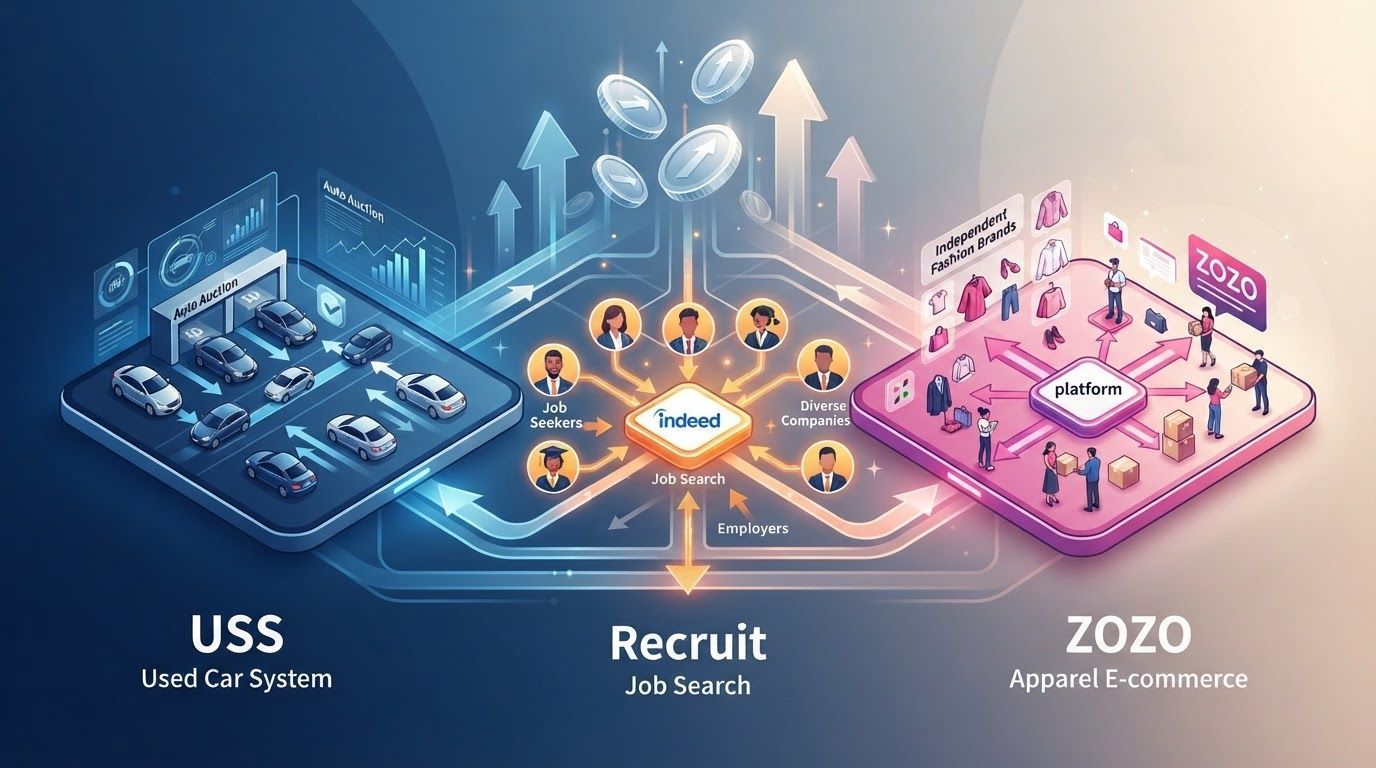
USS in used-car auctions, Recruit Holdings with its job search engine Indeed, and apparel marketplace ZOZO operate in three different industries with three different fee structures. Yet they share one model: they do not buy the goods, they connect buyers and sellers and charge a fee. Because they carry no inventory or price risk, costs do not rise in step with transaction volume, and high margins hold. The model still depends on something that attracts both sides—inspection systems, data and AI, or the power to draw shoppers. This article uses their numbers to trace both the strength and the limits of the matching business.
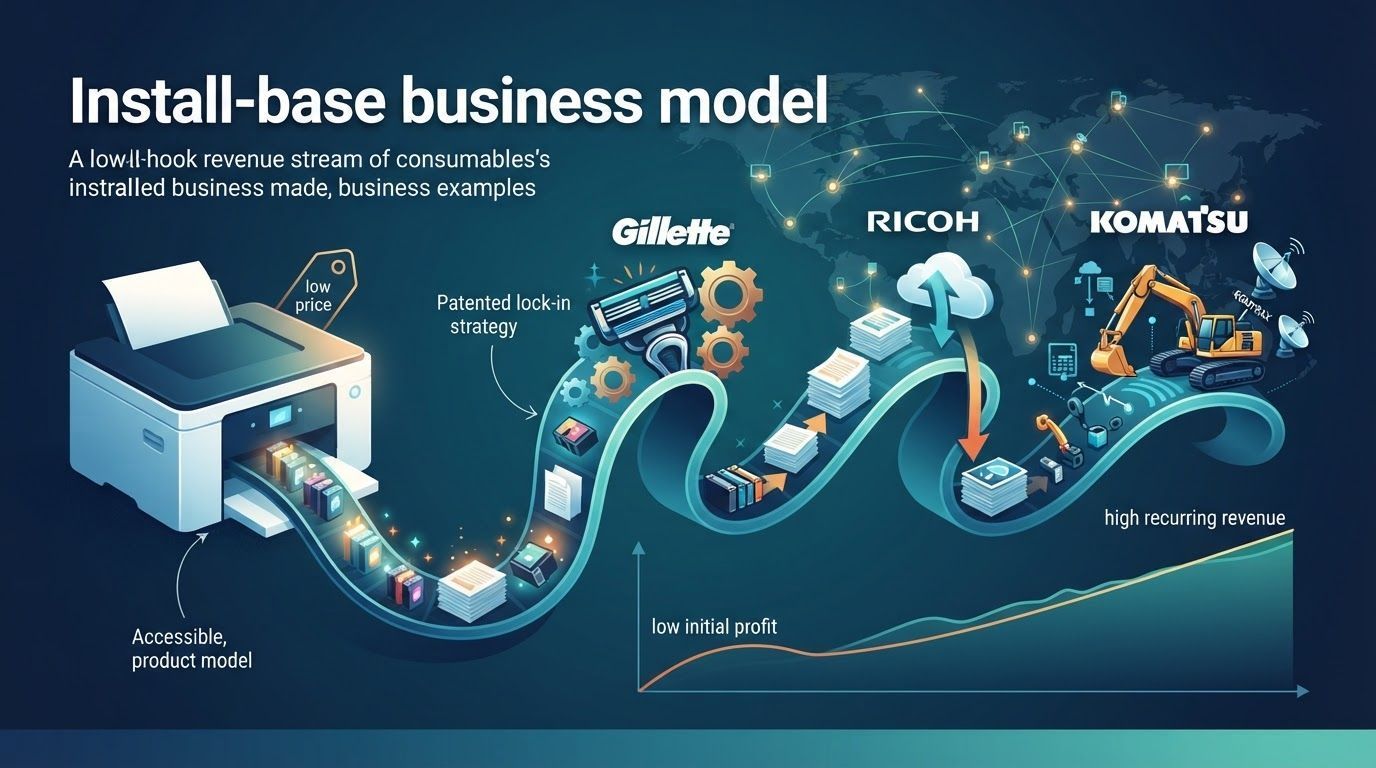
A copier's profit often comes not from the machine but from toner, consumables, and service contracts sold afterward. The installed-base model uses a cheap hook product to build an installed base, then recovers value through recurring consumption and service. Gillette patented the blade-to-handle connection; Ricoh is struggling amid paperless work; Komatsu's KOMTRAX turns parts sales into selling uptime. These cases show the conditions the model needs—and the limits that can break it.
Freemium joins "free" and "premium" into one word: a minority of paying users supports a majority of free users. Chris Anderson's 2009 book Free helped the model spread. Adobe's free PDF reader and free-to-play mobile games are classic cases. The article argues that freemium is not a one-time sale: it depends on recurring revenue, and on gathering enough free users so that some of them will keep paying.
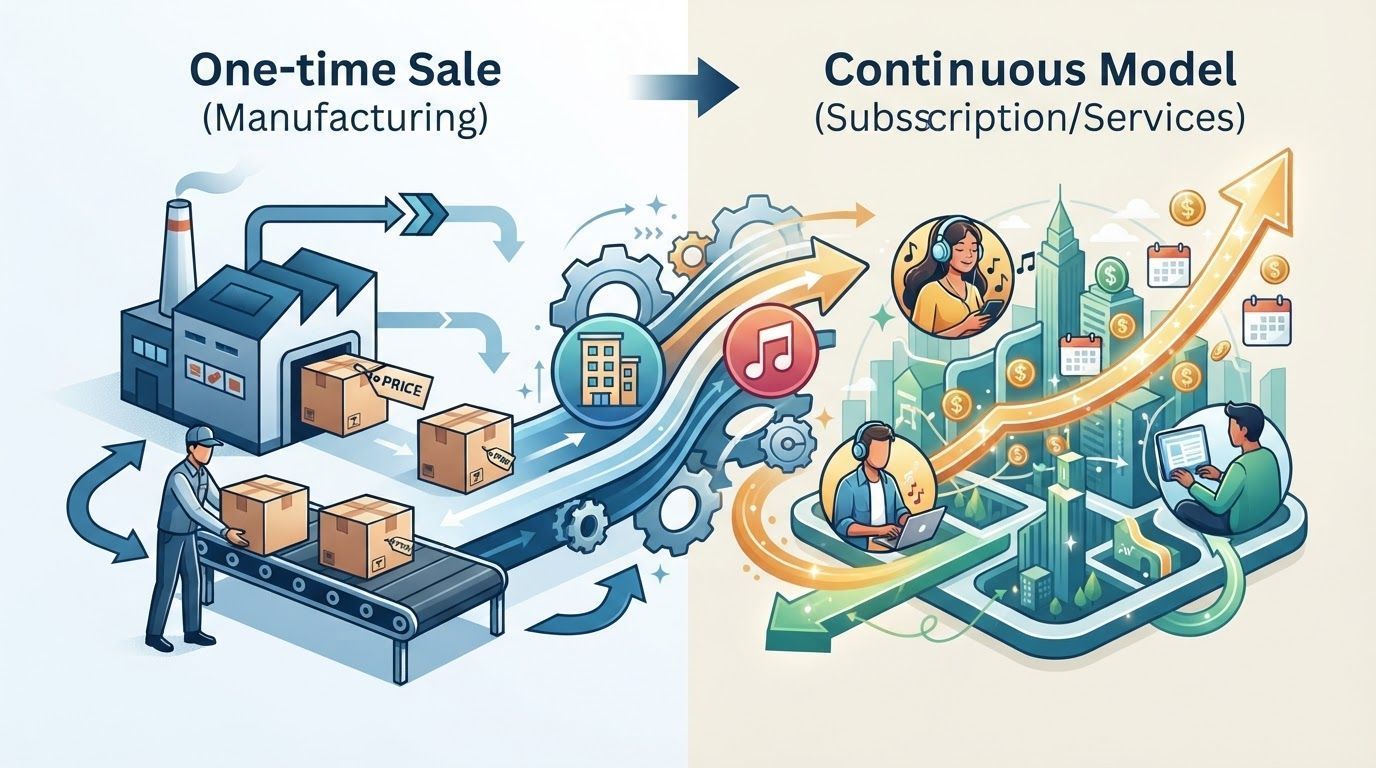
The recurring model charges for regular use of a product instead of a one-off sale. This article contrasts it with the sell-and-move-on manufacturing model, uses rental housing to explain why stable cash flow matters, and examines music streaming and convenience-store franchising—while noting that without a strong product, renewal stops.
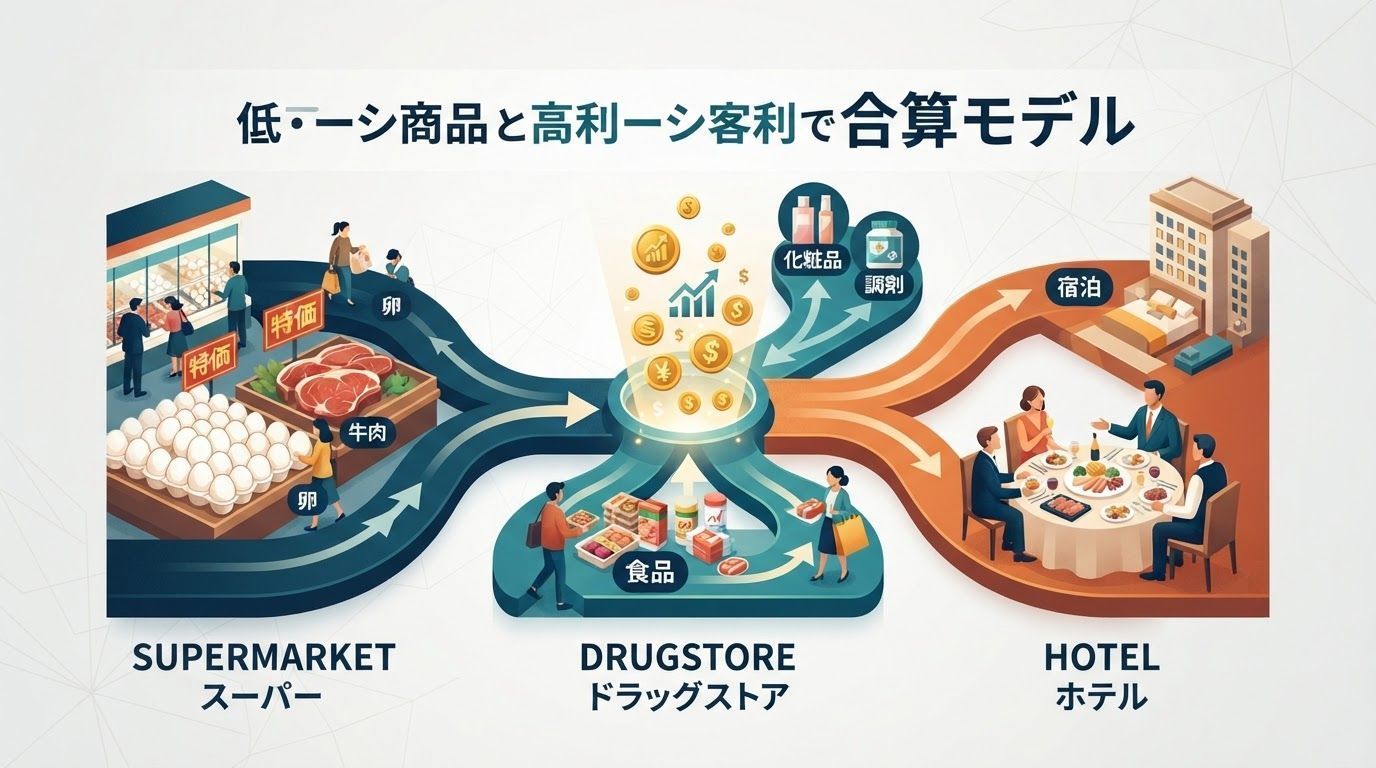
Supermarkets use eggs and beef as loss leaders, drugstores undercut supermarkets on food, and hotels keep restaurants and banquet halls even when they barely profit. The trick is the bundle: low-margin traffic drivers paired with high-margin profit engines. This piece unpacks that "combined model" through Welcia's food-and-pharmacy pairing, Life's shift from specials to private brands and prepared food, and the Imperial Hotel's use of banquets and restaurants to fill high-margin rooms—and lays out the conditions the model needs.
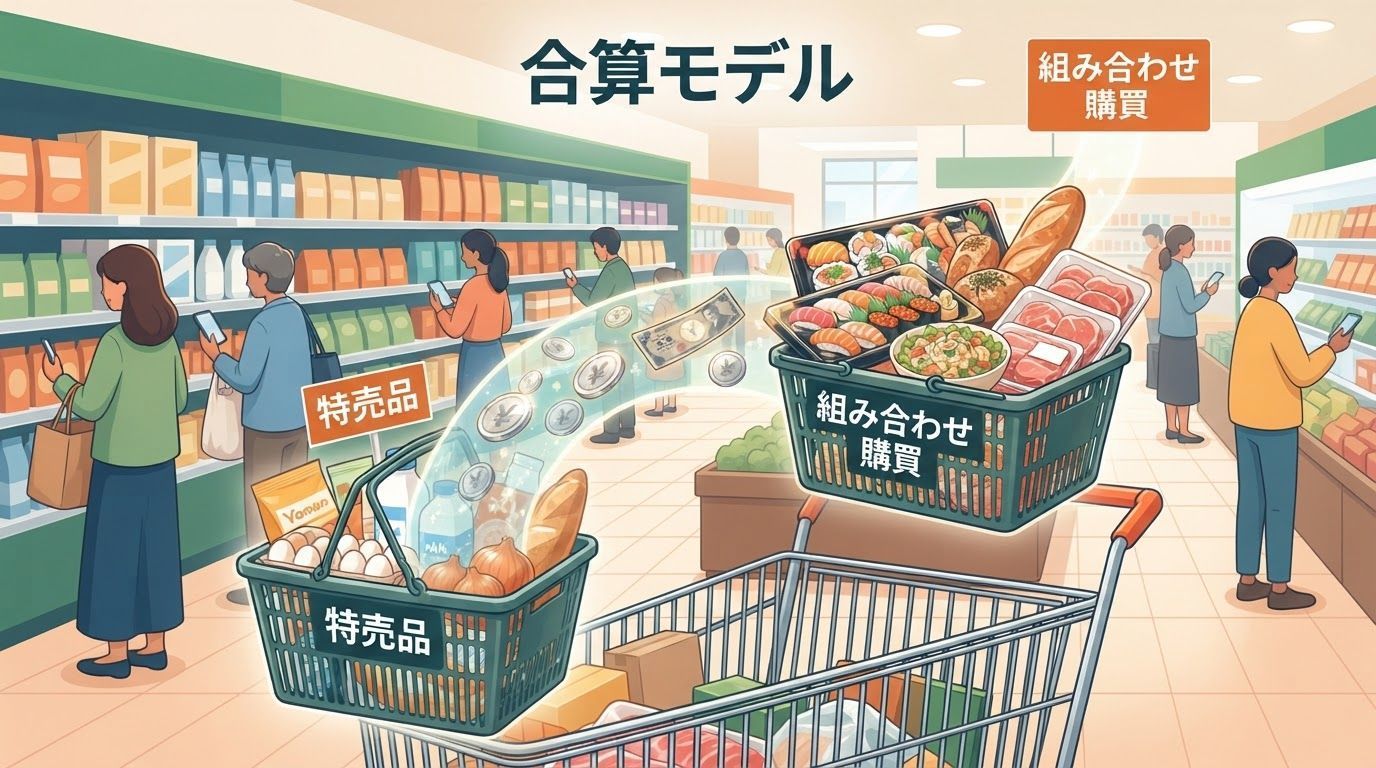
This article unpacks the aggregation model: traffic items and headline specials draw shoppers in, while higher-margin categories such as prepared foods and fresh produce capture the attached purchases. Using Life's category margins, it shows why daily-delivered goods make up over 40 percent of sales yet earn little, and examines operating margins at Life and Yaoko, the logic behind industry M&A, and the category-killer alternative.
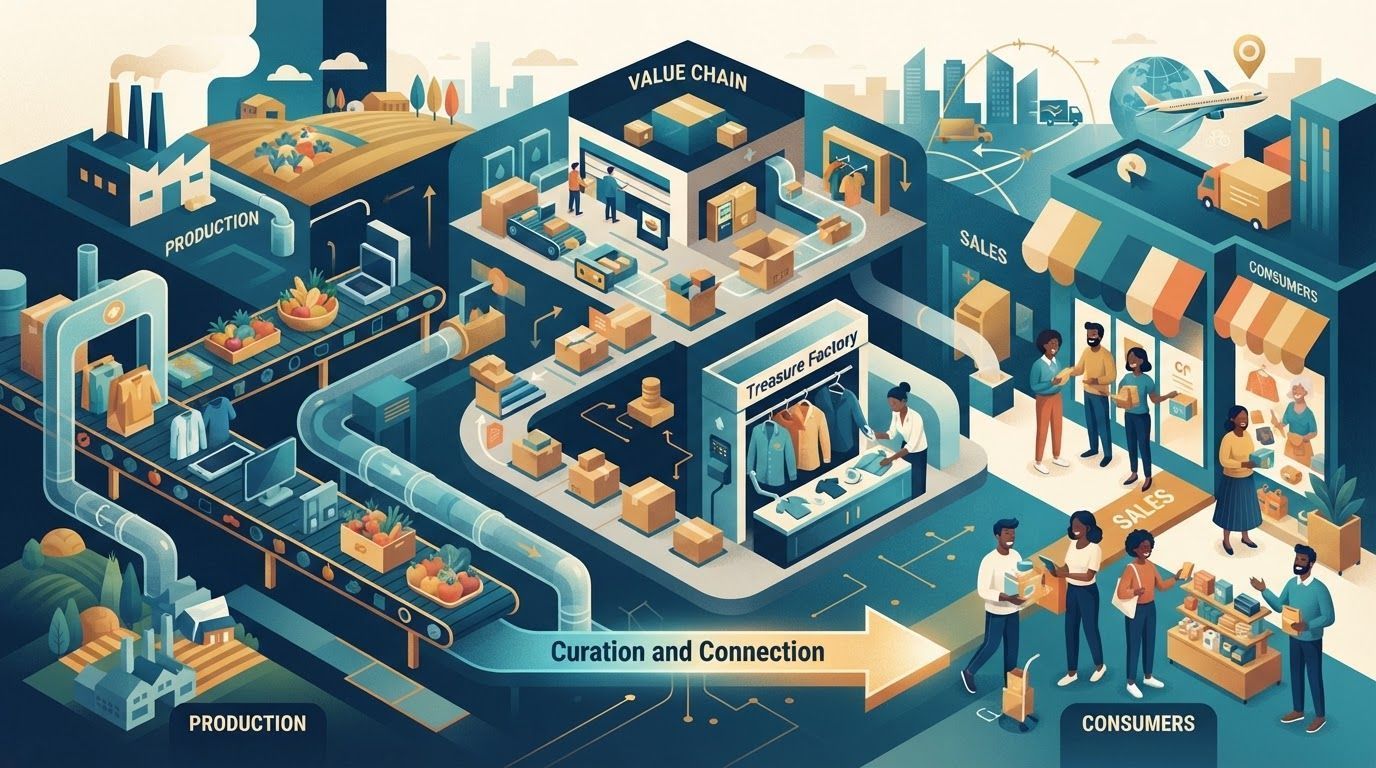
This post breaks down the distribution and retail model: companies make nothing, buy from producers, sell to customers, and earn the spread. It explains the two axes—matching power and the value chain—through Treasure Factory, which cleans and repairs secondhand goods for a 55.9% gross margin. It then examines the model's two weaknesses, easy imitation and thin profitability, and why general supermarkets and trading houses are moving toward combined models.
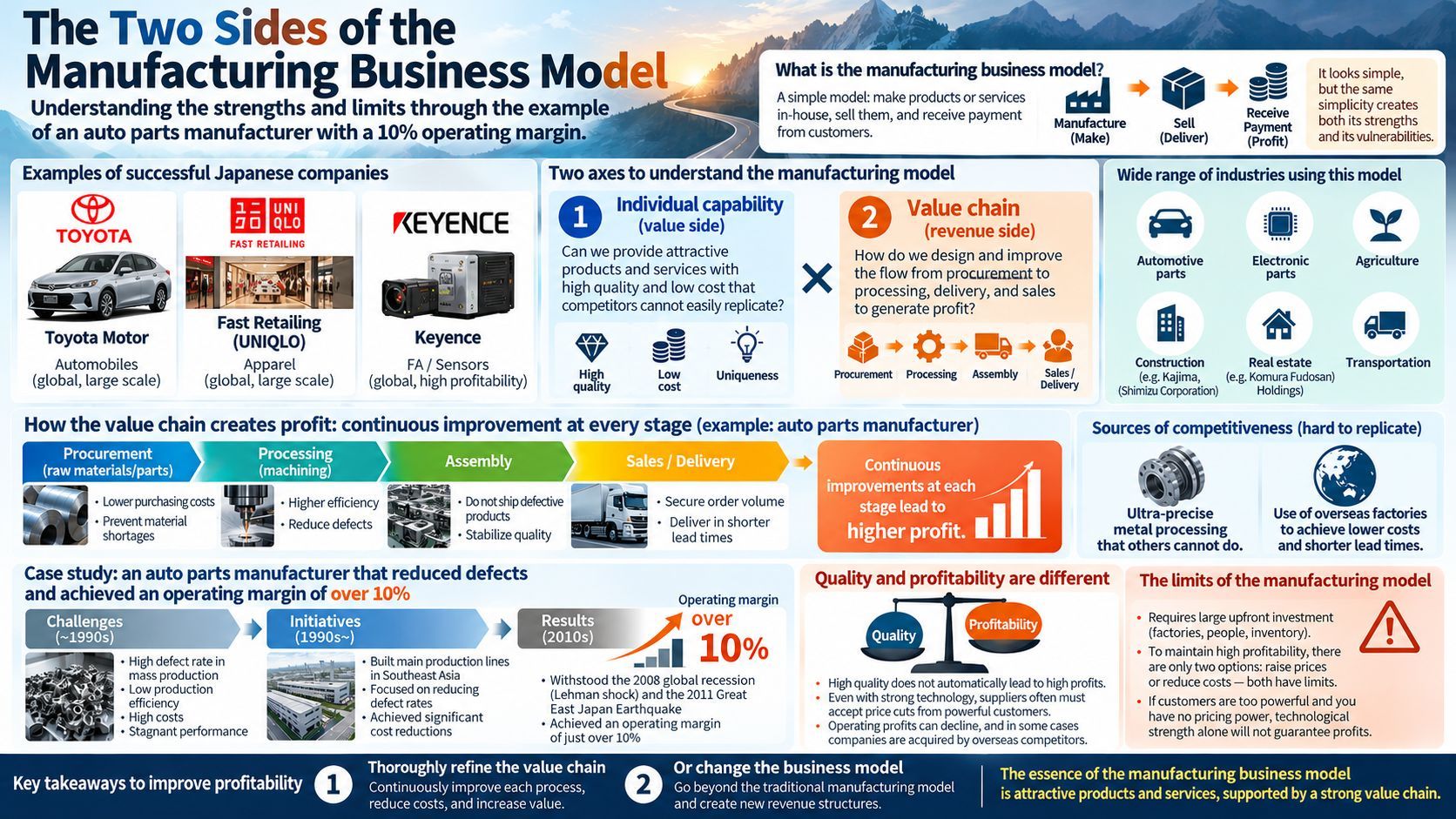
The make-and-sell model looks simple: a company manufactures and sells its own products and is paid by customers. Yet its strengths and its fragility come from the same place. Two axes matter: standalone strength—high quality, low cost, and things rivals cannot do—and the way revenue is earned across the value chain of procurement, processing, and delivery. One ultra-precision parts maker stagnated on mass-production defects, moved its main line to Southeast Asia in the 1990s, and improved defects so thoroughly that it held an operating margin above 10 percent through the 2008 recession and the 2011 earthquake. But quality and profit margin are different things: a supplier that cannot refuse price-cut demands does not recover, and was acquired. The only ways out are to overhaul the value chain or change the model.
Why did "business model" become a keyword? This article traces the term's earliest uses in the Japanese business press: the 1995 coverage of Dell and its direct sales plus build-to-order model, the 1997 feature on how PlayStation rejected Nintendo's business model, and later talk of an existing model no longer working as Japan's chip industry came under pressure. It then turns to Toyota — the two pillars of Just-in-Time and jidoka, the flaws of push production, the pull system inspired by American supermarkets, and why Ford-style mass production was overkill in Japan. It closes with Masayoshi Son's time machine management and the idea that there is no single right angle on a business model.
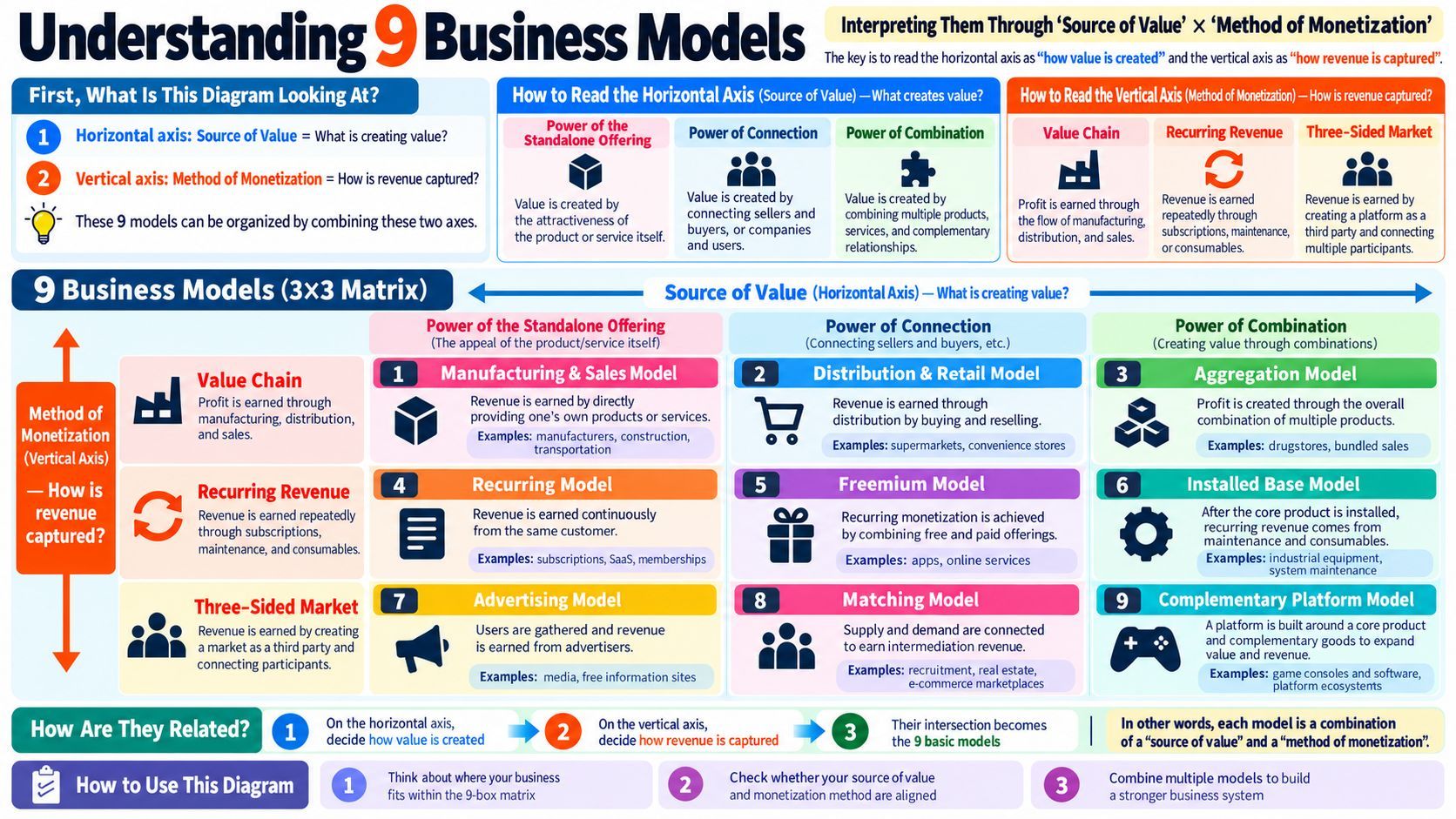
This article uses a single 'transaction map' to organize business models along two axes: value creation (the power of a single product, of combination, and of alliance) and revenue capture (value chain, recurring, and the three-party market). It then walks through nine models — manufacturing, distribution and retail, combination, recurring, freemium, installed base, advertising, matching, and platform — showing how even complex businesses reduce to basic moves and how the map works as a tool for reading strategy across industries.