
The Aggregation Model: Bring Shoppers In with Traffic Items, Profit from the Whole Basket
This article unpacks the aggregation model: traffic items and headline specials draw shoppers in, while higher-margin categories such as prepared foods and fresh produce capture the attached purchases. Using Life's category margins, it shows why daily-delivered goods make up over 40 percent of sales yet earn little, and examines operating margins at Life and Yaoko, the logic behind industry M&A, and the category-killer alternative.

The Aggregation Model: Bring Shoppers In with Traffic Items, Profit from the Whole Basket
A grocery store puts an item on special, sometimes willing to take a loss on it. What is it after?
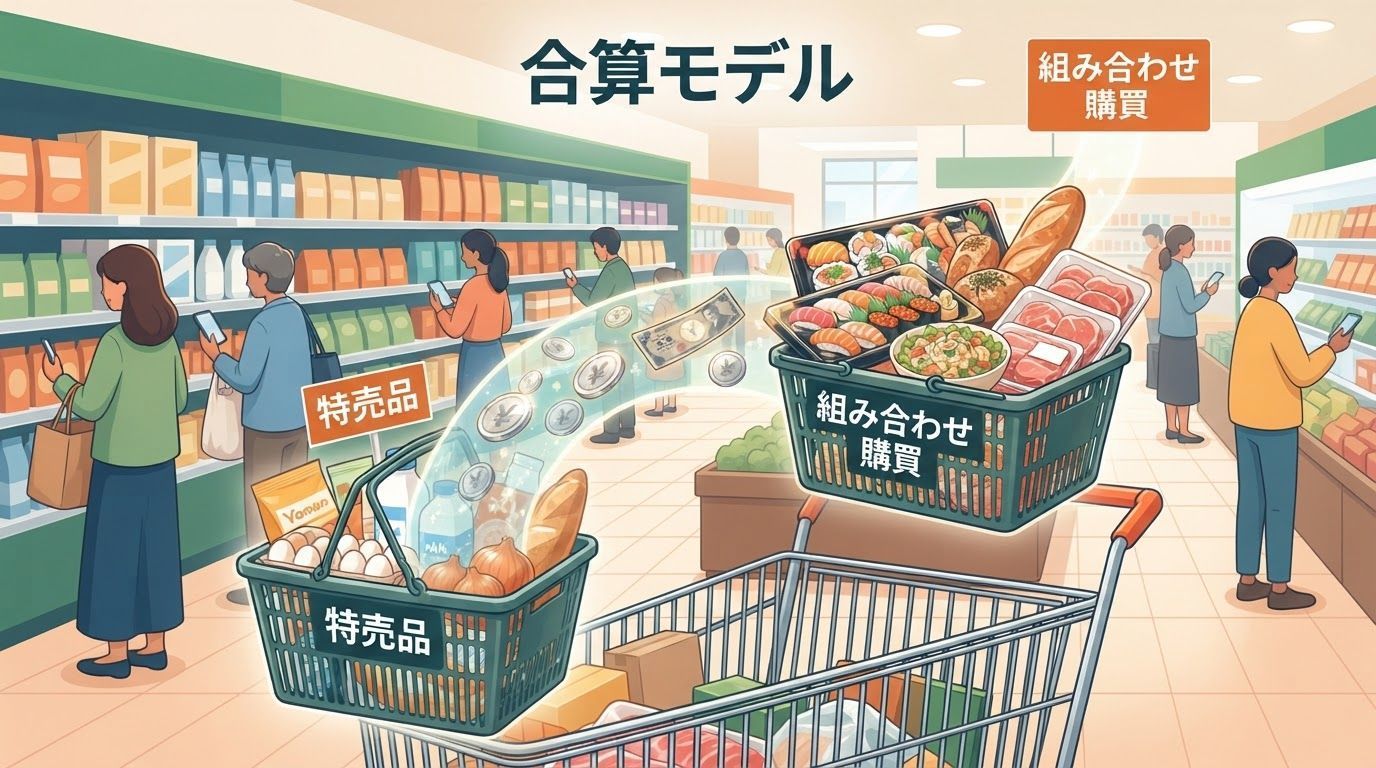
Look at that item alone and the numbers are red. Look at the cart the customer wheels out the door, and they balance. Zoom out to the whole store: the specials give people a reason to come in, and higher-margin categories such as prepared foods and fresh produce bring the profit home. Running a business around this combination of a traffic item and a profit item is what this article calls the aggregation model.
Two Lines: One Brings People In, One Makes the Money
To understand the model, picture a transaction map. The horizontal axis is "the power of combination"; the vertical axis is "the value chain."
On that map, the traffic-driving item is drawn with a dotted line. It is the hook that pulls customers through the door. The item that actually earns the profit is drawn with a solid line. The point of the aggregation model is not to maximize the margin on any single item. It is to place both kinds of items inside the same purchase, so that the transaction as a whole adds up.
The vertical axis answers a different question: where does the profit come from? The aggregation model builds its own value chain — sourcing, running the stores, processing, pricing — and stacks up the value created at each stage. It does not live on the simple gap between wholesale and retail. It earns on the value accumulated along the chain.
Why a Grocery Store Only Looks Like an Ordinary Retailer
The grocery store is the most typical example of the model, yet it is easily mistaken for an ordinary retailer: buy low, mark up, pocket the difference.
The trouble is that "buy and resell" is hard to differentiate. Anyone can stock the same goods, and customers can compare the same prices. The result is persistently low profitability. That is why the grocery store's actual operating model leans toward aggregation: use some items to create a reason to visit, and use others to capture the purchase.
The same structure shows up all over physical retail. Drugstores, large urban hotels with banquet halls and restaurants, set menus in casual dining, and course menus at izakaya all follow it. Theme parks do too, combining admission with spending inside the park to earn very high margins. The representative companies in these industries include Welcia Holdings, Cosmos Pharmaceutical, Life, Pan Pacific International Holdings, Imperial Hotel, and Oriental Land.
A Margin Table Shows How the Store Makes the Numbers Add Up
The clearest way to see how the model works on the ground is to look at margins by category.
At Life, the standout is prepared food. The shelves carry tempura, sushi, and boxed meals, much of it processed in-store. Compared with goods bought in and resold as-is, that leaves more room for gross profit. It is still cheaper than a convenience store, but for a supermarket it is an indispensable category.
Fresh produce — vegetables, fish, meat — also runs close to 30 percent gross margin. The surprise is the largest block by sales: daily-delivered processed foods, which account for more than 40 percent of revenue but carry a lower margin.
"Daily-delivered" means processed foods brought to the store every day: refrigerated meat products such as ham and sausage, processed seafood, milk and cheese, bread, fresh noodles. They are the things people use every day, which is exactly why their prices get compared so closely and why profit is hard to push up.
So the store's arithmetic looks like this. Flyers and headline specials pull people in. Some of those items were bought cheaply; some are sold at a loss. Customers buy the special, of course — but rarely only that. The ingredients for that day's meals, the seasonings that go with them, a packet of snacks picked up on the way: all of it goes into the cart.
The specials bring the traffic; prepared foods and fresh produce collect the profit. That combination is what holds up the store's sales and earnings.
The Cost: The More Complex the Mix, the Thinner the Margin
The model's weak point is precisely profitability.
If a supermarket could sell only the good-margin categories, such as prepared foods, its profit would look much better. But the format itself requires a wide assortment. Consumers are sharp on price, and the store has to compete hard on price while also carrying low-priced goods. The result is a thin overall margin.
Life's operating margin is 2.9 percent. Yaoko — known in the industry as a highly profitable company, among the best of listed firms, with 35 consecutive years of revenue and profit growth — still posts only 4.7 percent.
That also explains why mergers among large supermarket and drugstore operators are so active. Combining lets them spread costs and use bulk purchasing to lower the cost of goods. Scale itself is one source of profit in the aggregation model.
The other route is to narrow instead: target one specific field, as a "category killer" does. In prepared food, that means convenience stores and takeout bento; in hotels, the business hotel built for work trips. They do not compete on a broad combination. They go deep on one thing.
The Point and the Difficulty: Combination Up Front, Profitability in the Background
At its core, the aggregation model is "the combination of a traffic item and a high-margin item" multiplied by "the value chain." The first decides why customers come; the second decides where the profit comes from.
The conditions for making it work are not easy. The traffic item has to actually bring people in; customers have to actually buy something alongside it; and the store has to be able to process high-margin goods and run the whole value chain. If any link fails, the combination degenerates into a plain discount — and the numbers stop adding up.