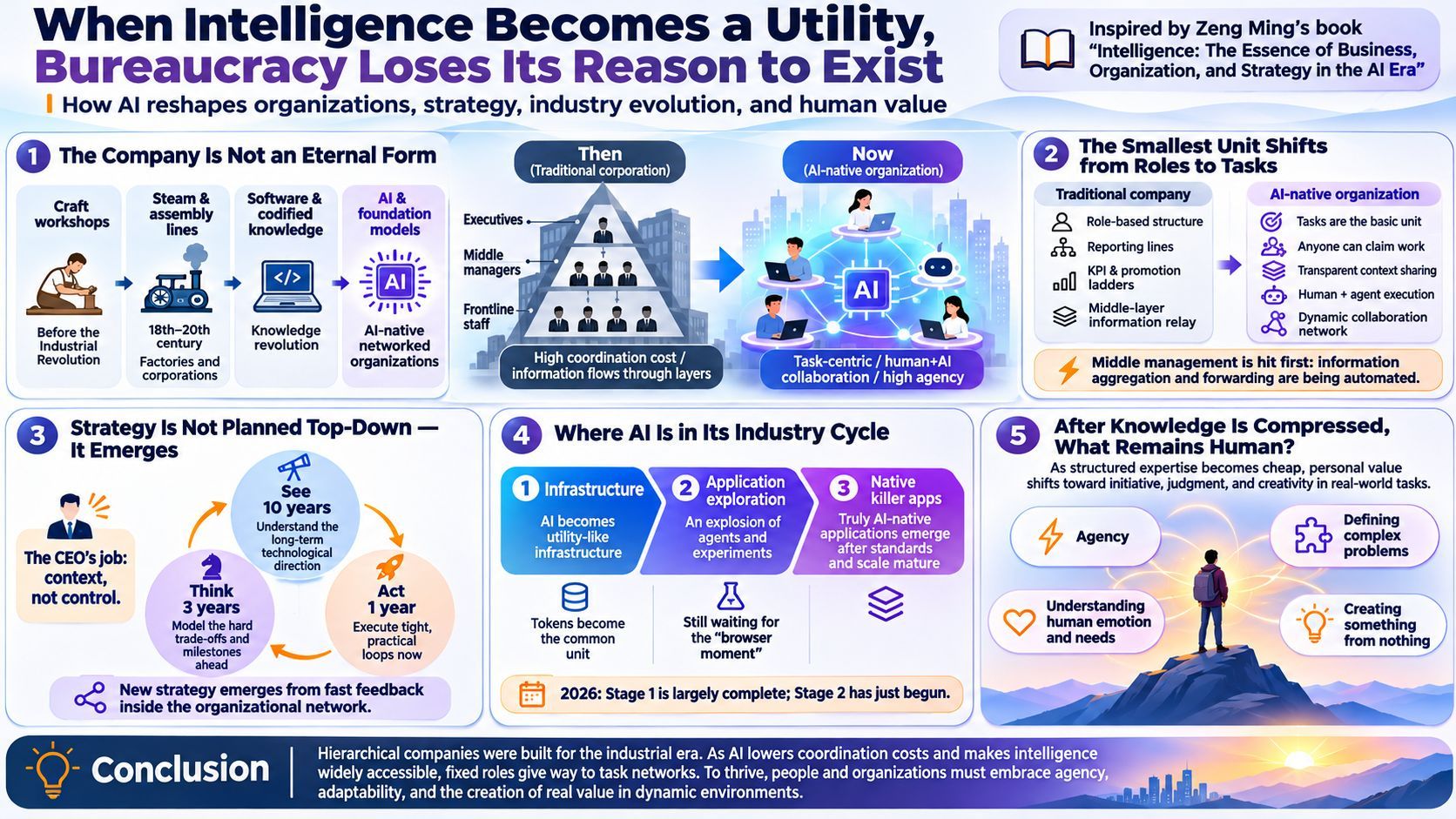
Zeng Ming argues in his new book Intelligence that the industrial-era corporation and hierarchical management are fading. Once large models turn general intelligence into infrastructure like water and electricity, the basic unit of organization shifts from the job to the task, and strategy emerges from the organization rather than from top-down plans. The piece traces the three stages of AI diffusion, the endgame of model companies once token becomes a unit of measure, and an application layer still waiting for its browser moment — then asks what is left for humans once structured knowledge is taken over.
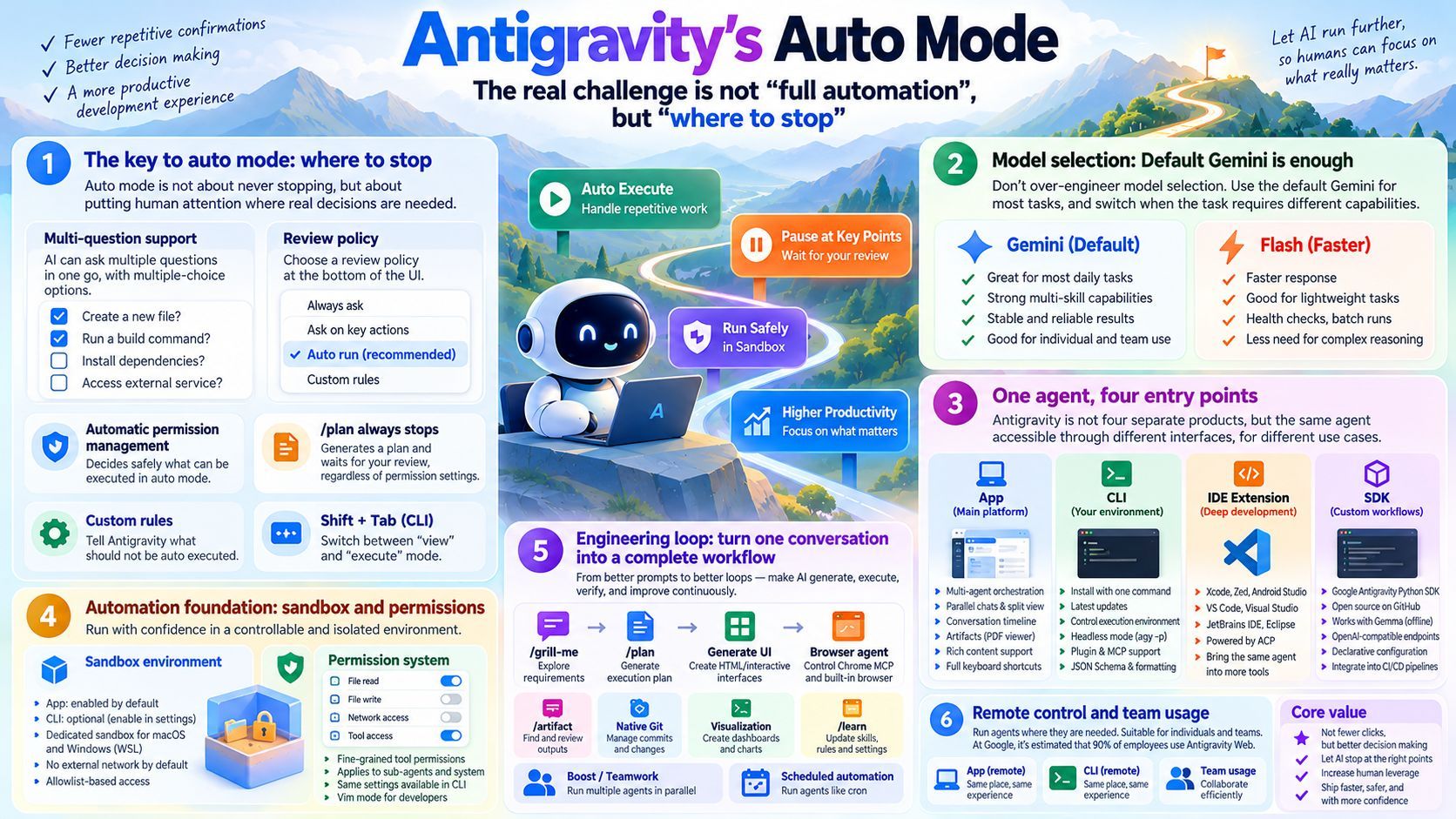
Google Antigravity isn't chasing a smarter 'full auto' switch. It's building layered control: multi-select questions, review policies, auto permissions, a hard stop in /plan, Shift-Tab and rules in the CLI. The article then maps the four entry points—App, CLI, IDE, and SDK—along with macOS and Windows sandboxes, permission rules, Git worktrees, /learn, and scheduling automation, using demos and audience Q&A to show how auto mode can move fast without giving up judgment.
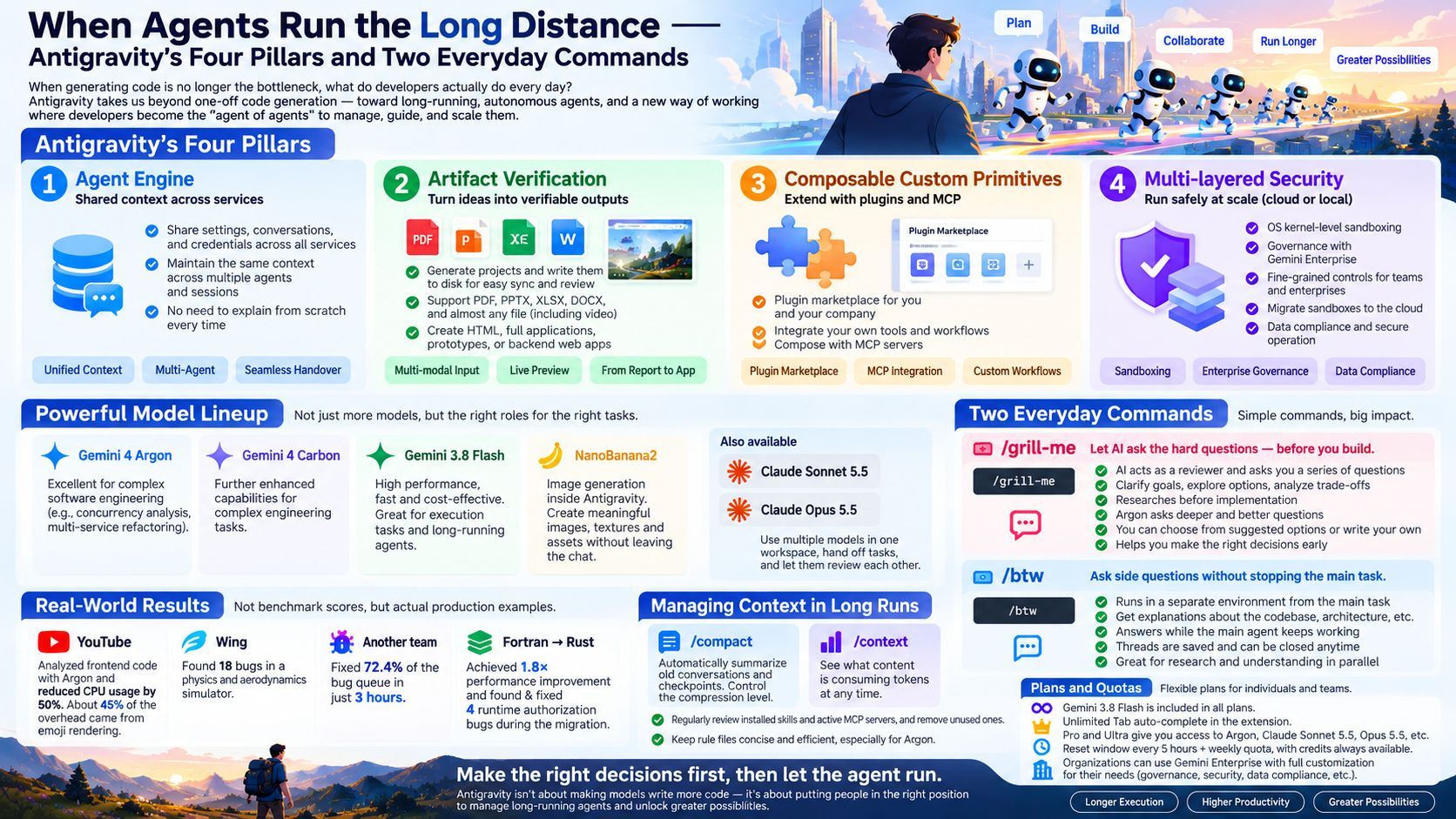
Antigravity is moving from code generation to managing long-running agents. Here are its four pillars, how Argon and Flash divide the work, what production cases show, and the two commands I use most: grill-me and /btw.
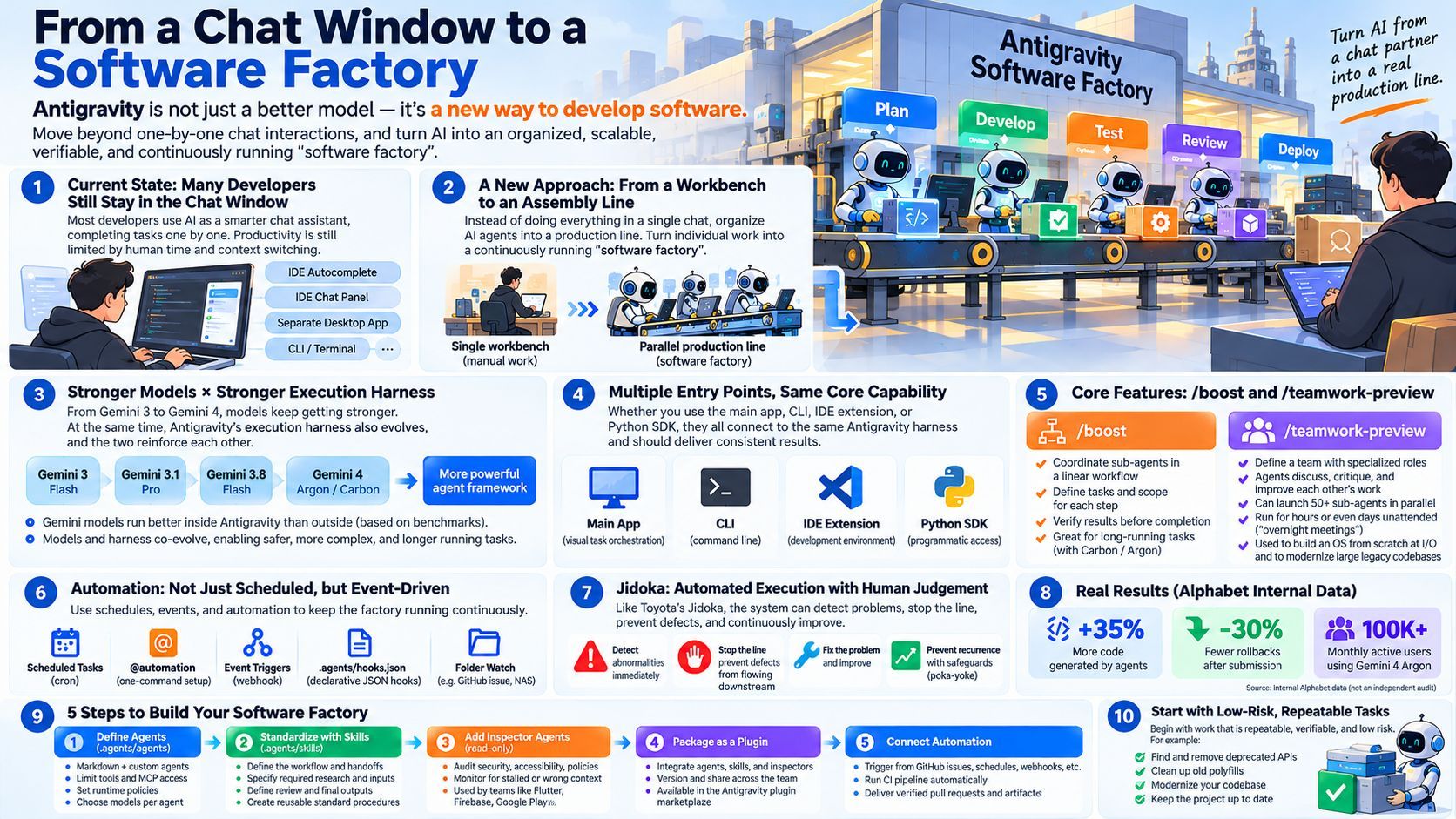
At the Antigravity deep dive, a Google developer relations engineer argued that AI-assisted programming should move beyond a smarter chat partner toward a “software factory” designed as a parallel assembly line. The article traces the co-evolution of models and harnesses, structured delegation with /boost and Teamwork Preview, cron- and hook-driven automation, a stop-and-verify discipline borrowed from Toyota's Jidoka, state persistence through .gemini/brain, and five steps for building a line.
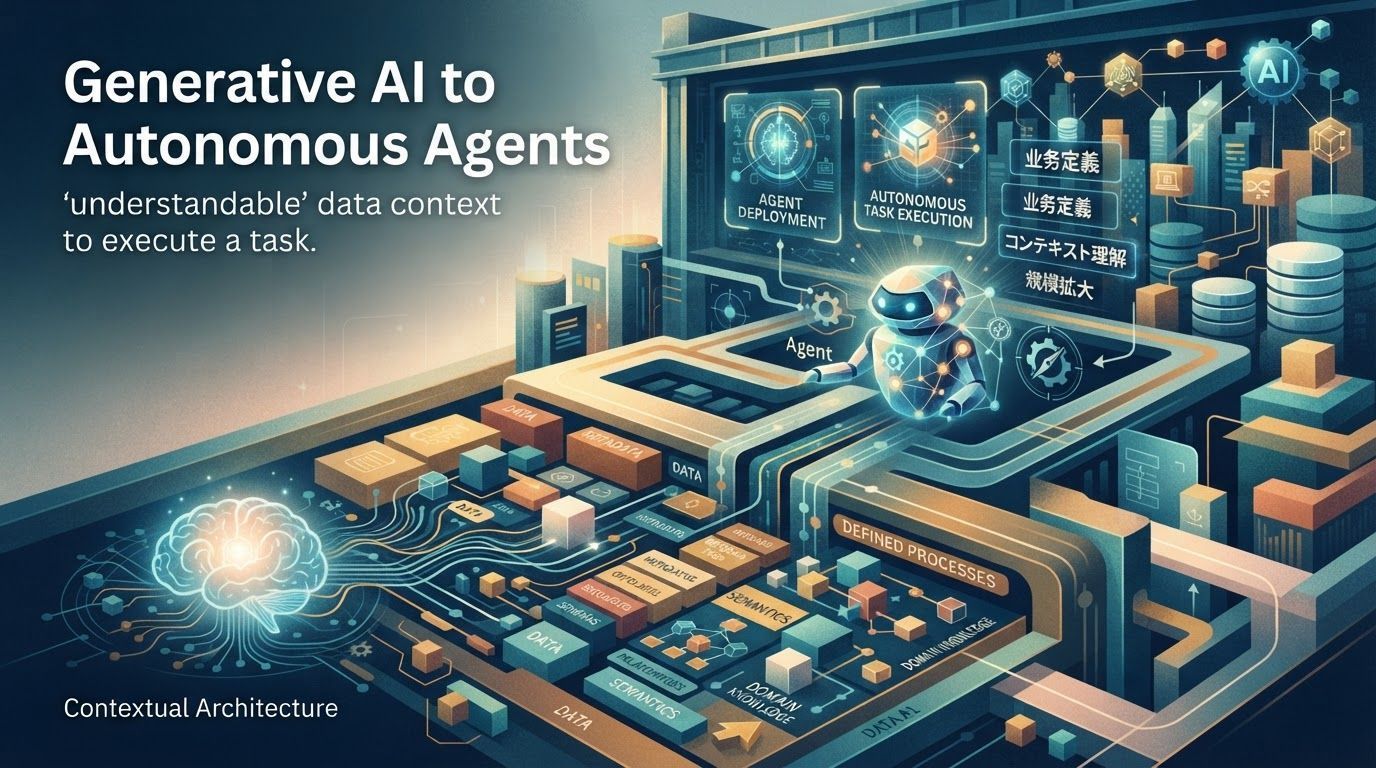
Generative AI is moving from answering questions in a chat box to pursuing goals as an autonomous agent. Drawing on a Google Cloud talk, this article explains why many hallucinations are really missing business definitions, why proofs of concept hit cost, latency, governance, and reproducibility walls at scale, and how a context architecture — data sources, metadata, a semantic layer, and calculation logic — addresses them. It also covers a five-category, 20-run comparison and demos in banking and marketing.
When AI makes coding faster, the bottleneck does not disappear; it moves to requirements, articulation of business knowledge, and verification. Passing tests do not prove product value, and the scarcest people are those who can connect customers, business, and engineering. Drawing on finance and telecom examples, the article examines where AI belongs, what must remain human, and how organizations should start.
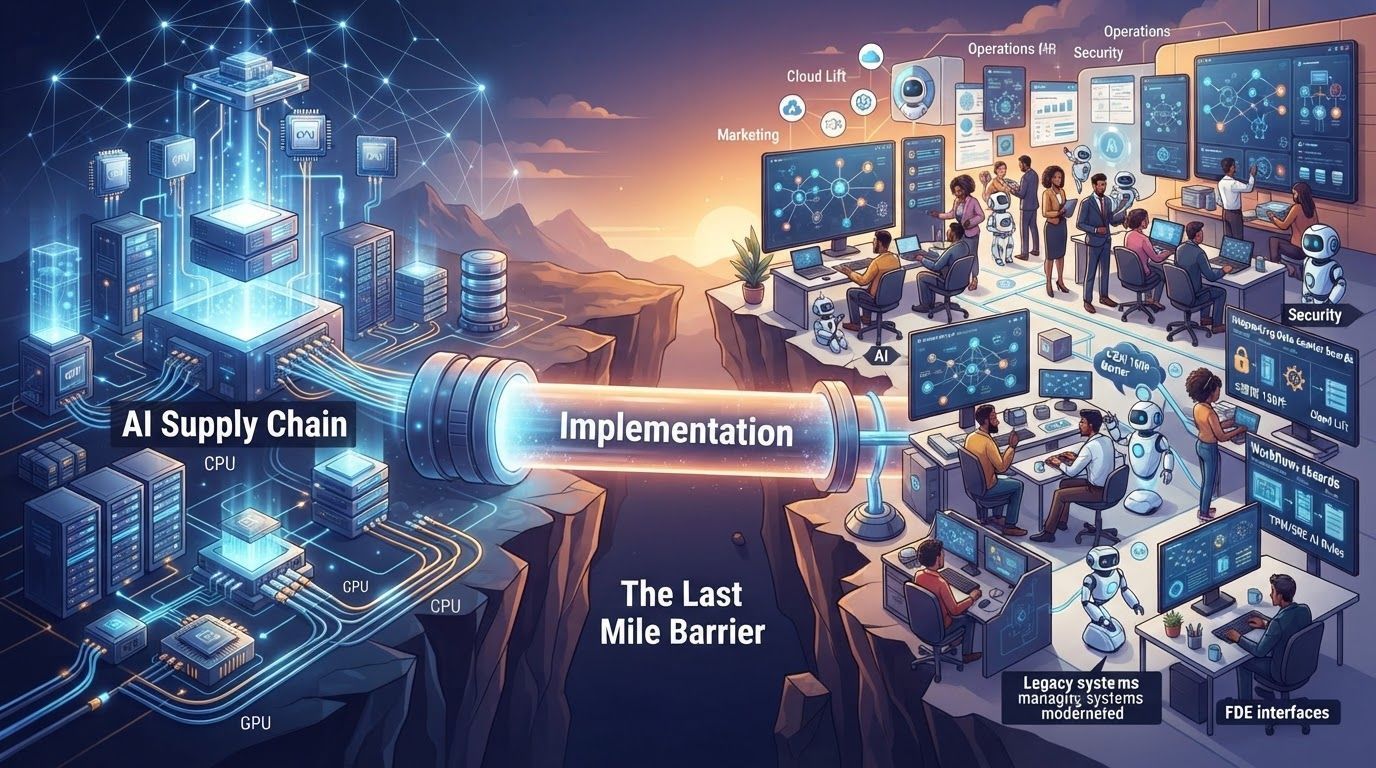
In enterprise AI, the bottleneck is not the model but implementation. A SoftBank speaker places implementation at the end of a chain running from semiconductors and data centers to power and storage, then describes agents across every department, a June security service, the five FDE levels and the system-design judgment that matters most, and why mainframes, COBOL, and missing specs make cloud lift a prerequisite. A six-week batch of 150 requests now takes one person five to eight hours.
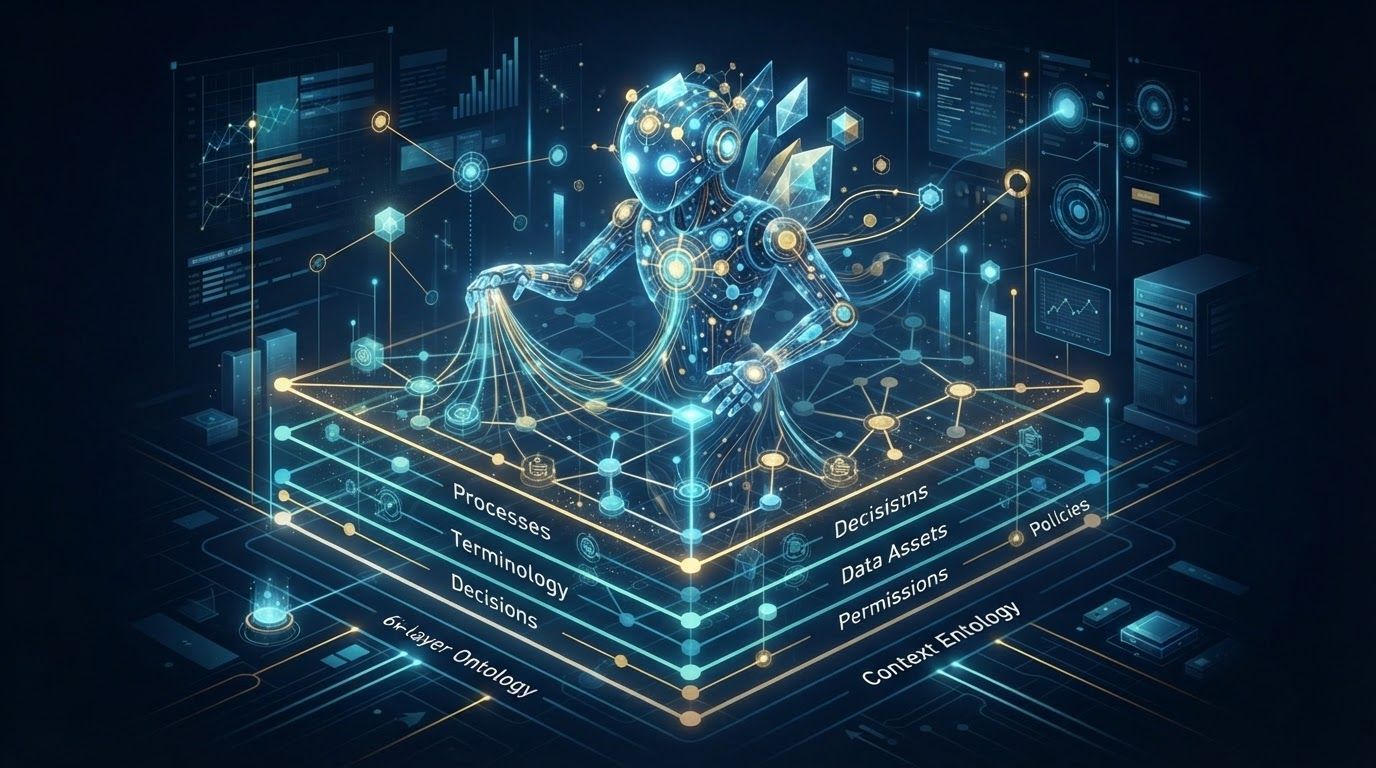
AI agents often fail in the enterprise not because they cannot reason, but because they lack business knowledge. Neo4j's Context Engine organizes processes, terminology, data location, permissions, and past decisions into a six-layer ontology and graph, combining GraphRAG retrieval with memory and learning. This article explains the approach and the questions that remain in private preview.
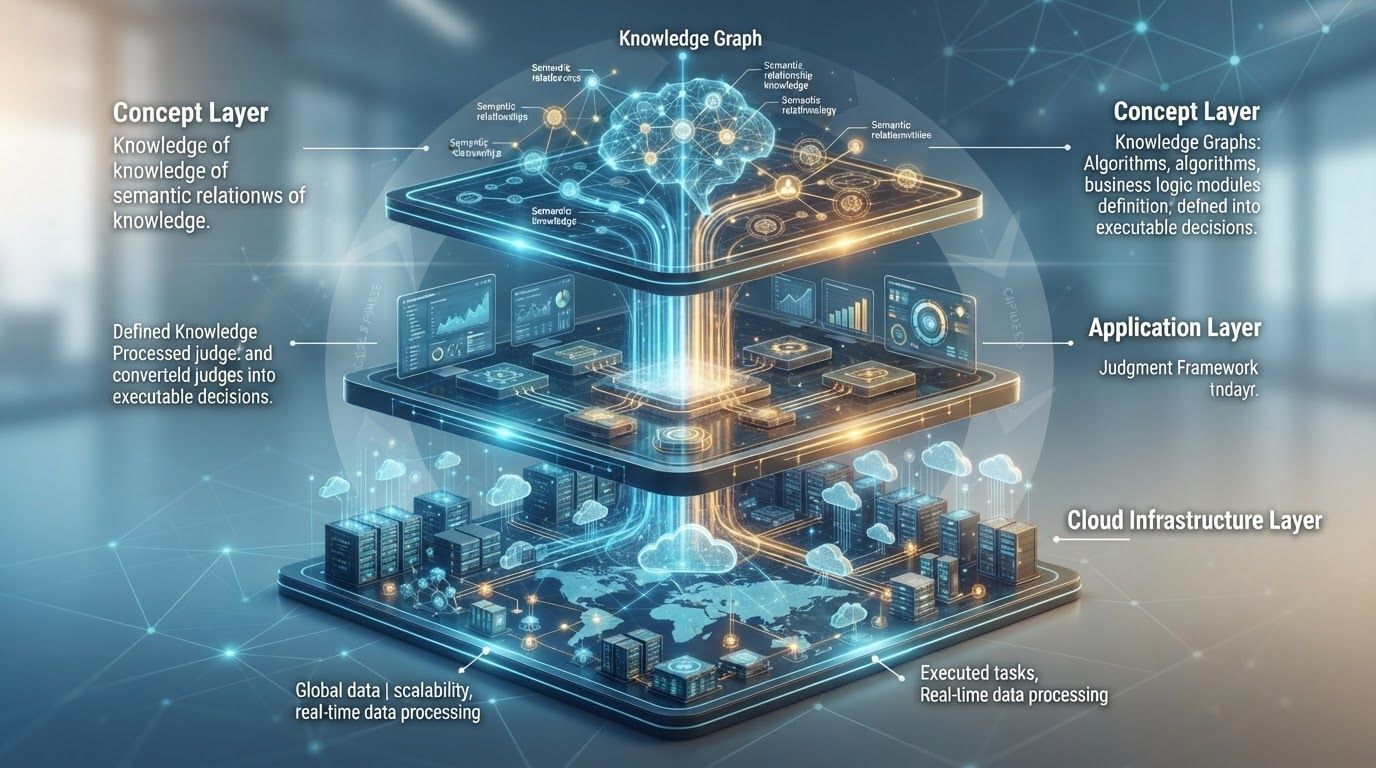
Most enterprise AI proposals stop at “you need a knowledge graph.” This article breaks the problem into three layers: the concept layer that defines what knowledge looks like, the application layer that extracts business logic and makes it judgeable, and the cloud infrastructure layer that lets judgment actually execute. It also covers a judgment framework built on five cycles and six capabilities, a modernization approach that wraps legacy systems in MCP-accessible services, and why intelligence without execution is worthless.
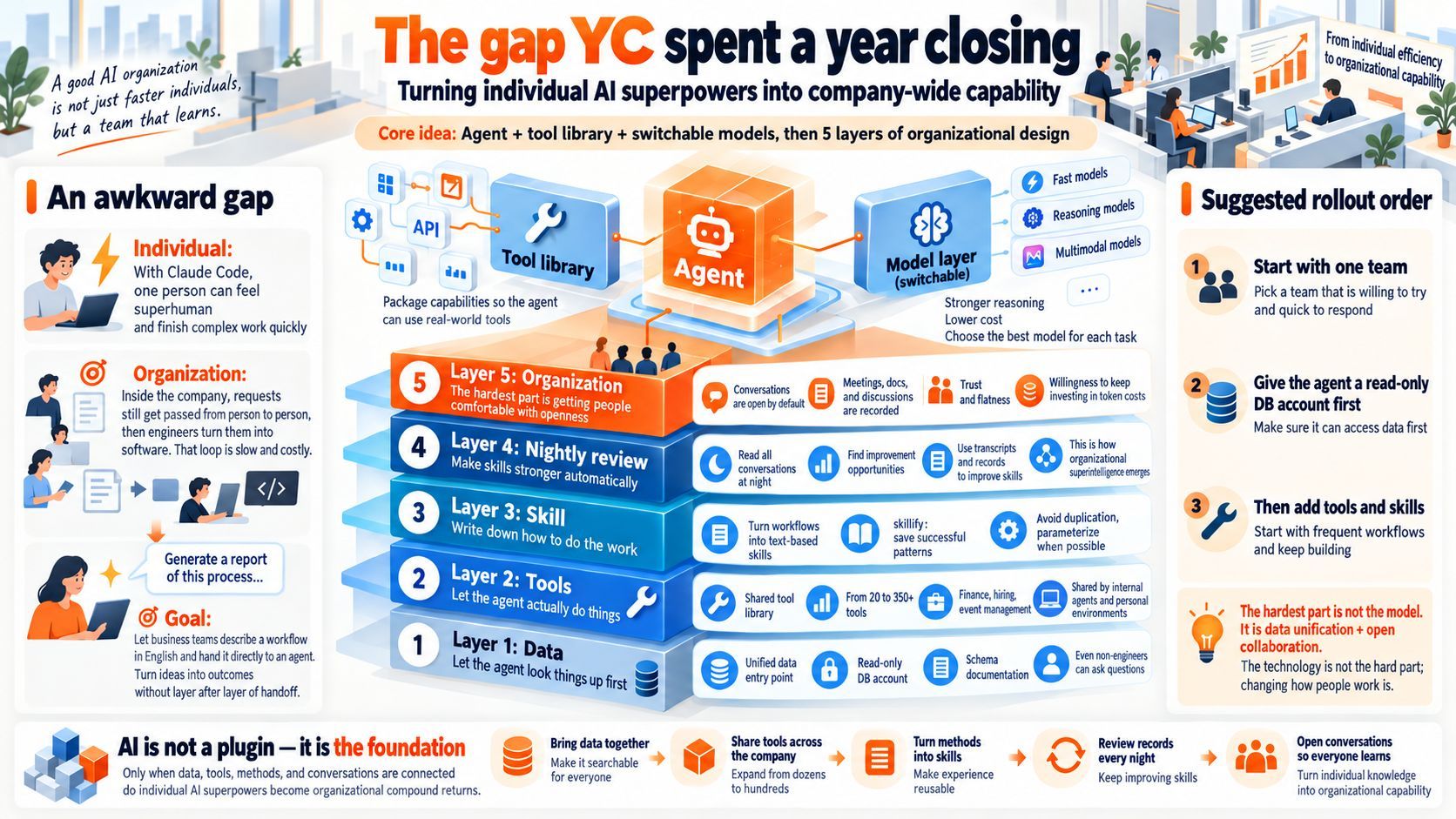
Individuals use AI powerfully, yet companies barely change. YC spent a year building a five-layer system: unified data, shared tools, skills that capture how work is done, a nightly review that improves those skills, and conversations made public by default. Pete explains the structure, the two hardest layers, and where to start.
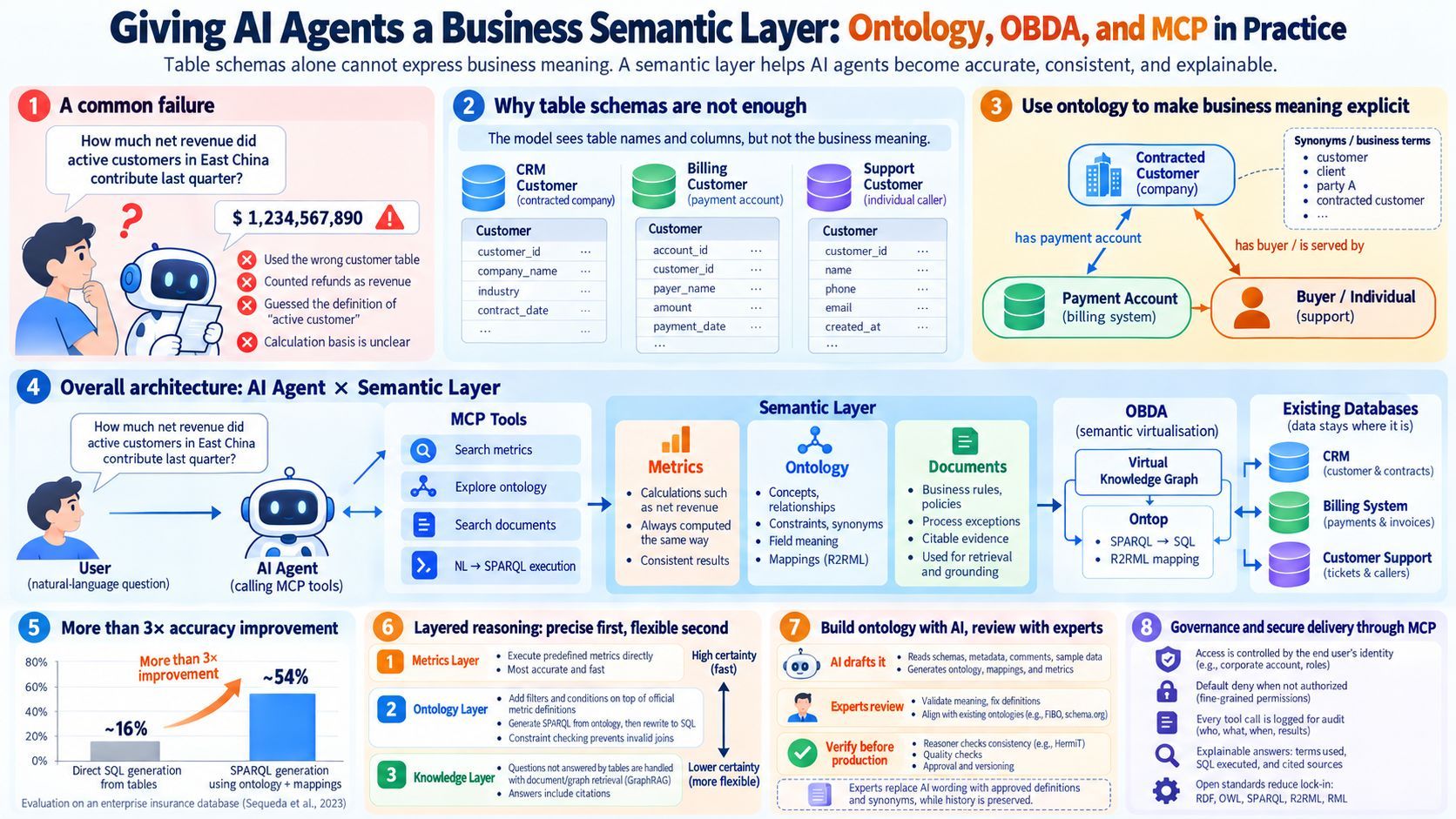
Putting a table schema in the prompt does not teach an AI agent what the business means, so it can still return a number that looks professional but is wrong. Drawing on an insurance-industry benchmark where GPT-4's execution accuracy rose from about 16% to about 54%, this article explains the semantic layer built from metrics, an ontology, and documents; how OBDA maps the ontology onto existing data; and how layered resolution balances determinism with flexibility. It also covers AI-drafted, expert-approved ontologies, MCP delivery, identity-aware governance, and five practical recommendations.
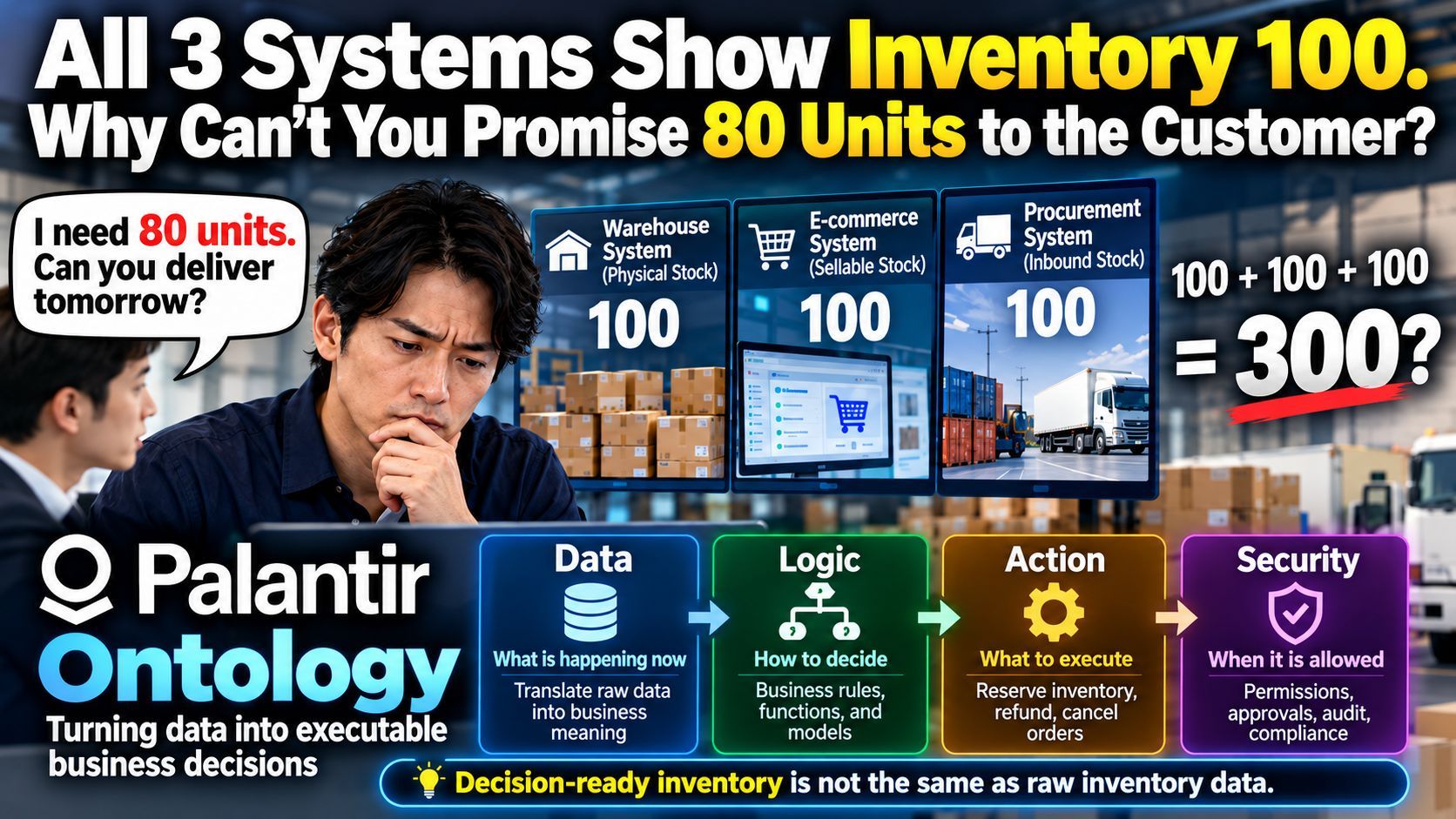
The warehouse, e-commerce, and procurement systems each show 100 units, but adding them up does not mean you can deliver 300. Palantir splits a real business decision into Data, Logic, Action, and Security, describes the business world with Object, Property, and Link, and lets AI actually execute within enforced boundaries. Using an inventory example, this article explains the core of the Ontology and how its philosophy maps onto skills and MCP in the LLM era: build agents first, and let the Ontology grow with complexity.