Sony runs six businesses: games, music, pictures, electronics, semiconductors, and financial services. It has not abandoned hardware; it is layering platform fees, copyright licensing, subscriptions, and B2B services on top. Entertainment's share of revenue rose from about a quarter in fiscal 2012 to more than half in fiscal 2022.
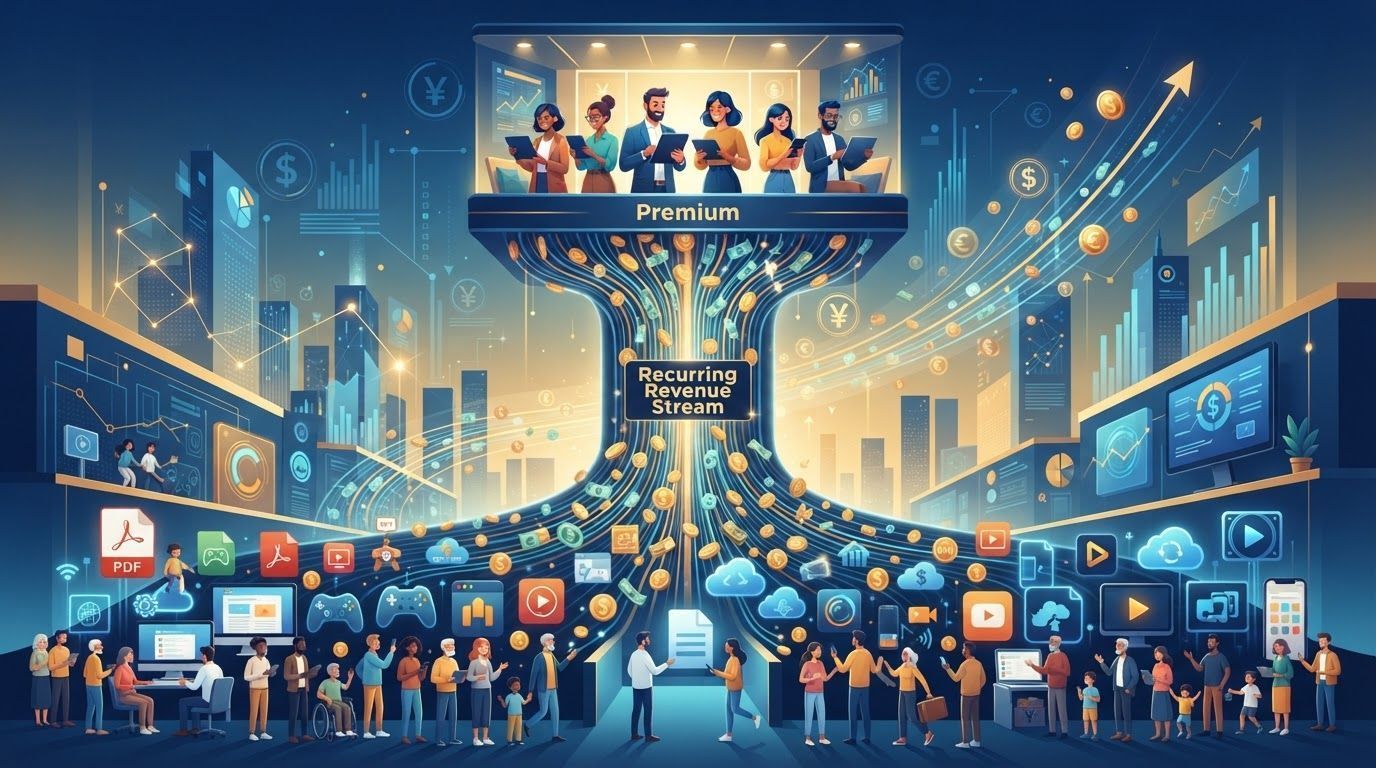
Freemium joins "free" and "premium" into one word: a minority of paying users supports a majority of free users. Chris Anderson's 2009 book Free helped the model spread. Adobe's free PDF reader and free-to-play mobile games are classic cases. The article argues that freemium is not a one-time sale: it depends on recurring revenue, and on gathering enough free users so that some of them will keep paying.
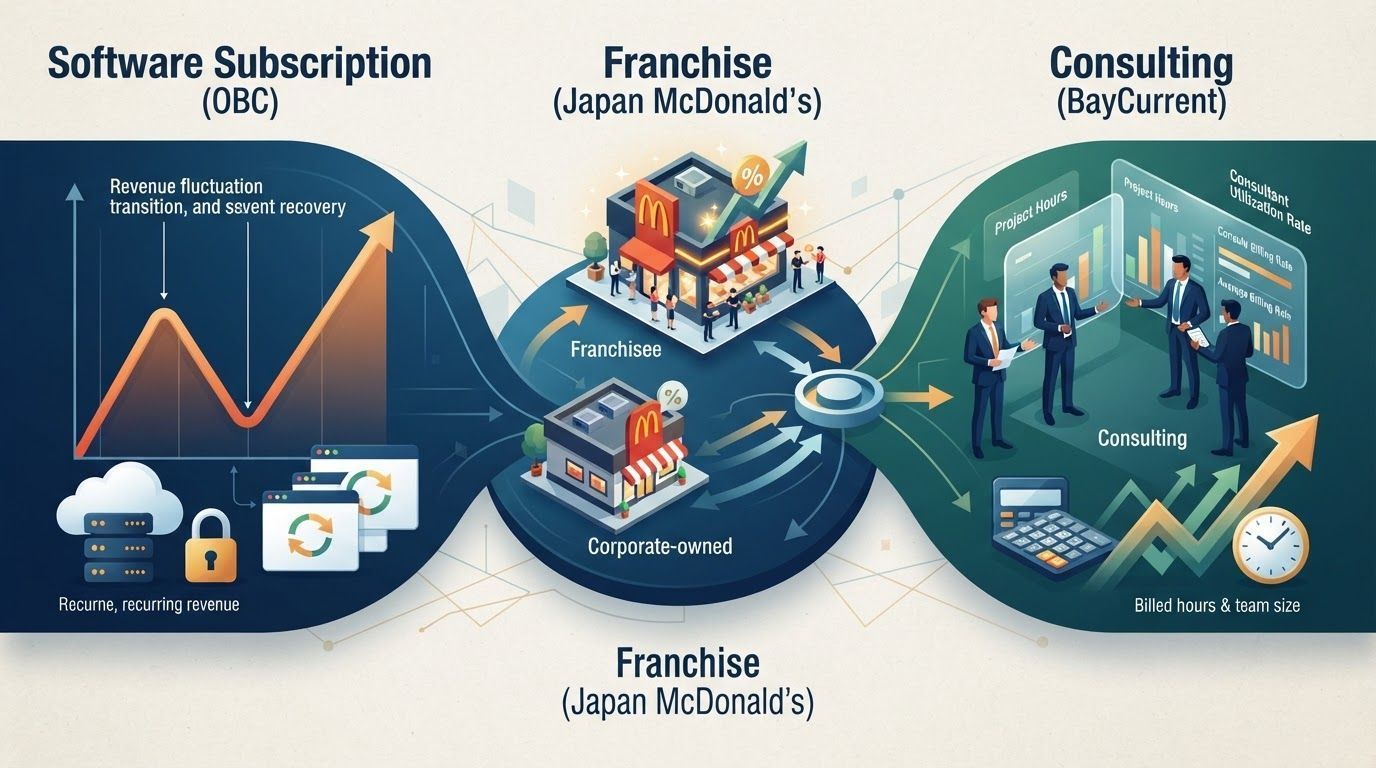
Three companies, three ways to turn one-off sales into recurring revenue. OBC weathered a volatile cloud transition before a V-shaped recovery; McDonald's Japan earns a higher gross margin from franchising than from company-owned stores; BayCurrent's revenue comes down to price, headcount, and utilization. The article breaks down the cost structures and risks behind each model.
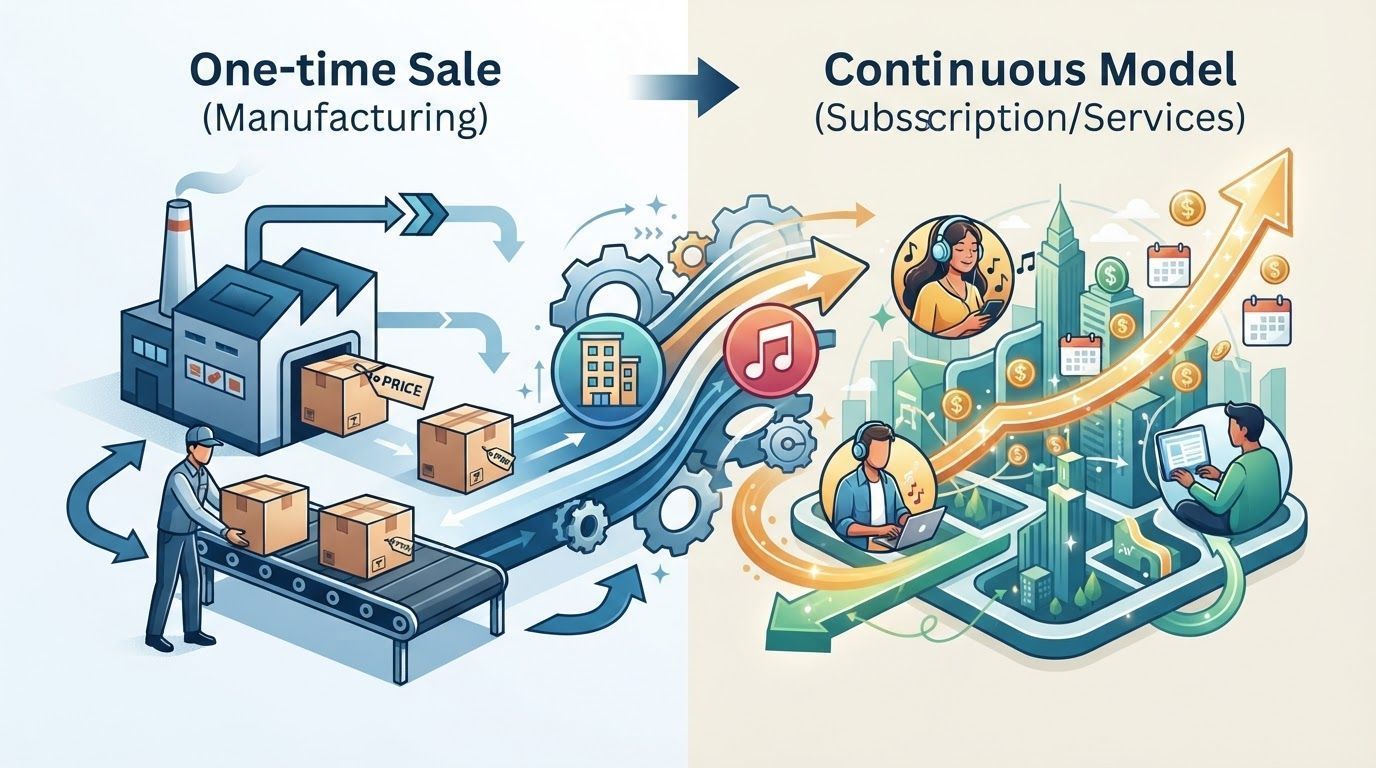
The recurring model charges for regular use of a product instead of a one-off sale. This article contrasts it with the sell-and-move-on manufacturing model, uses rental housing to explain why stable cash flow matters, and examines music streaming and convenience-store franchising—while noting that without a strong product, renewal stops.
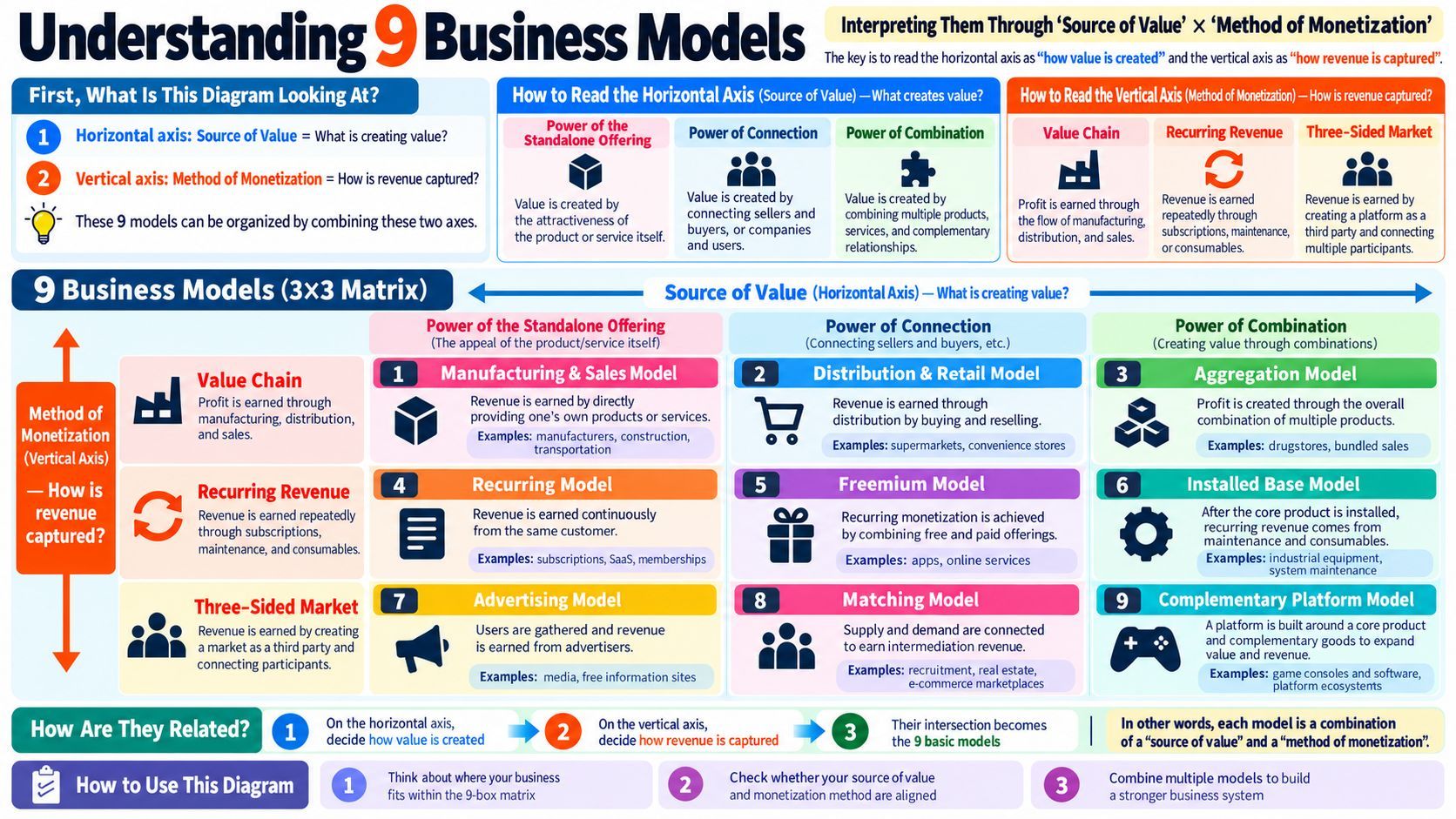
This article uses a single 'transaction map' to organize business models along two axes: value creation (the power of a single product, of combination, and of alliance) and revenue capture (value chain, recurring, and the three-party market). It then walks through nine models — manufacturing, distribution and retail, combination, recurring, freemium, installed base, advertising, matching, and platform — showing how even complex businesses reduce to basic moves and how the map works as a tool for reading strategy across industries.