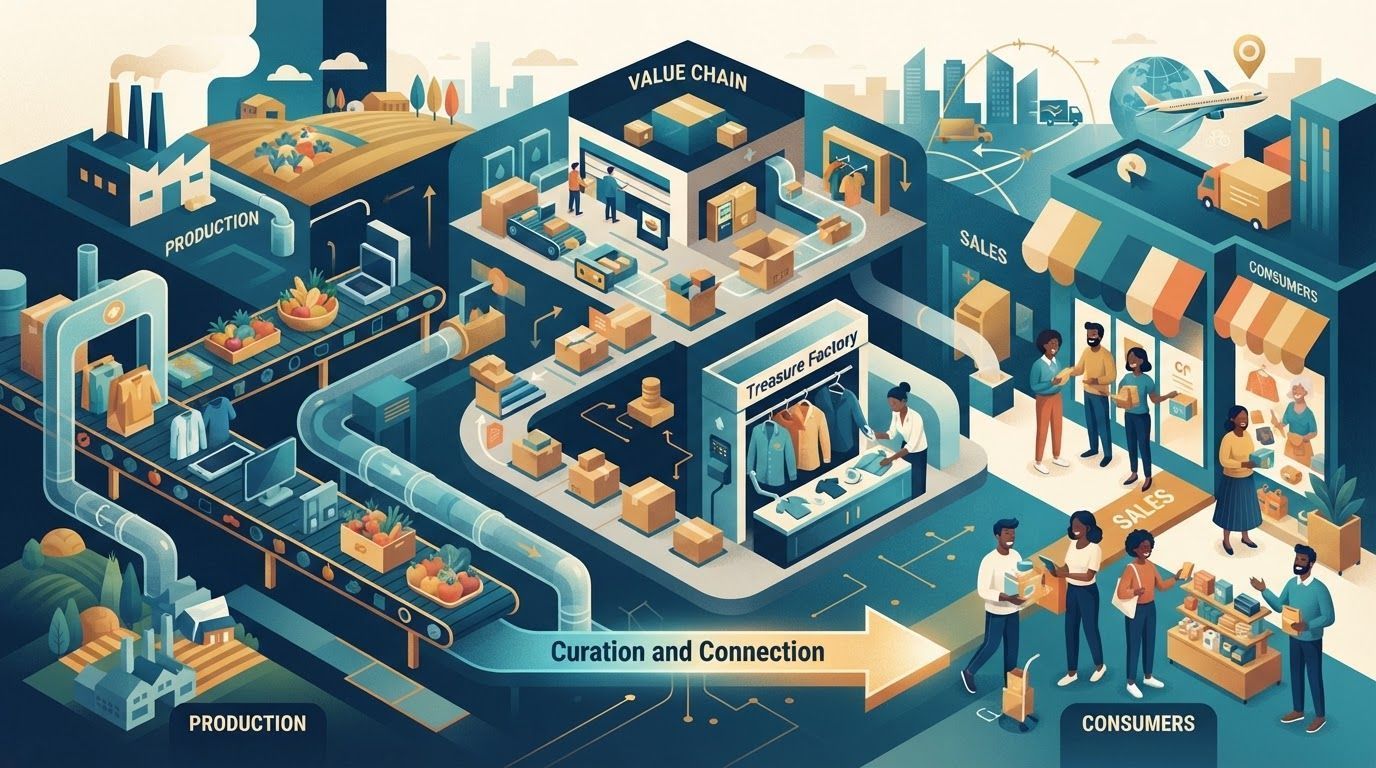
This post breaks down the distribution and retail model: companies make nothing, buy from producers, sell to customers, and earn the spread. It explains the two axes—matching power and the value chain—through Treasure Factory, which cleans and repairs secondhand goods for a 55.9% gross margin. It then examines the model's two weaknesses, easy imitation and thin profitability, and why general supermarkets and trading houses are moving toward combined models.
A Mac teleprompter built with Vibe Coding: a local AI model advances the lines automatically, so you don't scroll by hand while talking. Processing stays on the device and footage needn't go to the cloud, though it only runs on Apple silicon Macs. Beauty filters complete the recording workflow, and the code is open source to download and modify.
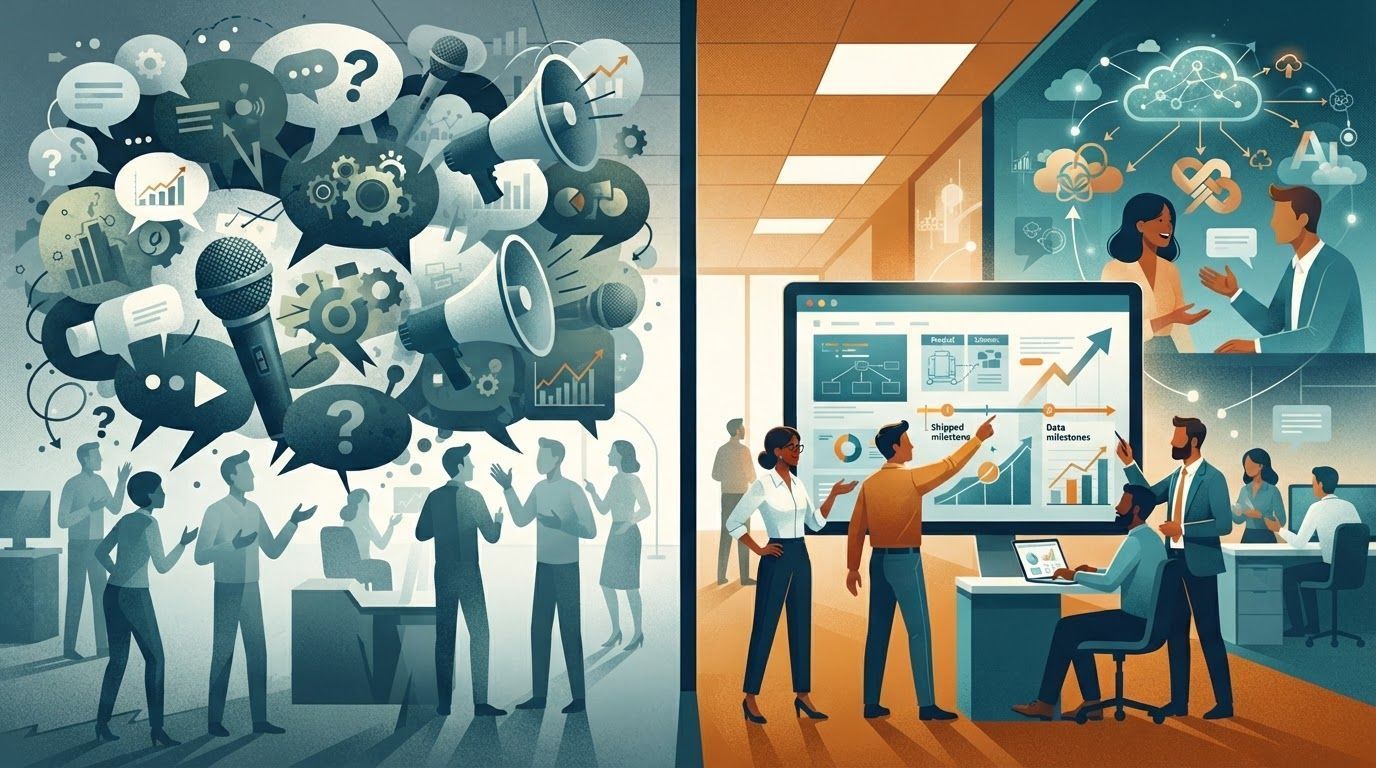
A month into a new job, the author hits the same wall he left behind: plenty of drive, no outlet for it. He traces the problem to a culture where talk outweighs action—endless arguments, concepts outnumbering shipped products. Drawing on his experience with Japanese clients, he argues for fixing the inside first: daily reporting, joint planning, and solid work before going out to knock on doors. He then pushes further: in the AI era software products are losing value, and the edge moves to cloud partnerships, cross-selling, and the ability to read people, adjust their state, and inspire them through narrative.
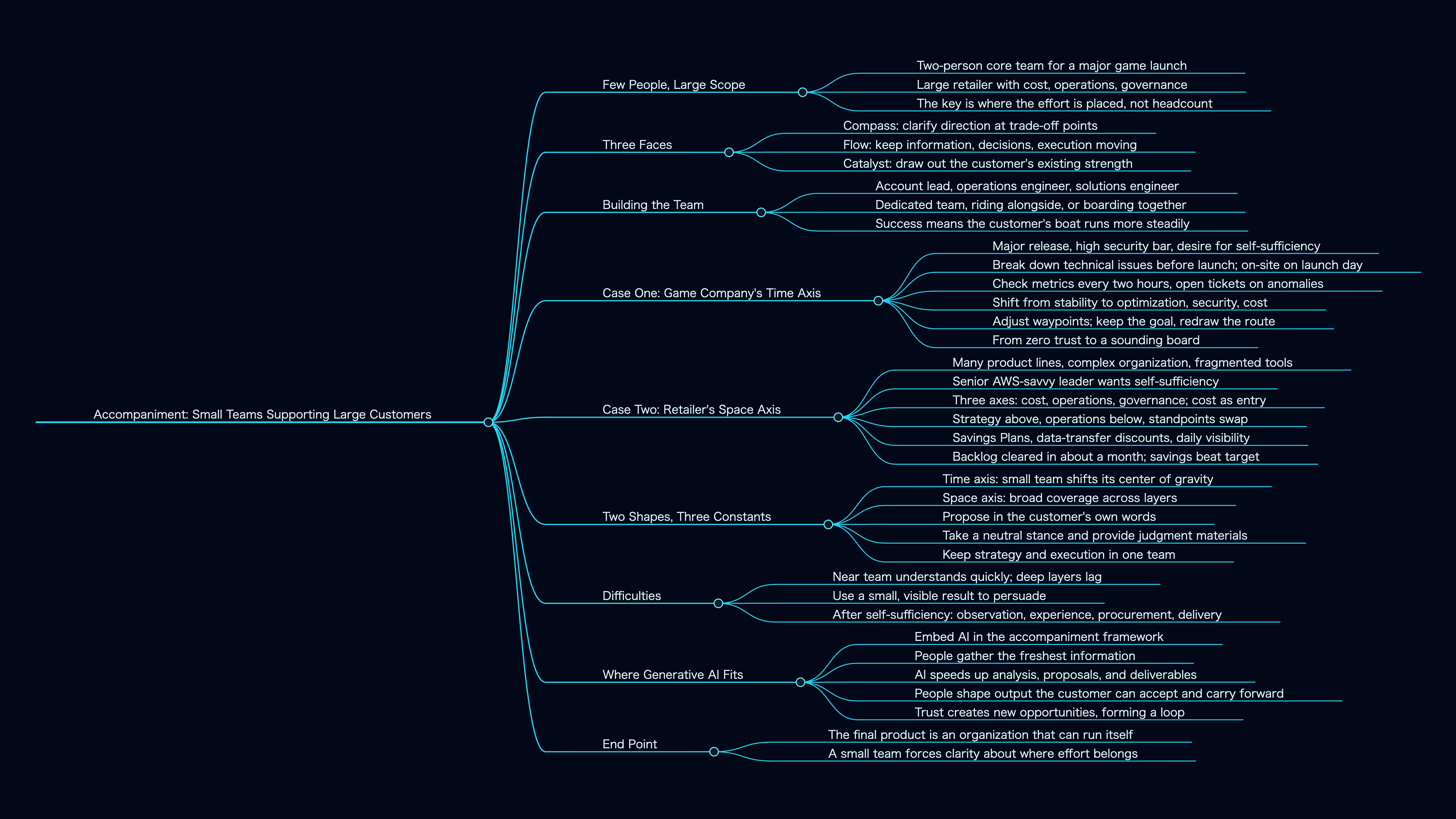
I attended a talk by an expert from Classmethod—who oversees Enterprise Service—on how small teams can support major enterprise clients. Drawing on two contrasting case studies—a gaming company and a large-scale retail enterprise—the speaker explained the concept of "co-piloting" (hands-on, long-term support) through three distinct roles: the compass, the process, and the catalyst. The presentation covered shifting a team’s focus across both temporal and spatial dimensions, and the importance of keeping strategy and execution within the same team. The discussion concluded by exploring the ongoing value of a support team even after a client achieves self-sufficiency, as well as the integration of generative AI into this co-piloting framework.
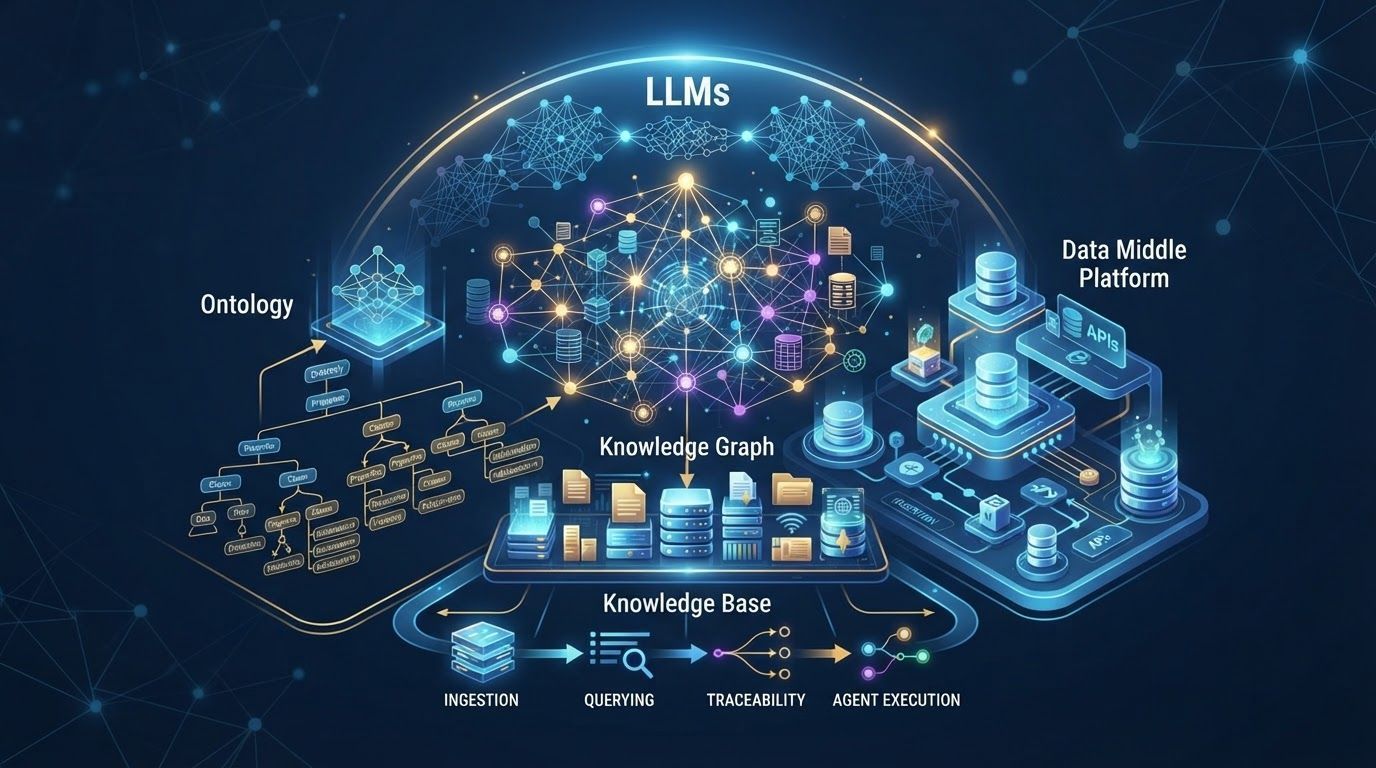
Ontology, knowledge graphs, knowledge bases, and data middle platforms mostly predate LLMs, yet they are back in the spotlight. Drawing on a knowledge graph he built himself, the author explains how the four relate and what LLMs actually changed in ingestion, querying, traceability, and agent execution.
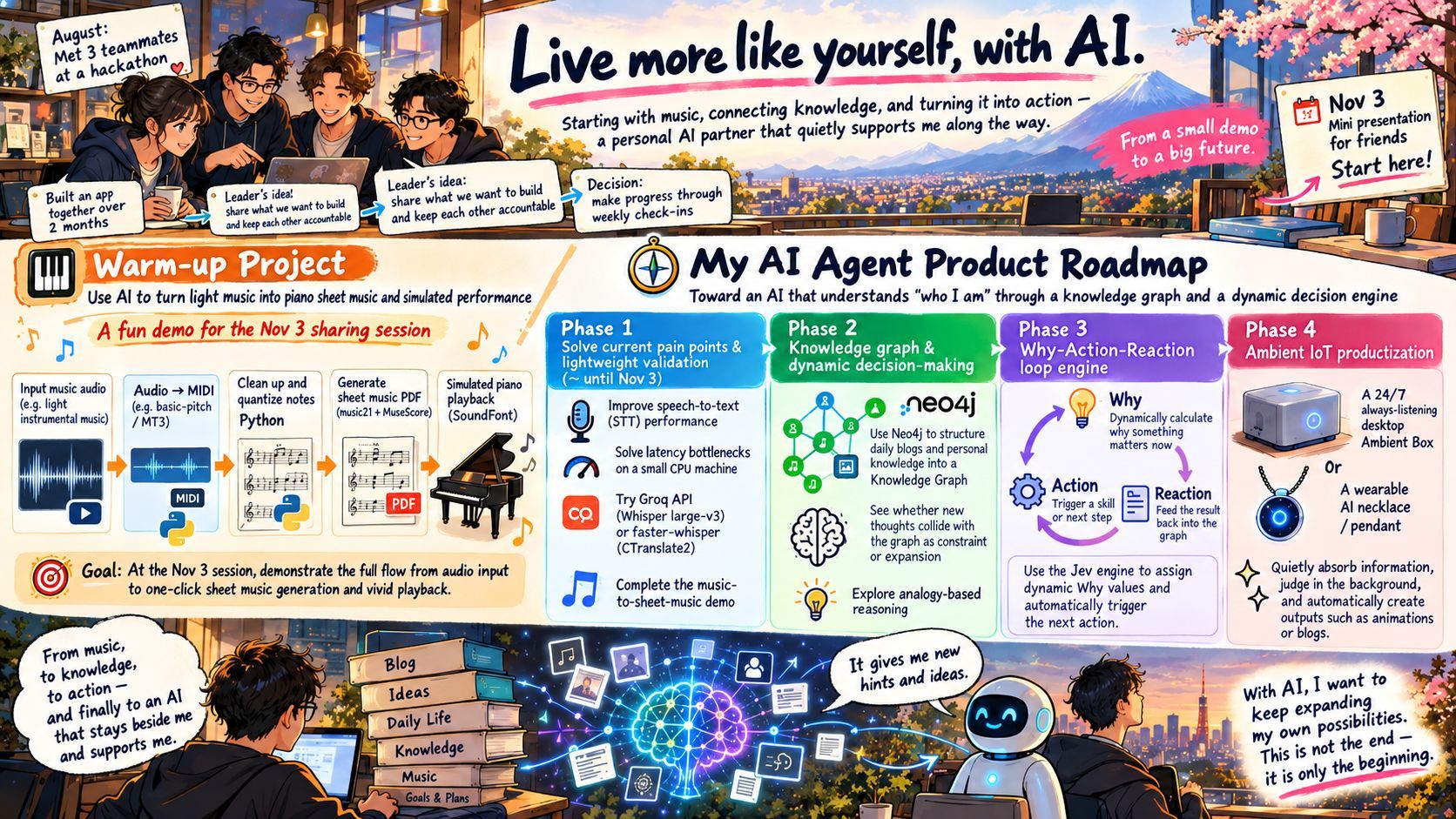
Ahead of a small November 3 session with friends, I'm building a warm-up demo that turns light music into piano sheet music and simulated playback, validating the audio-to-MIDI pipeline. Then I return to the core product: a Neo4j knowledge graph that gives an agent a dynamic “why,” developed across four phases — faster STT, knowledge collision, a Why-Action-Reaction loop, and Ambient IoT hardware. The post also records the open questions and the weekly cadence I'm using to keep moving.
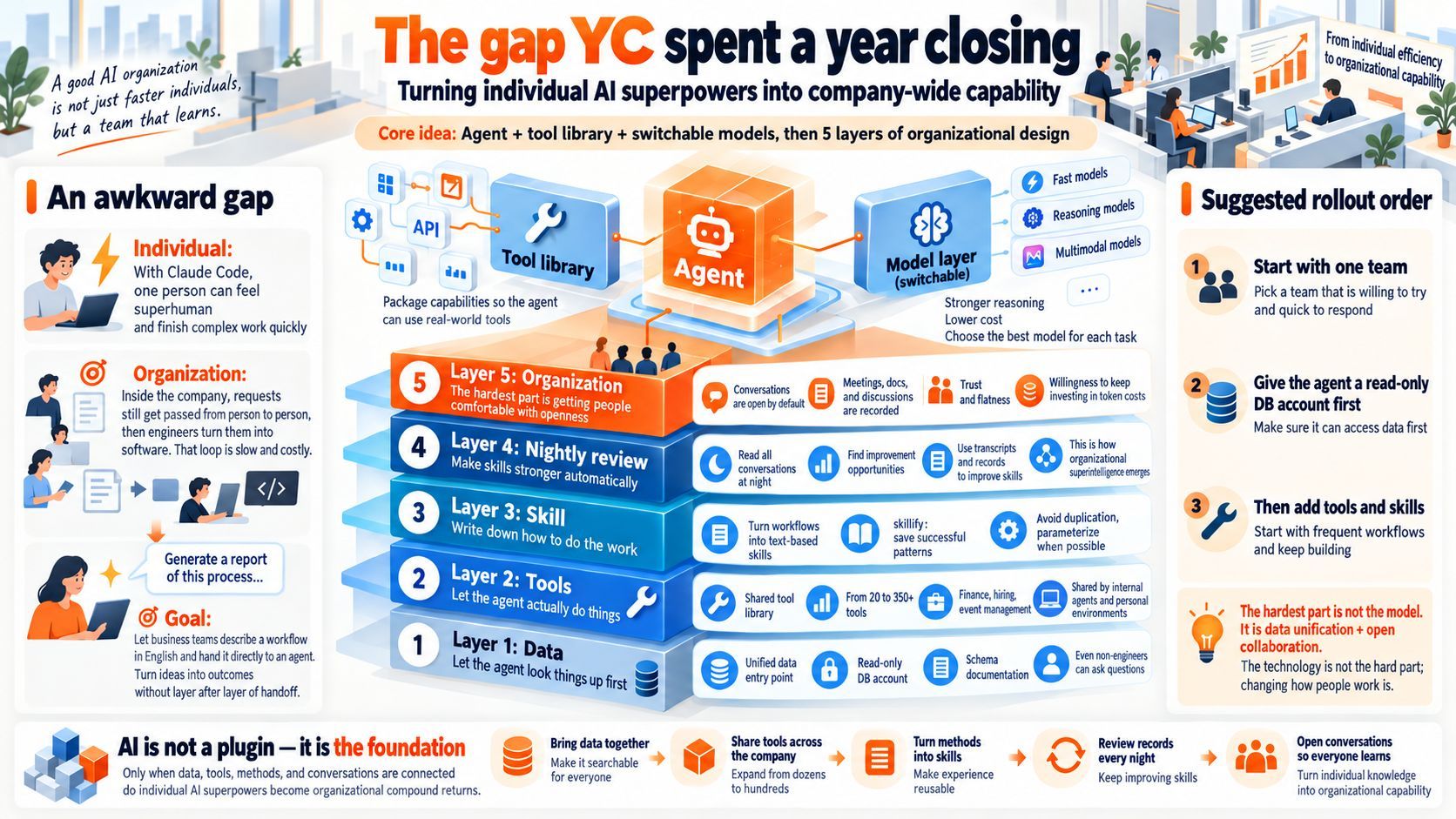
Individuals use AI powerfully, yet companies barely change. YC spent a year building a five-layer system: unified data, shared tools, skills that capture how work is done, a nightly review that improves those skills, and conversations made public by default. Pete explains the structure, the two hardest layers, and where to start.
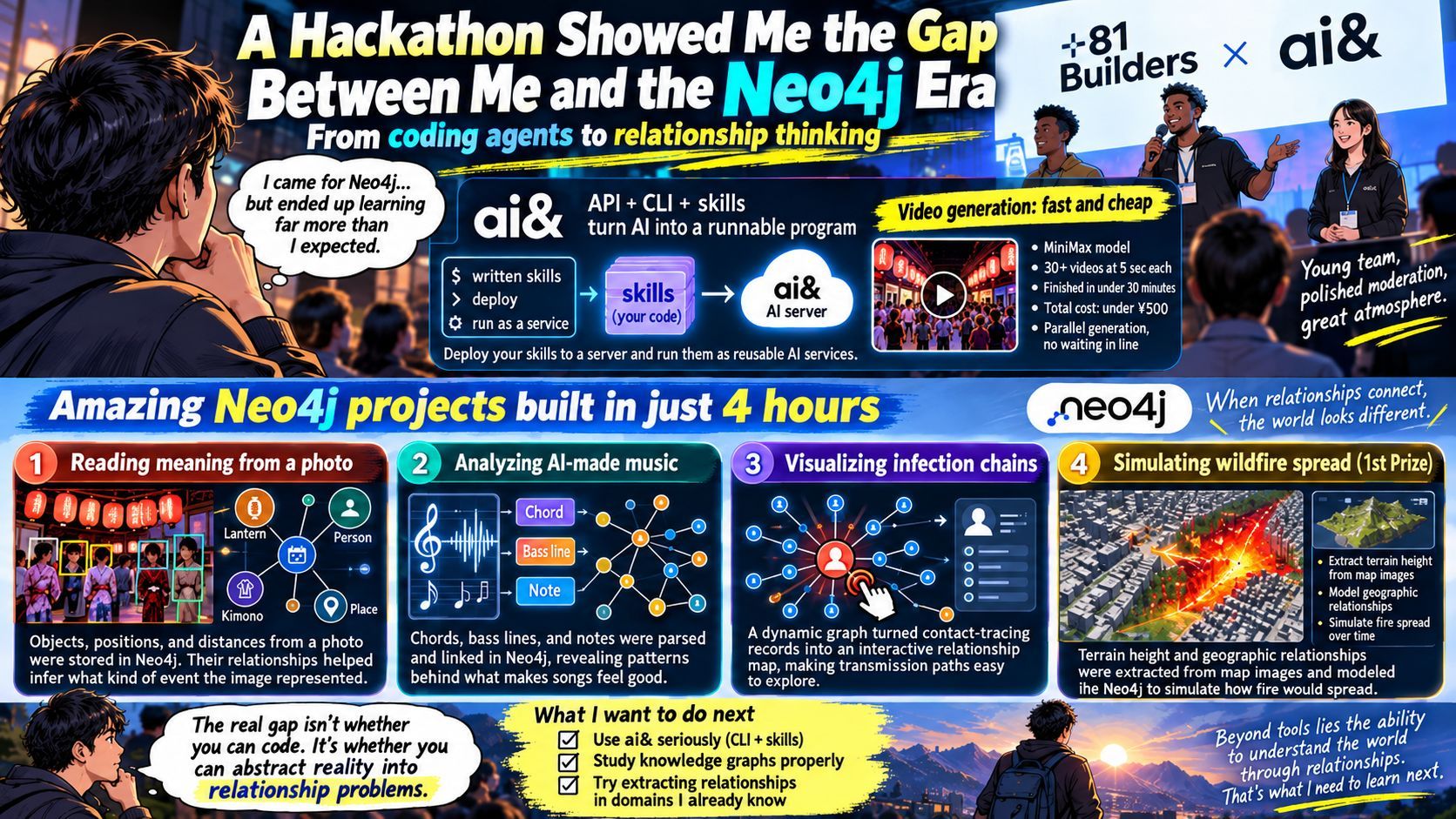
I joined a hackathon hosted by +81 Builders , where ai& showed how its CLI and skills turn an AI service into a deployable server, and MiniMax video generation proved fast and inexpensive. The bigger shock was what participants built with Neo4j in four hours: relationship analysis of photos, music analysis, a dynamic contact-tracing graph, and a fire-spread simulation. The experience made me realize that coding-agent fluency is no longer enough, and that I need to learn knowledge graphs.
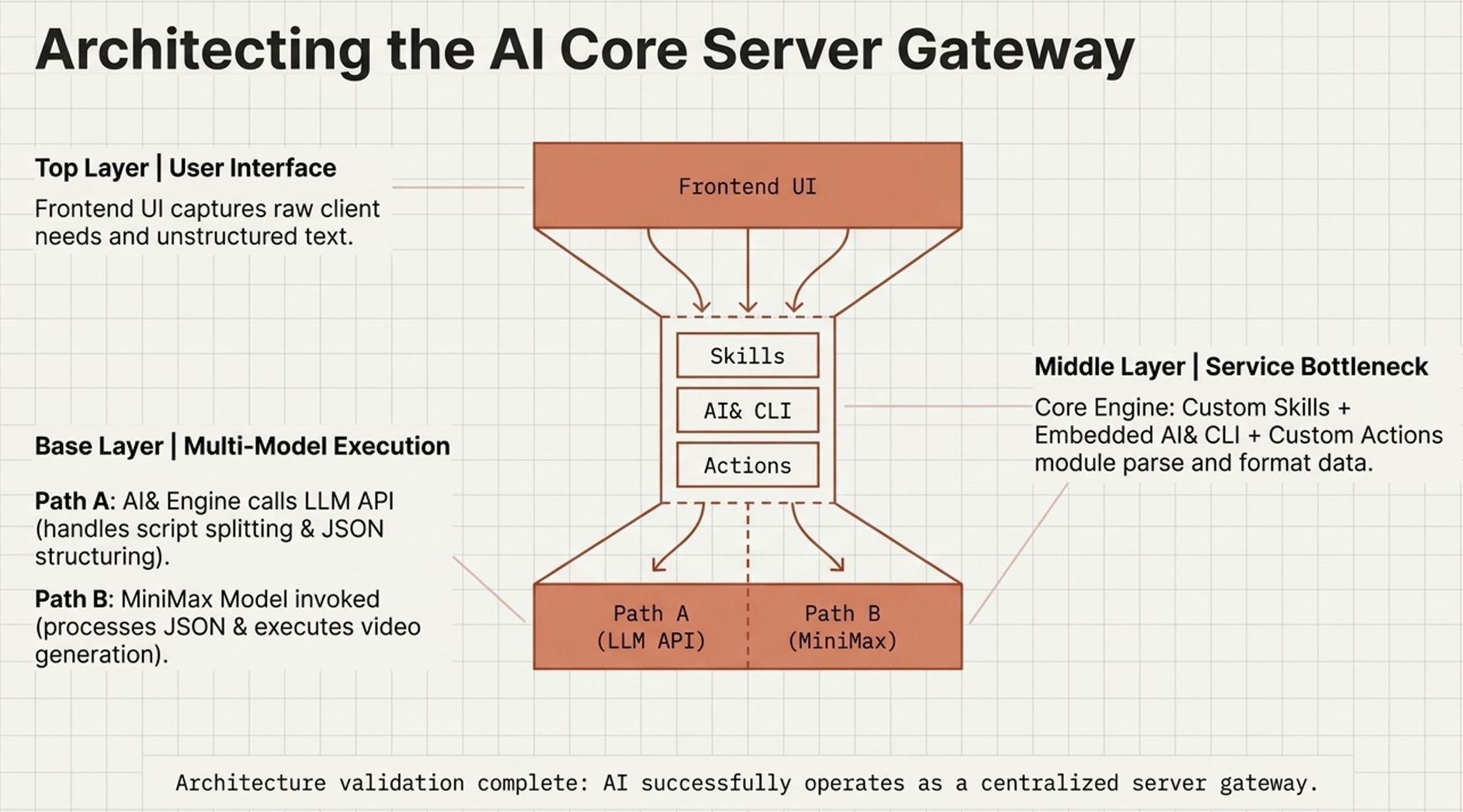
At a hackathon I built a tool that turns a story or blog post into video, validating three layers. The first automatically splits a story into sections, generates prompts, characters, and voiceover, then produces video section by section. The second wraps the AI& CLI in a service layer, using skills to drive the AI LLM API so non-programmers can use it. The third writes the voiceover first and uses it as a reference for MiniMax to generate visuals—a sound-driven approach. All three validations succeeded.