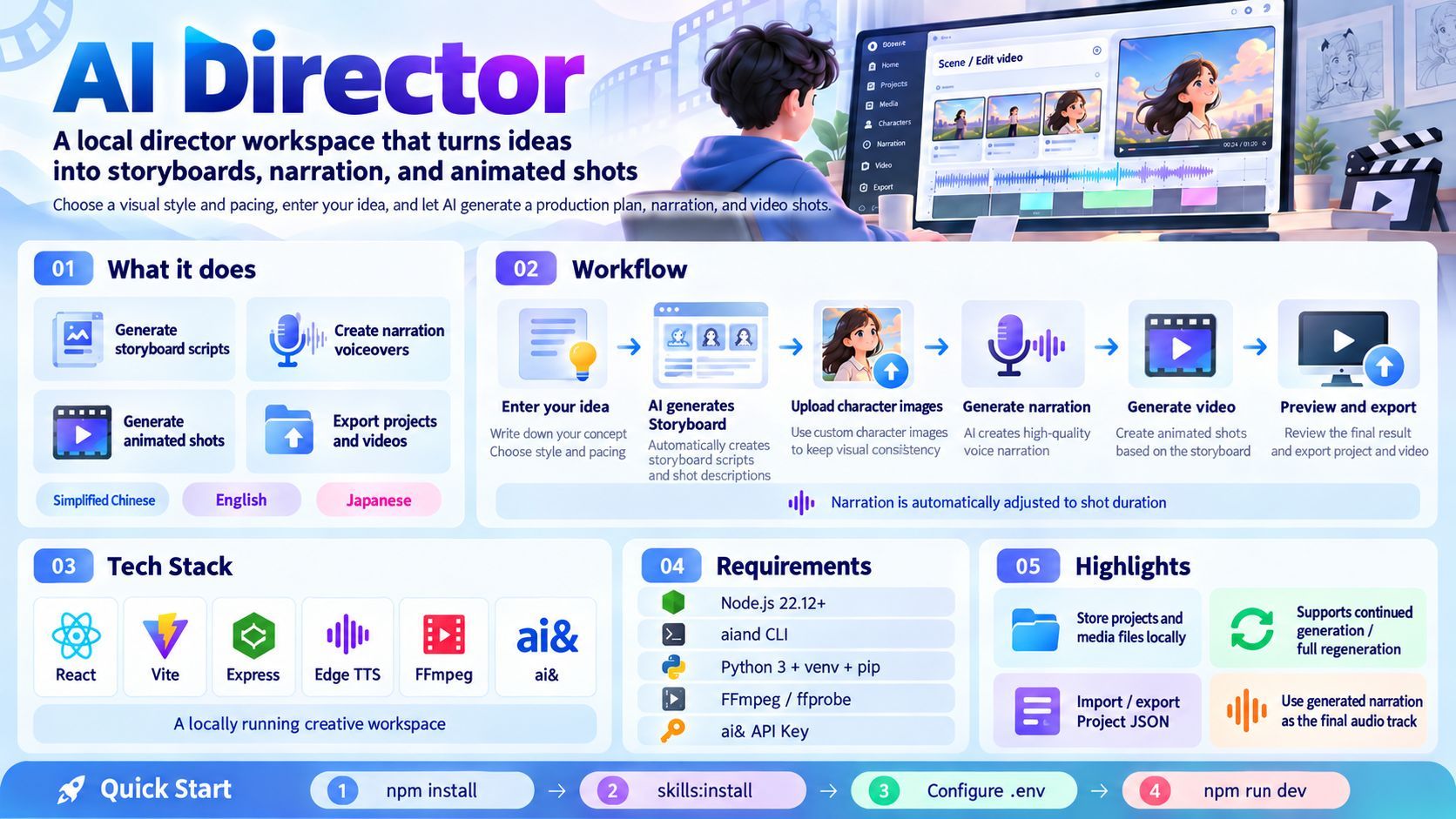
AI Director is a local director's workspace that breaks an idea into a storyboard, characters, voiceovers, and shots. It constrains AI output with validated project JSON, fits Edge TTS narration to each shot's duration, and generates video through ai&'s MiniMax H3. This article walks through the production flow, timeline handling, the boundaries of paid tasks, the local-first data design, and the engineering choice to load and validate the Skill explicitly.
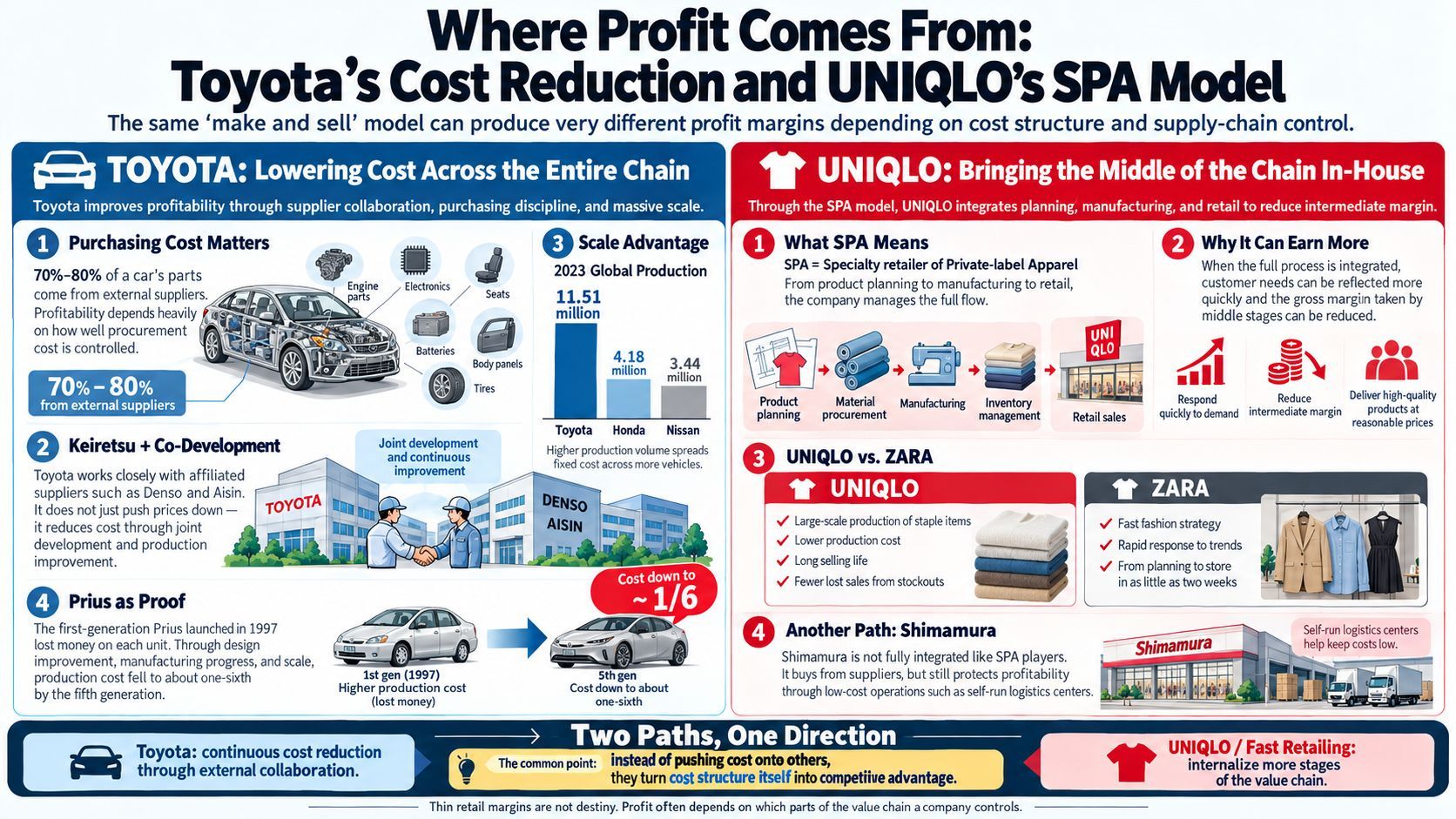
Toyota, Honda, and Nissan run the same manufacturing-and-sales model, yet Toyota's margins are higher. Part of the reason is its commitment to cost reduction while working with keiretsu suppliers such as Denso and Aisin; part is the scale effect of 11.51 million vehicles produced worldwide in 2023. The second case is Fast Retailing (Uniqlo), known for an SPA model that handles planning, manufacturing, and sales in-house, cutting out intermediate margins and reaching global scale with a staple-product strategy opposite to Zara's. This article compares the two industries through one question: how does a company turn its cost structure into a competitive advantage?
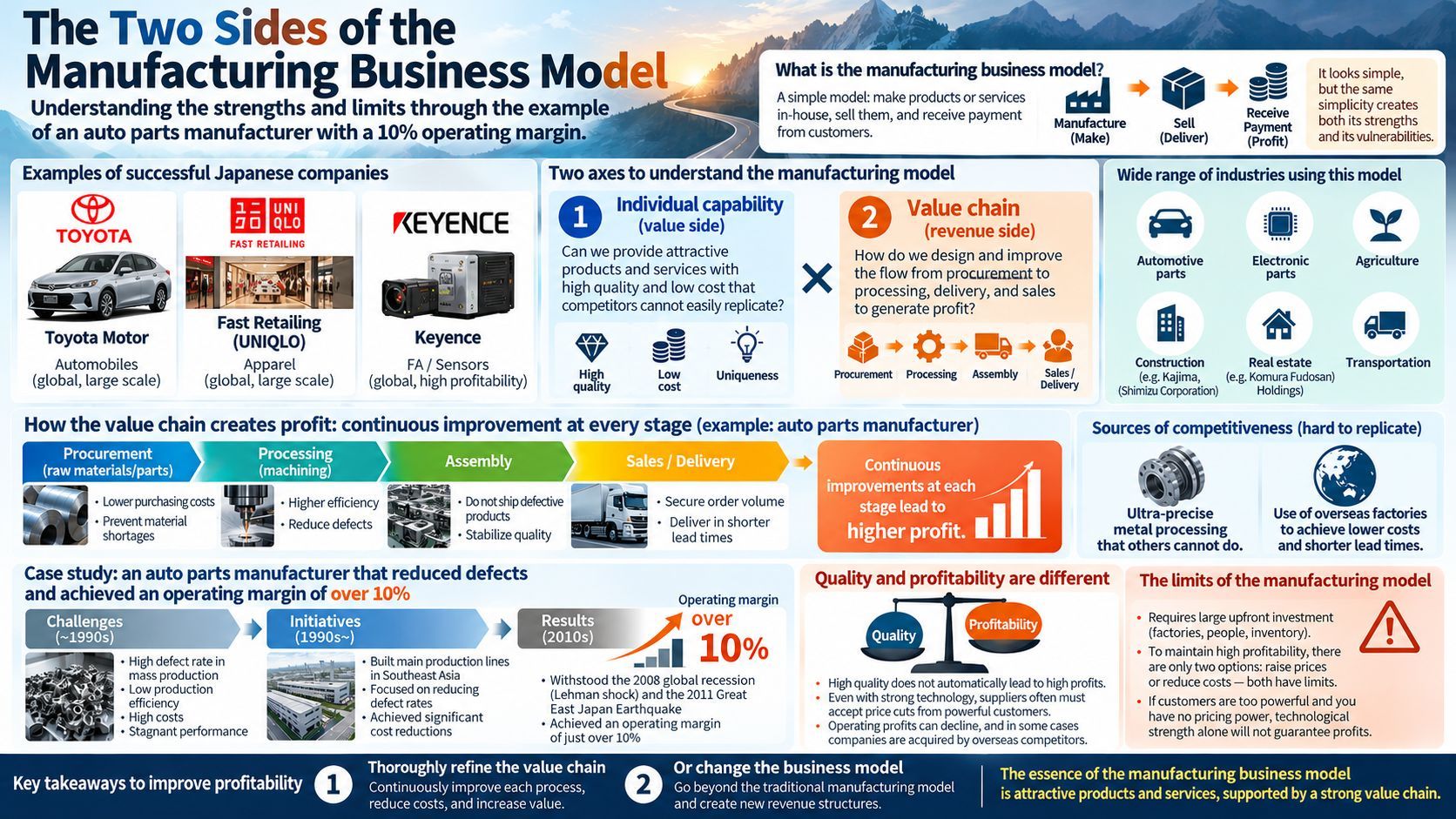
The make-and-sell model looks simple: a company manufactures and sells its own products and is paid by customers. Yet its strengths and its fragility come from the same place. Two axes matter: standalone strength—high quality, low cost, and things rivals cannot do—and the way revenue is earned across the value chain of procurement, processing, and delivery. One ultra-precision parts maker stagnated on mass-production defects, moved its main line to Southeast Asia in the 1990s, and improved defects so thoroughly that it held an operating margin above 10 percent through the 2008 recession and the 2011 earthquake. But quality and profit margin are different things: a supplier that cannot refuse price-cut demands does not recover, and was acquired. The only ways out are to overhaul the value chain or change the model.
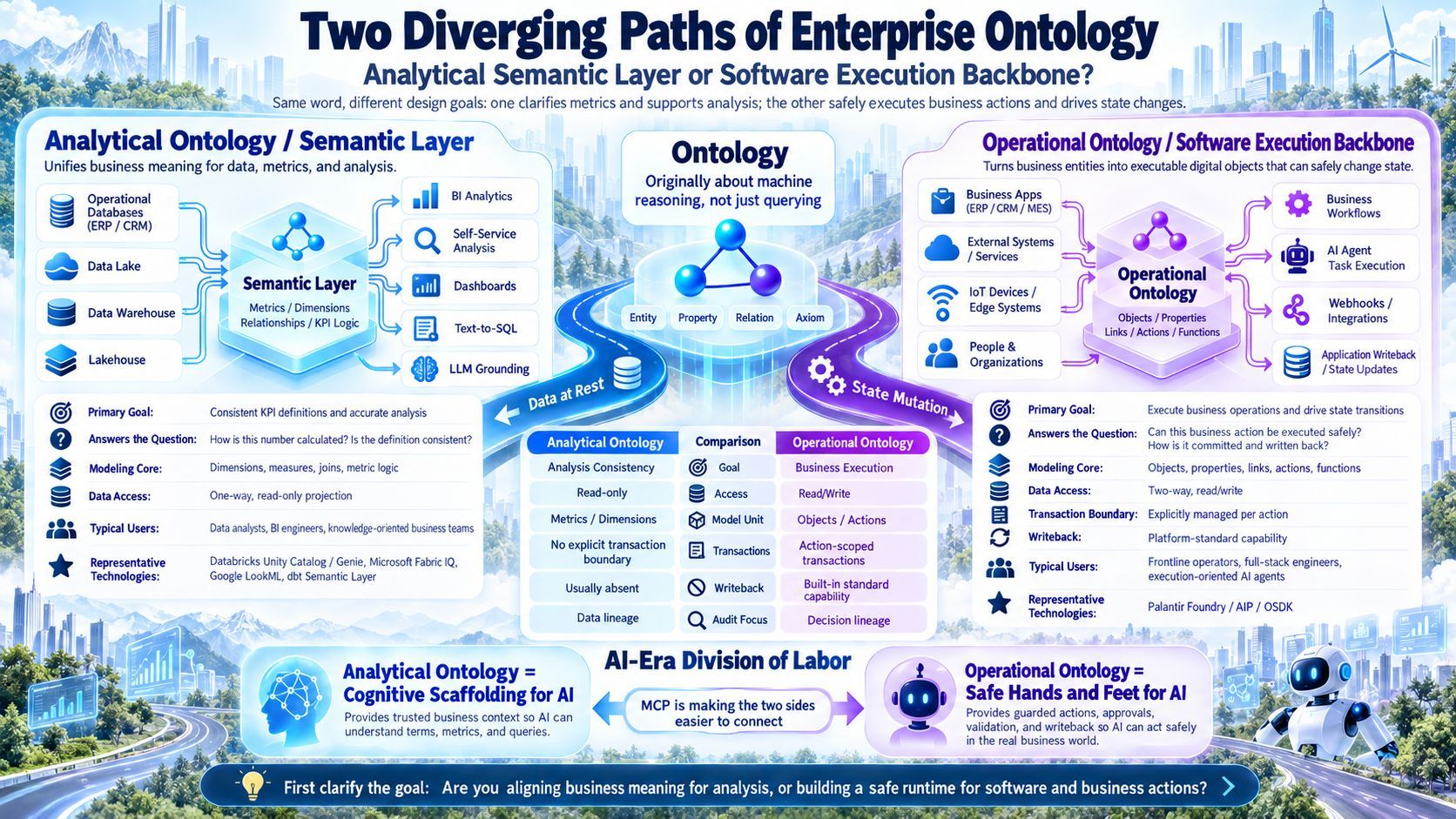
Enterprise ontology has split into two currents. The analytical semantic layer unifies metric definitions and supports BI, Text-to-SQL, and LLM grounding in a read-only way; the operational ontology fuses state-change transactions, precondition validation, write-back to external systems, and type-safe OSDK code generation into a runtime for business applications. The offerings from Databricks, Microsoft, and Google Cloud are essentially extensions of the former, while Palantir represents the latter, implementing enterprise-scale CQRS and decision lineage. This article compares their structures, their division of labor in the age of AI agents, and a selection matrix for enterprise architecture.
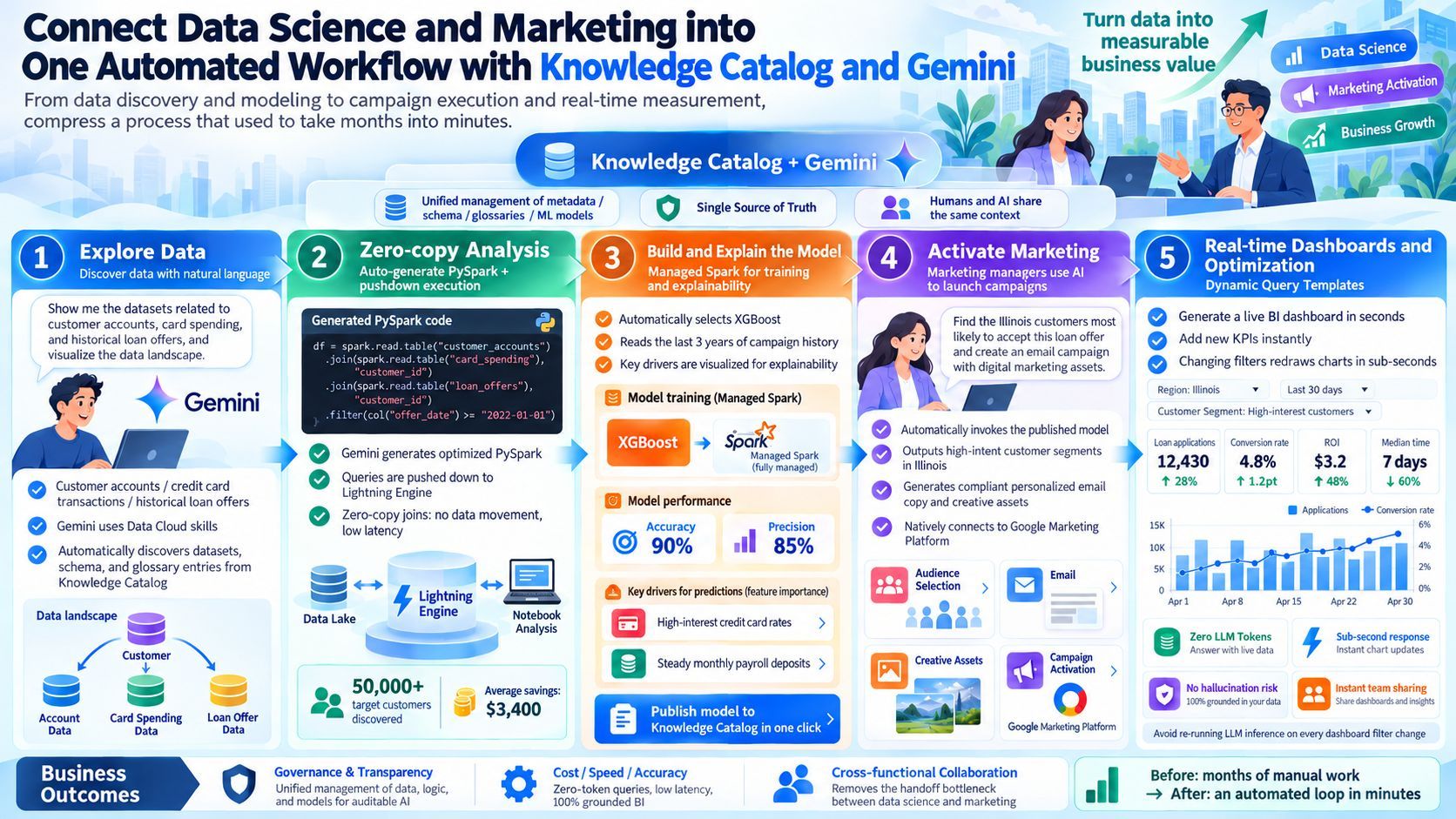
Using a retail bank loan-switch example, this article shows how Knowledge Catalog and Gemini connect data science with marketing: natural-language data exploration, auto-generated PySpark with zero-copy joins on Lightning Engine, an XGBoost model (90% accuracy, 85% precision), one-click publishing to the catalog, and zero-token BI analysis that compresses months of work into minutes.
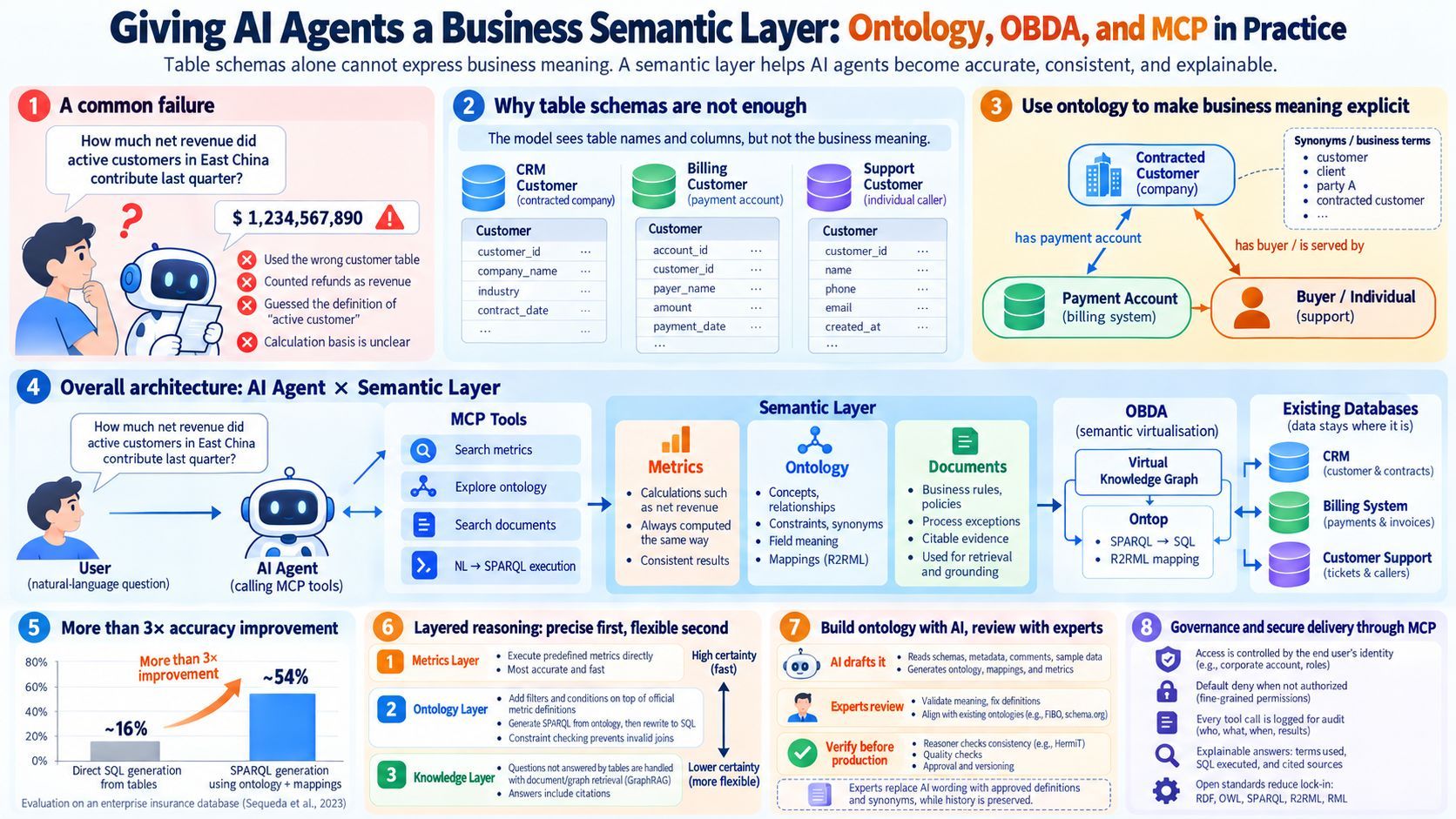
Putting a table schema in the prompt does not teach an AI agent what the business means, so it can still return a number that looks professional but is wrong. Drawing on an insurance-industry benchmark where GPT-4's execution accuracy rose from about 16% to about 54%, this article explains the semantic layer built from metrics, an ontology, and documents; how OBDA maps the ontology onto existing data; and how layered resolution balances determinism with flexibility. It also covers AI-drafted, expert-approved ontologies, MCP delivery, identity-aware governance, and five practical recommendations.
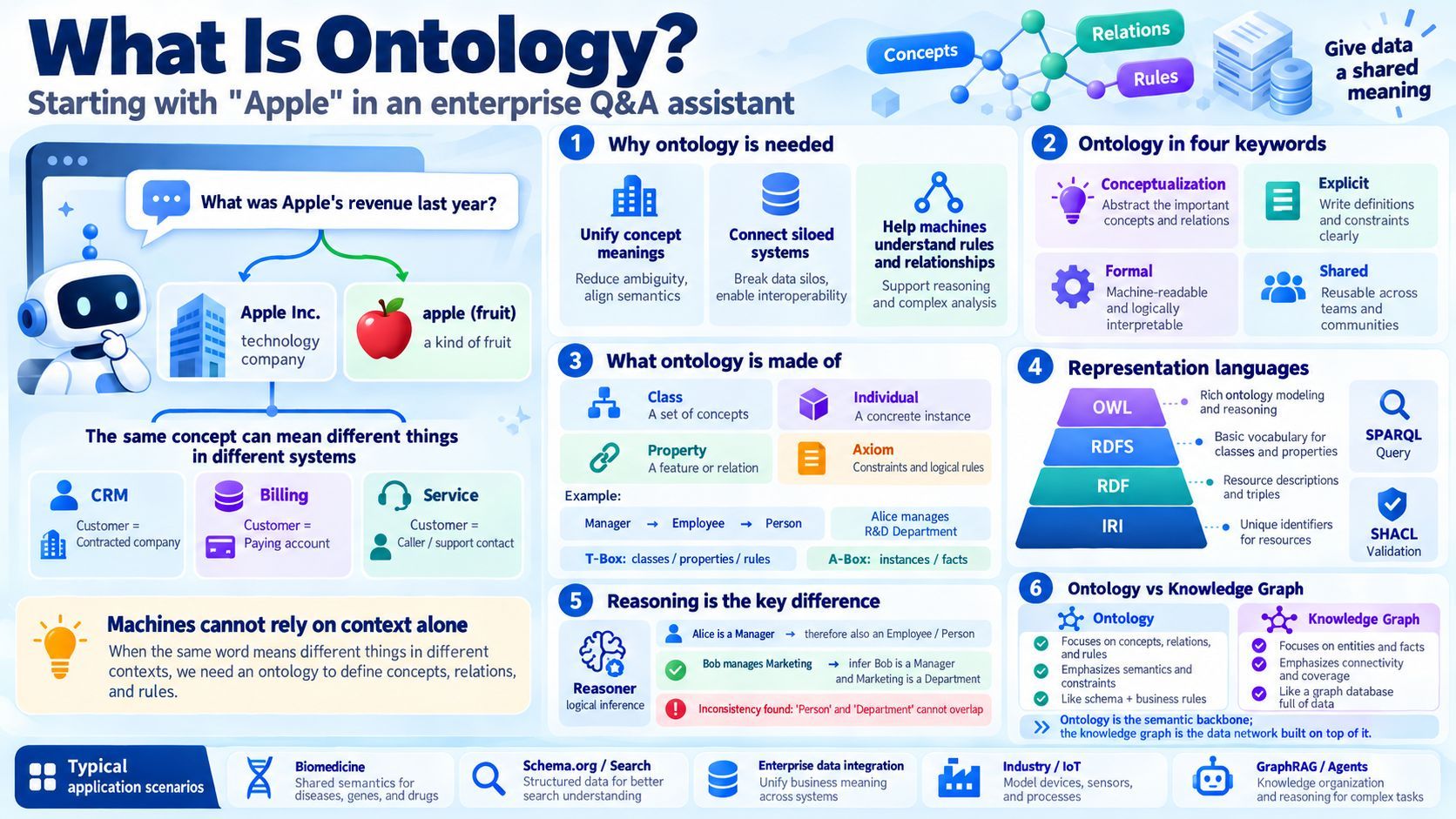
A machine cannot tell that "Apple" means a company rather than a fruit, or that three tables all named Customer mean different things, without an explicit semantic model: an ontology. This article traces the idea from philosophy to Gruber's and Studer's definitions, breaks down classes, individuals, properties, and axioms, and covers RDF, RDFS, OWL, and reasoners. It surveys real uses in biomedicine, Schema.org, enterprise data integration, industry and IoT, and the LLM era, then explains how ontology differs from a knowledge graph and how to start building one.
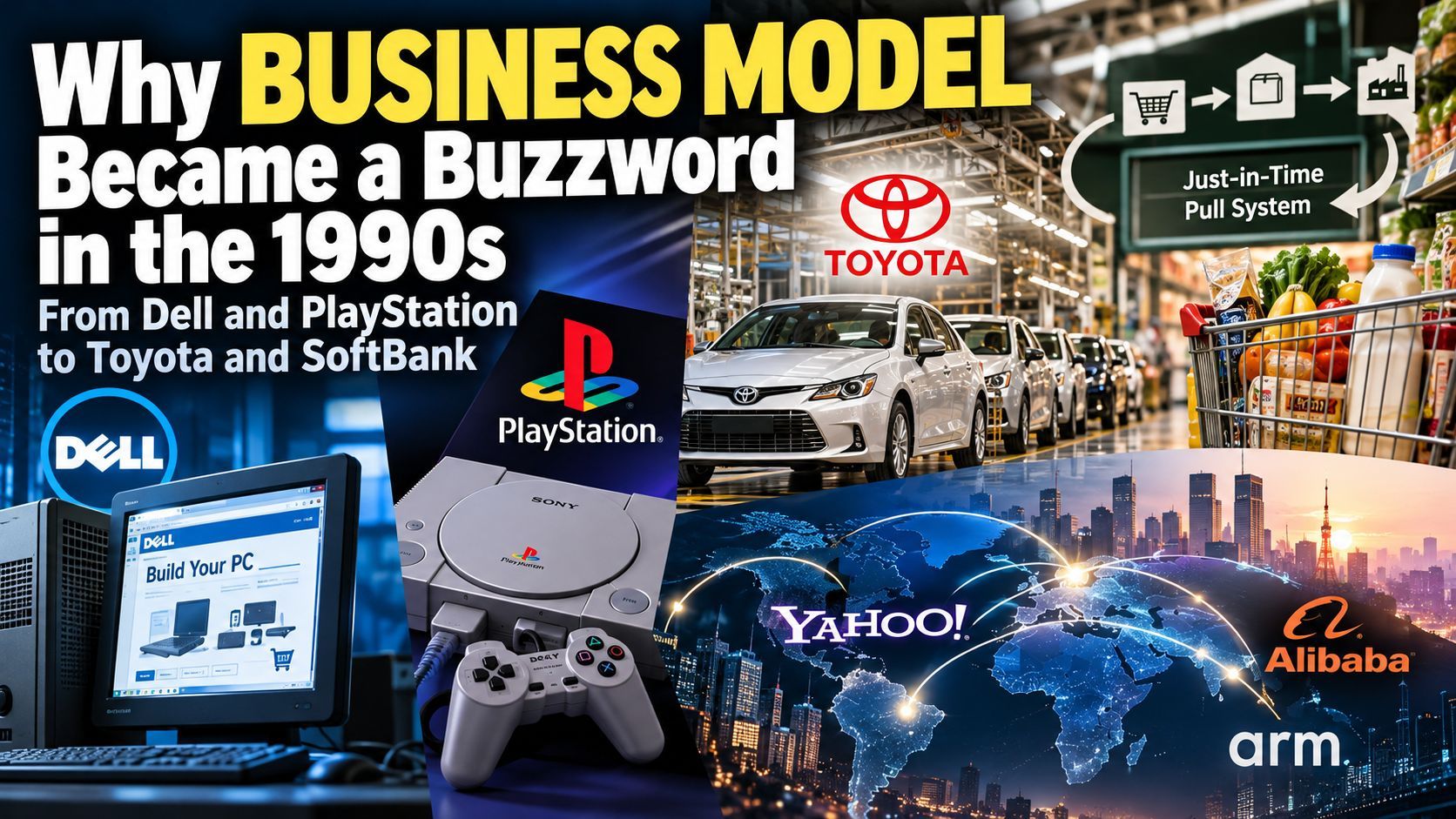
Why did "business model" become a keyword? This article traces the term's earliest uses in the Japanese business press: the 1995 coverage of Dell and its direct sales plus build-to-order model, the 1997 feature on how PlayStation rejected Nintendo's business model, and later talk of an existing model no longer working as Japan's chip industry came under pressure. It then turns to Toyota — the two pillars of Just-in-Time and jidoka, the flaws of push production, the pull system inspired by American supermarkets, and why Ford-style mass production was overkill in Japan. It closes with Masayoshi Son's time machine management and the idea that there is no single right angle on a business model.
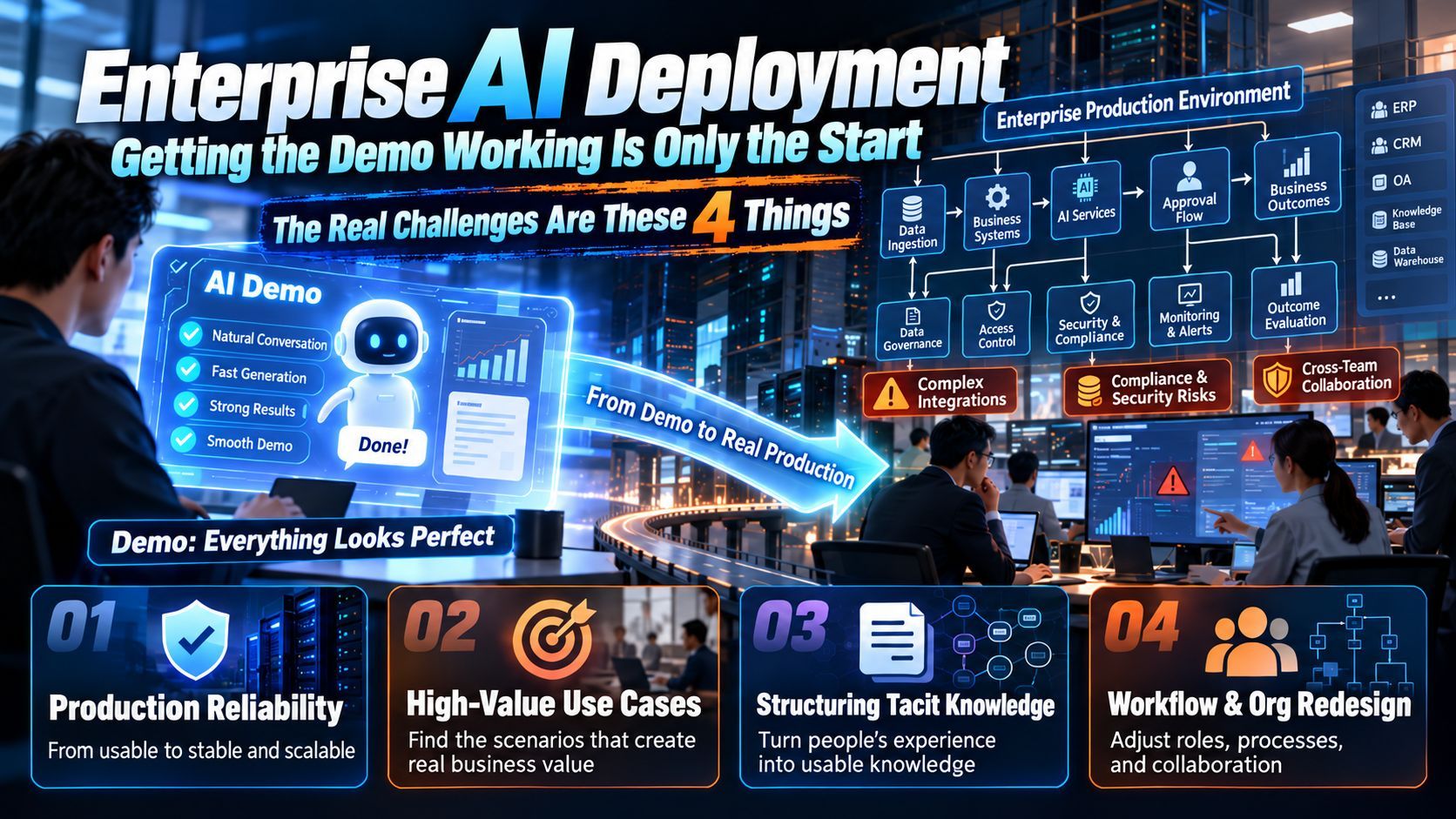
Using the Tencent Research Institute's FDE report as a lens, this article lays out four problems that recur in enterprise AI adoption: mistaking a working demo for a shippable product, building an AI application without choosing a high-value scenario, assuming AI can do what employees already do well, and confusing individual productivity with organizational productivity. Drawing on AI customer service and ERP examples, it explains the gap between demo and production and why tacit knowledge must be turned into usable context, then offers three fixes: don't measure the adoption cycle by demo speed, organize small teams where business and technology share accountability, and have senior leadership personally drive process, responsibility, and assessment changes.