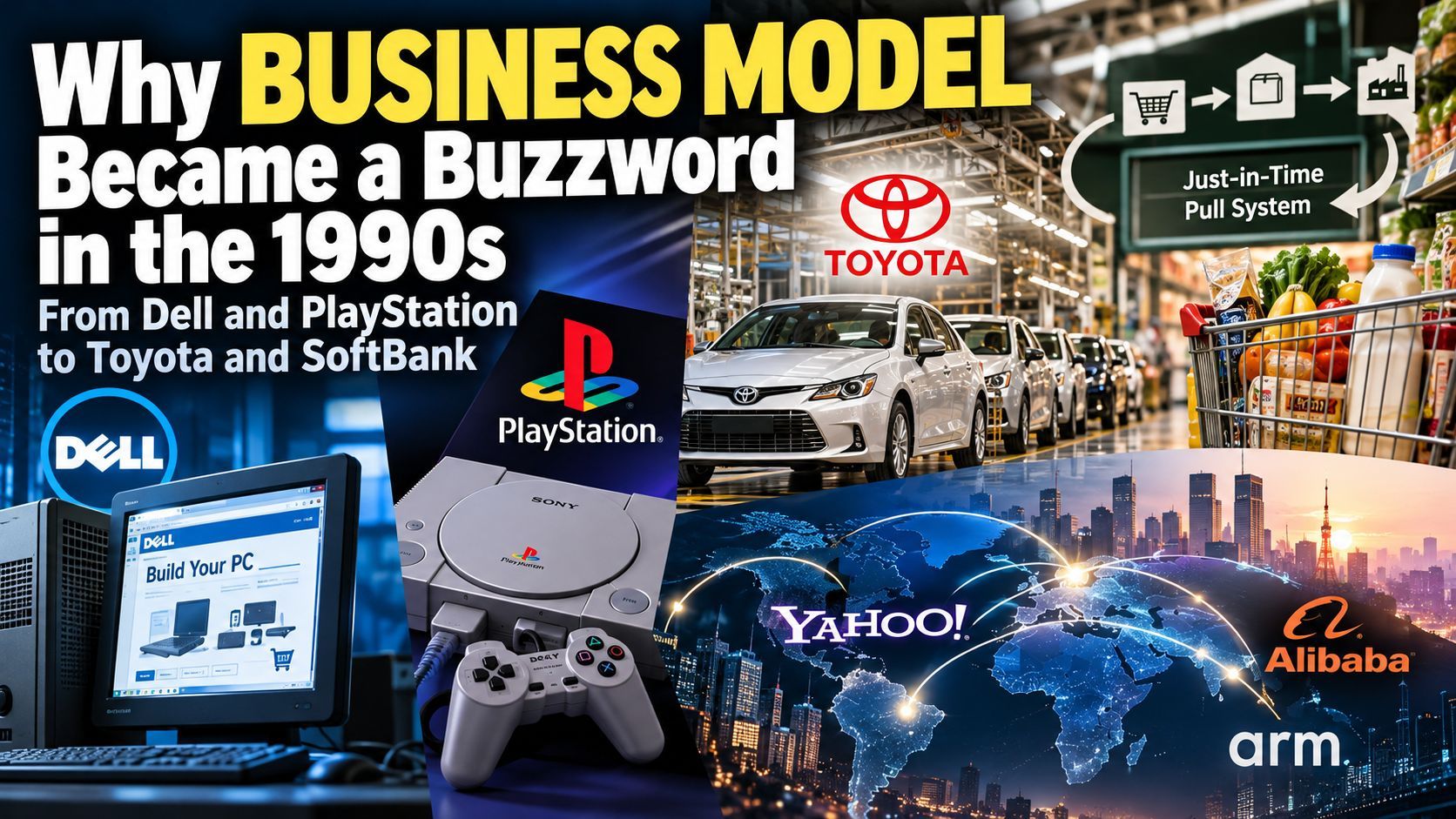
Why did "business model" become a keyword? This article traces the term's earliest uses in the Japanese business press: the 1995 coverage of Dell and its direct sales plus build-to-order model, the 1997 feature on how PlayStation rejected Nintendo's business model, and later talk of an existing model no longer working as Japan's chip industry came under pressure. It then turns to Toyota — the two pillars of Just-in-Time and jidoka, the flaws of push production, the pull system inspired by American supermarkets, and why Ford-style mass production was overkill in Japan. It closes with Masayoshi Son's time machine management and the idea that there is no single right angle on a business model.
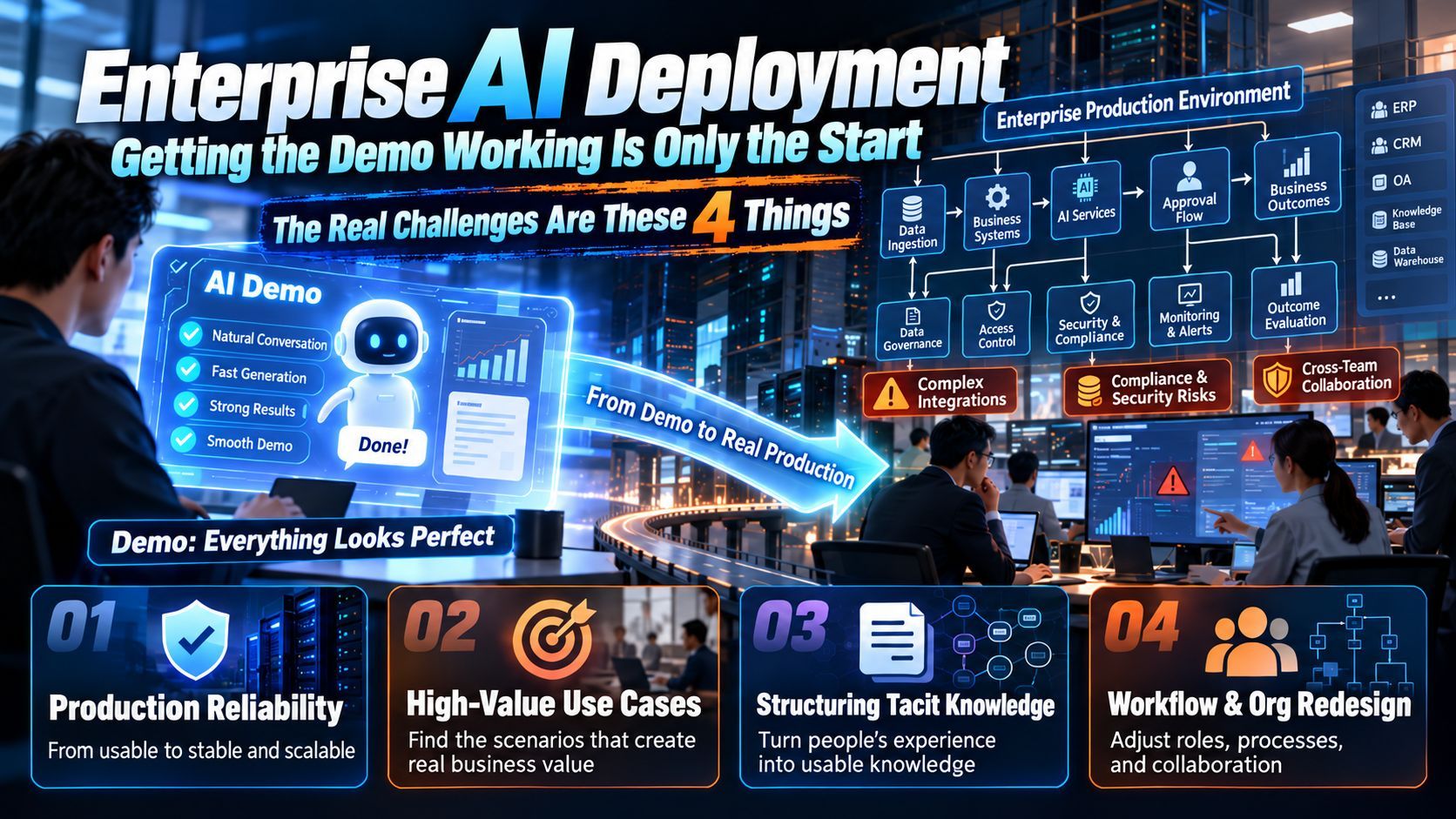
Using the Tencent Research Institute's FDE report as a lens, this article lays out four problems that recur in enterprise AI adoption: mistaking a working demo for a shippable product, building an AI application without choosing a high-value scenario, assuming AI can do what employees already do well, and confusing individual productivity with organizational productivity. Drawing on AI customer service and ERP examples, it explains the gap between demo and production and why tacit knowledge must be turned into usable context, then offers three fixes: don't measure the adoption cycle by demo speed, organize small teams where business and technology share accountability, and have senior leadership personally drive process, responsibility, and assessment changes.
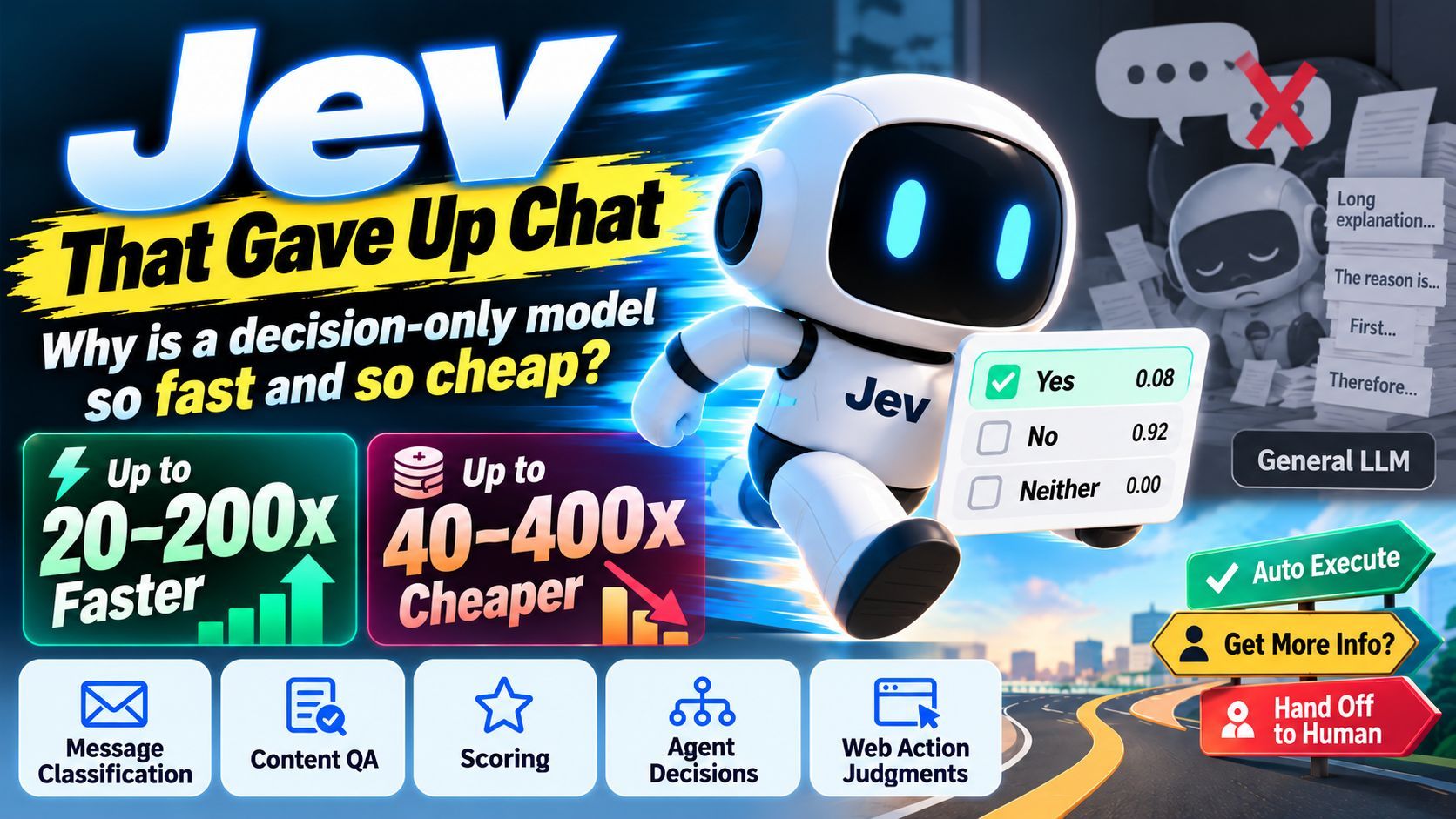
TypeSafe AI's Jev does not write; it returns decisions and their probabilities. In official tests it is up to about 193.6 times faster than a general-purpose LLM and about 444.6 times cheaper, at $0.042 per million input tokens with free output. Called with a state and a question, it answers as Noul, Choice, or Score, and is trained with RLCD so its calibrated probabilities can drive automatic routing—a division of labor among judging, generating, and executing.
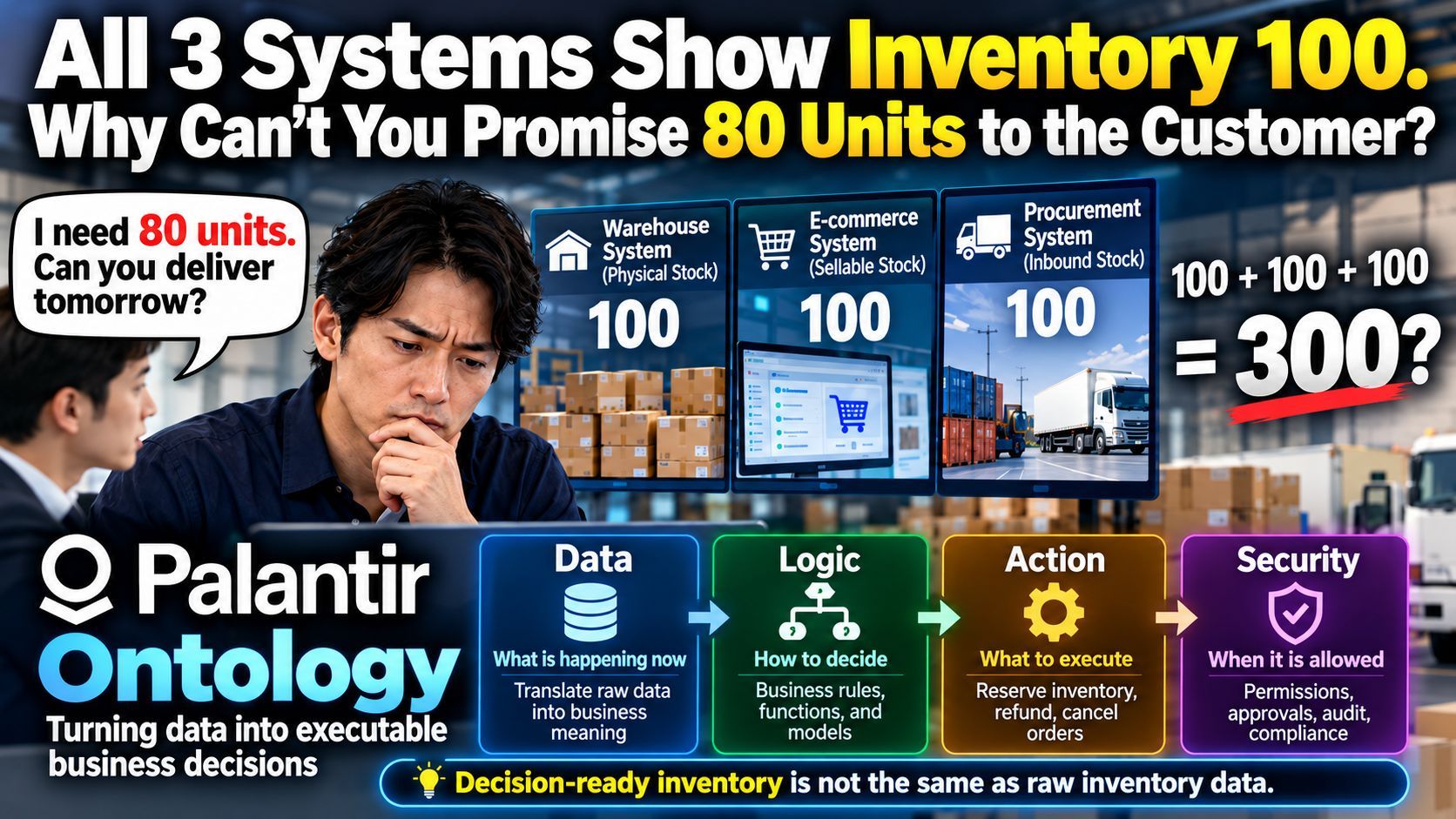
The warehouse, e-commerce, and procurement systems each show 100 units, but adding them up does not mean you can deliver 300. Palantir splits a real business decision into Data, Logic, Action, and Security, describes the business world with Object, Property, and Link, and lets AI actually execute within enforced boundaries. Using an inventory example, this article explains the core of the Ontology and how its philosophy maps onto skills and MCP in the LLM era: build agents first, and let the Ontology grow with complexity.
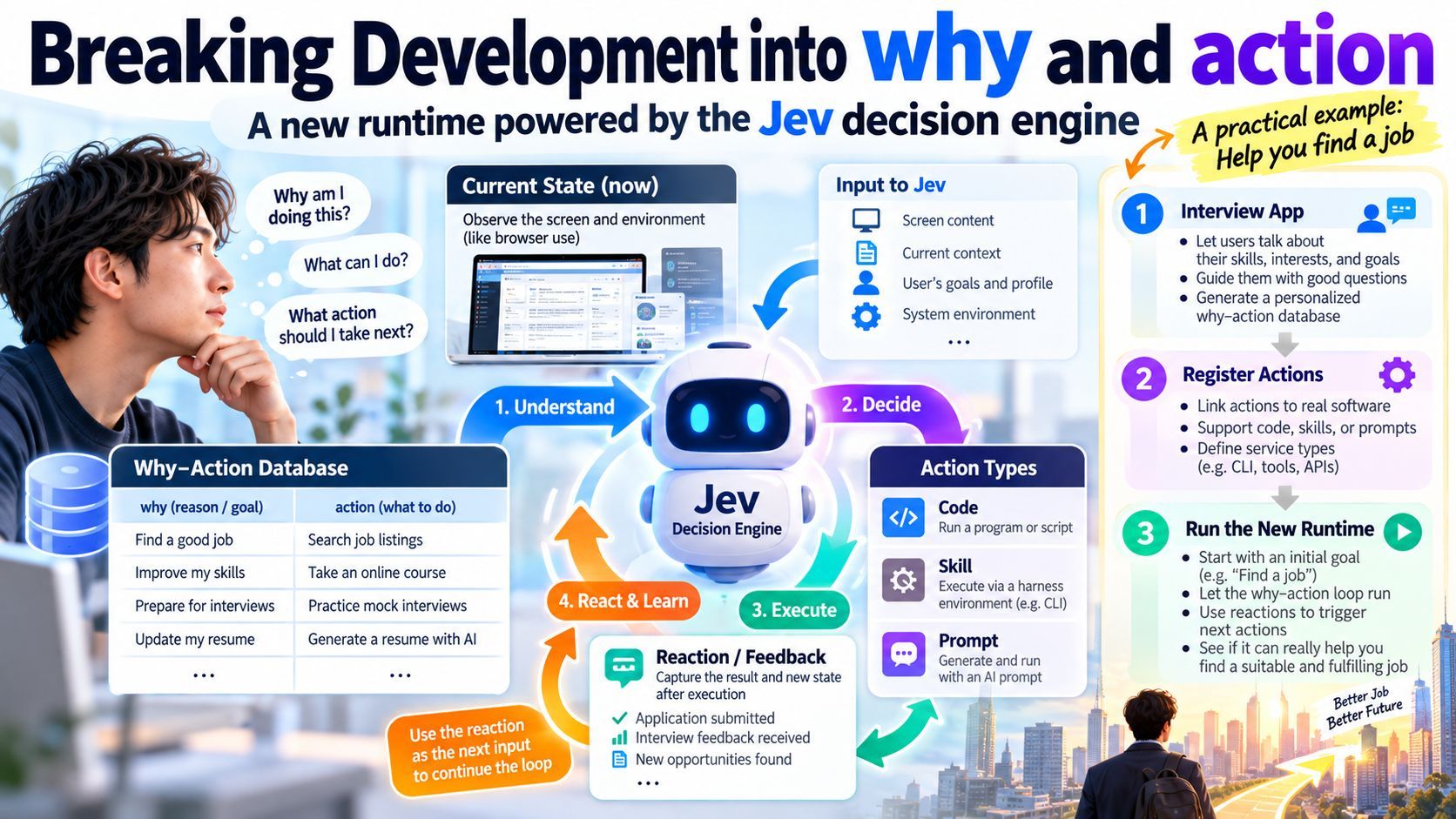
Starting from JVE, a judgment engine that appeared in 2026, this post abstracts development into a key-value pair of why and action and imagines a new runtime driven by the current state: it takes in "now," decides which why-actions to prioritize and in what order, then runs them. A reaction after each action becomes new input that triggers the next Y; browser use watches "now," and an interview helps people build their own why-action database. The scope narrows to a small "find you a job" example in three steps.
a16z's seventh report reveals a contradiction: nearly half of U.S. consumers have used AI, but only about a quarter use it daily and just 4.5% pay for ChatGPT, Gemini, or Claude—while the top 1% of payers spend $903 a month. For three years AI has been understood as a time-saving productivity tool, yet the consumer products that reached billions made people want to spend time in them. Tracing personal agents and subscription economics, the piece argues consumer AI must shift from efficiency to experience.
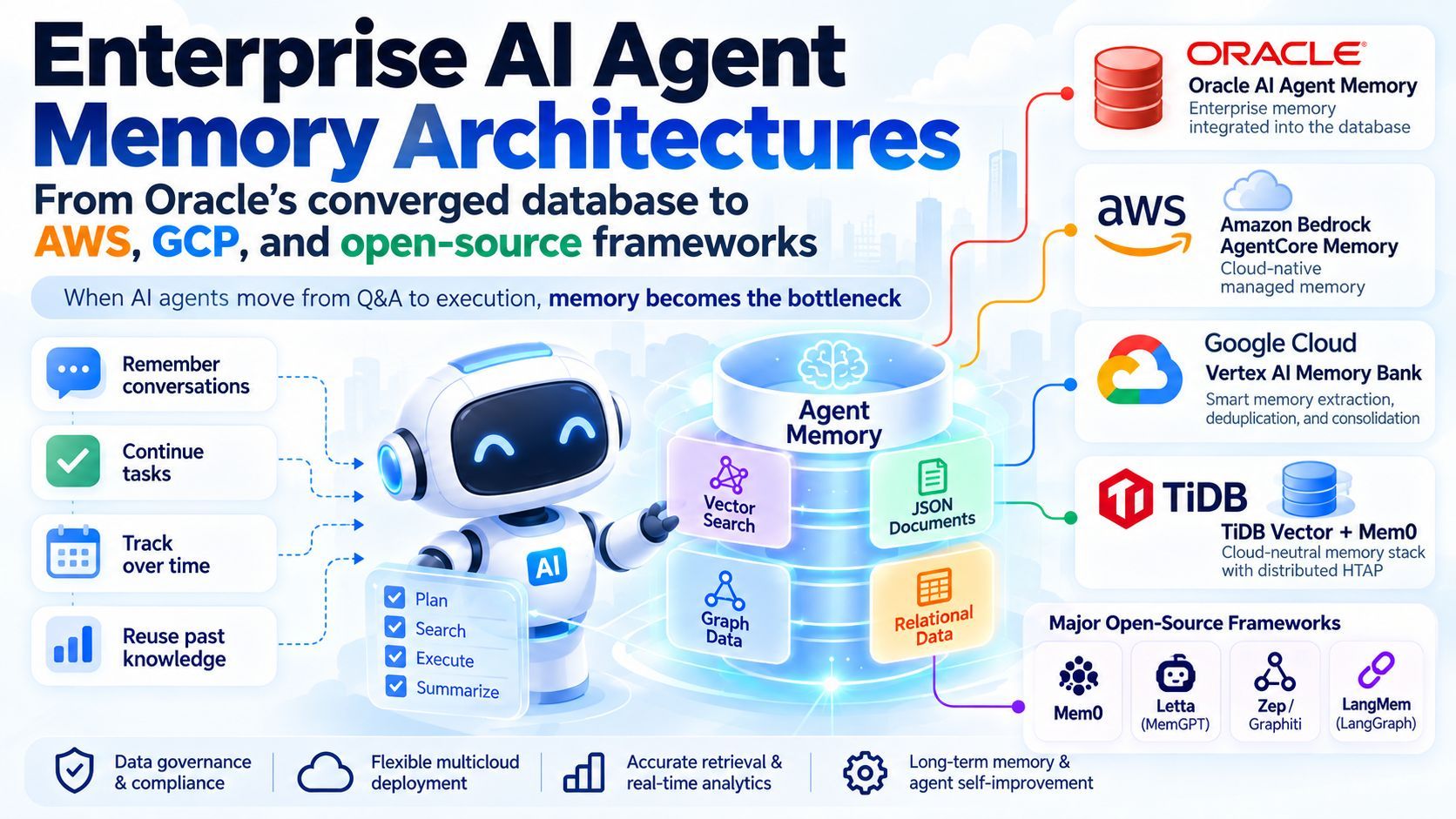
Once AI agents take on multi-day tasks, memory becomes infrastructure. This article covers Oracle AI Agent Memory's converged-database route, TiDB Vector plus Mem0's distributed HTAP route, the managed AWS Bedrock AgentCore Memory and GCP Vertex AI Memory Bank services, and four open-source frameworks: Mem0, Letta, Zep/Graphiti, and LangMem. It closes with selection guidance for regulated industries, cloud-native apps, multi-tenant SaaS, and temporal-logic use cases, plus three future trends.
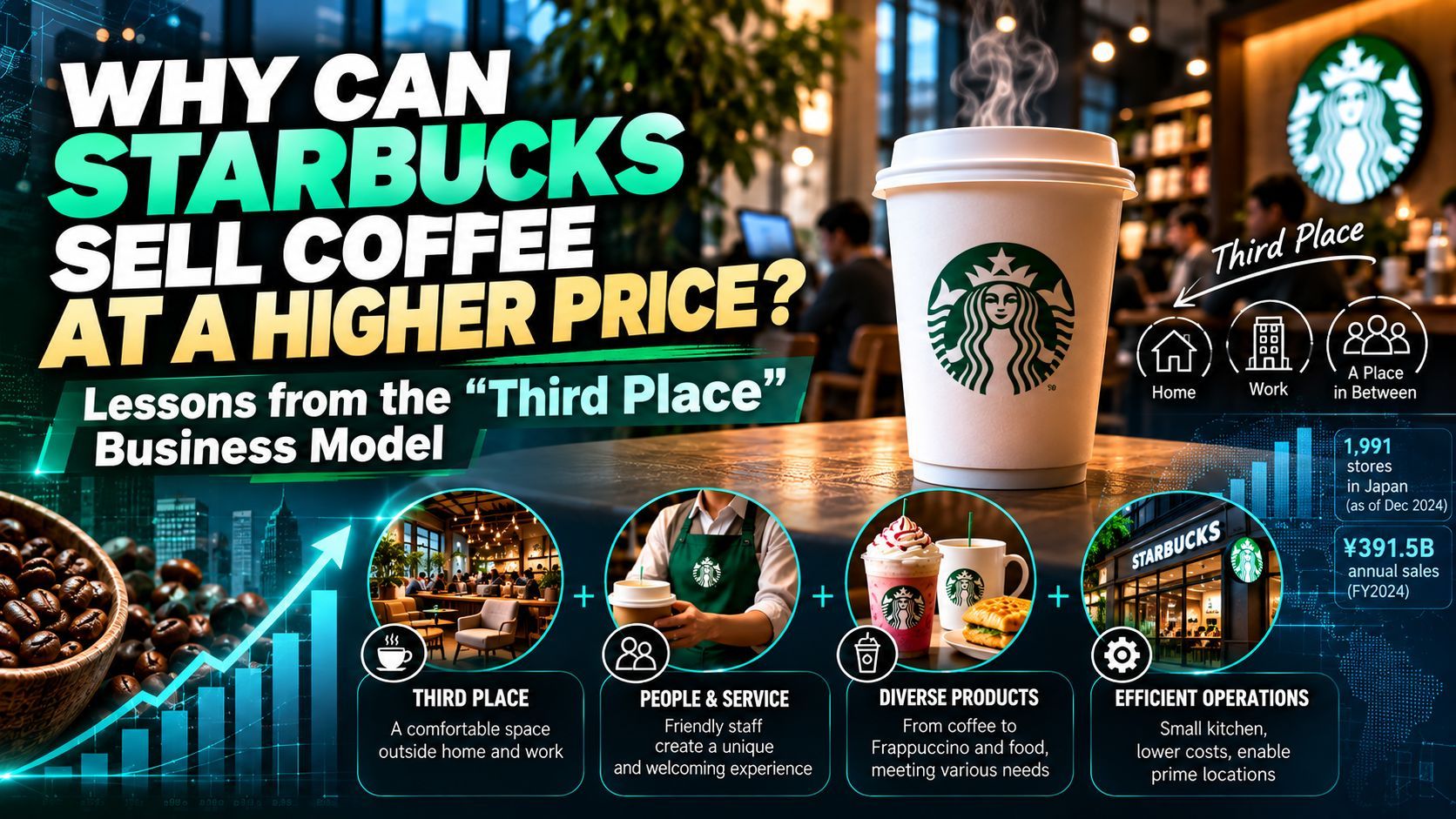
Starbucks charges 380–510 yen for a drip coffee—more than Doutor or Tully's—yet it is Japan's largest café chain. Using Starbucks as the example, this article traces the success factors behind it: the "third place" concept, friendly staff, product strategy, and store design. It then separates the narrow and broad definitions of a business model and lays out three ways to build one—strategic analysis, customer insight, and pattern adaptation—along with their trade-offs.
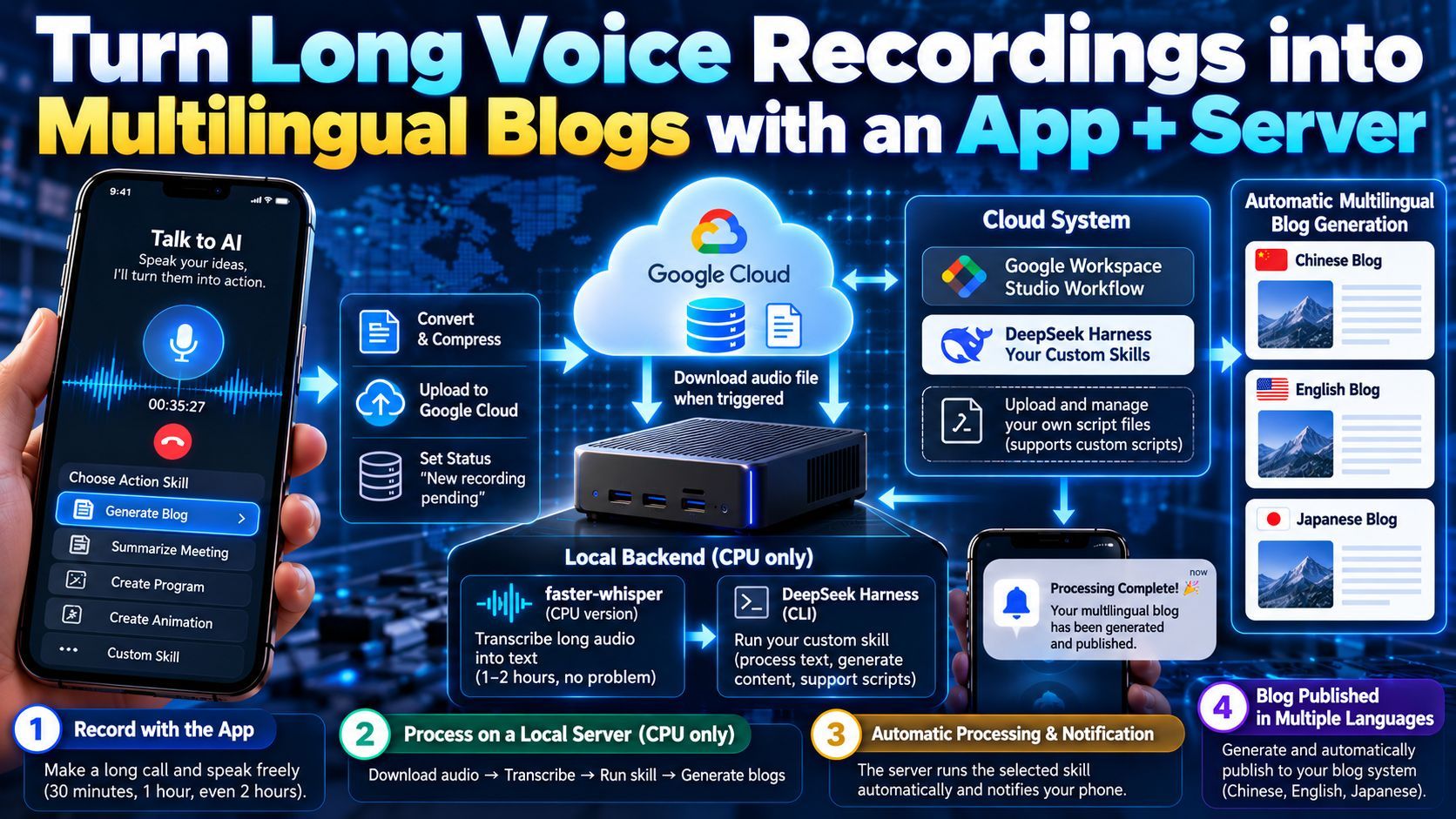
A look at a voice-processing system I built in September from one app plus a set of servers. Long call recordings are compressed and uploaded to Google Cloud, then picked up by a CPU-only, GPU-less machine that runs faster-whisper for speech-to-text and launches DeepSeek Harness as a CLI to run skills. The cloud system lets you upload your own skills and script files, and when processing finishes it notifies my phone while a script converts the content into three languages and posts it to my blog. It matches MUSE and Dota in core functionality while doing long-form transcription on CPU at very low cost. Next up is an automatic decision engine so the system can choose which Action Skills to run and in what order.
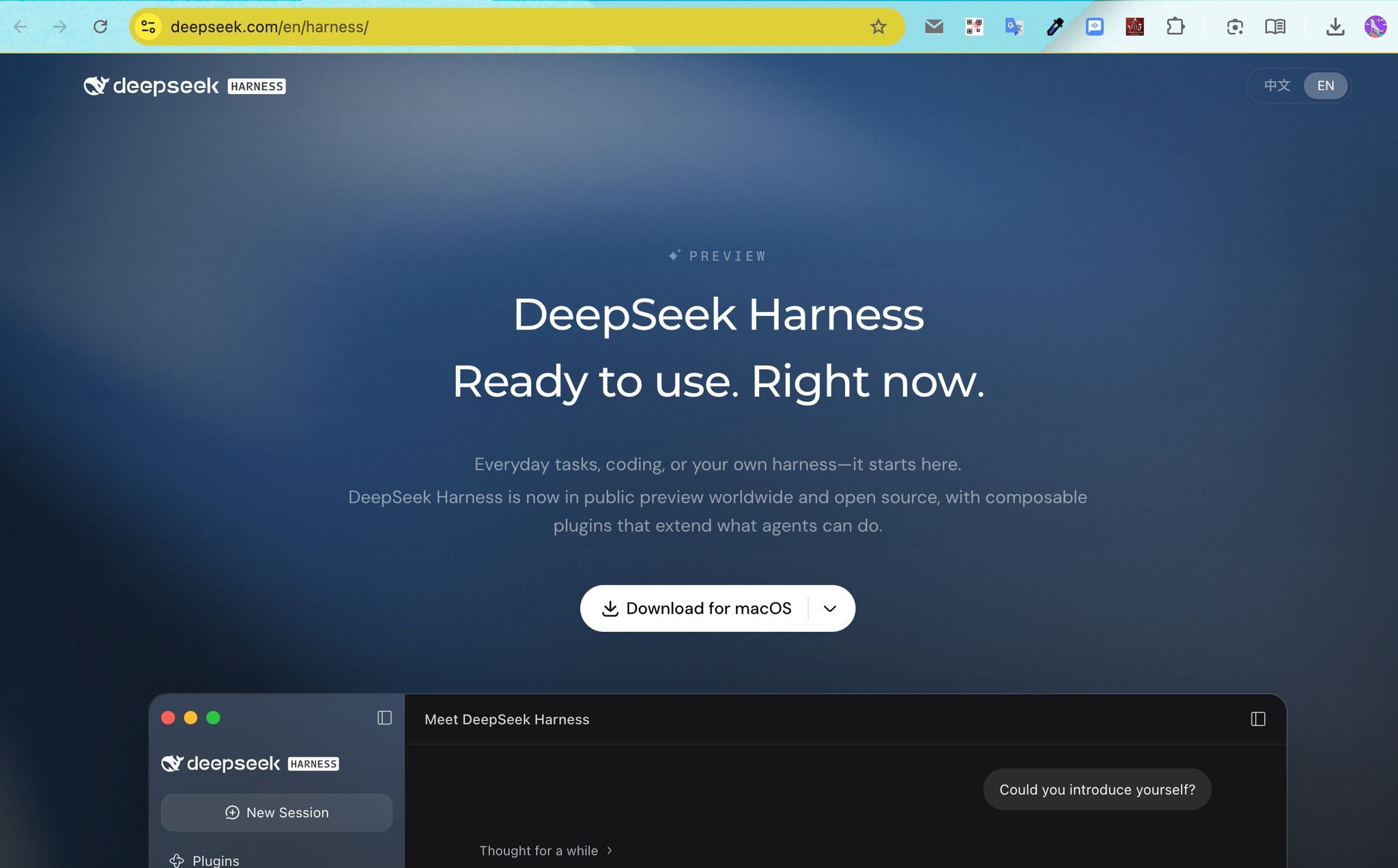
This post reviews the newly released official Desktop version of DeepSeek Harness, highlighting seamless configuration migration from the CLI version and the new Voice Input plugin. It also explores the M5Stack AI-8850 hardware kit discovered through SenseVoice, providing a breakdown of five key AI audio models including Whisper, MeloTTS, CosyVoice2, and 3D-Speaker-MT.
I attended the AI Film Hackathon in Tokyo at the Fujitsu Kawasaki Tower and used the AI animation tool Magnific for the first time. It ships with MiniMax H3 series models and Google Flash 3.8 TTS, while an AI Agent automatically operates the canvas to build the Base layer. At a roughly five-hour event I finished seventeen or eighteen audio-driven clips totalling nearly two minutes in under two hours, and the promo CM I made for a pet-care App won an award. I also sense coding agents giving way to more expressive AI products.
A Voice to Action system is complete. It runs on a second-hand, CPU-only PC at home as the server, with an App, the cloud, and Firestore managing state, while Fast Whisper converts speech to text. DeepSeek Harness's DeepSeek Flash model serves as the engine for script-capable skills uploaded from the cloud. Recordings become Japanese, Chinese, and English blog posts that upload automatically through an API — all lightweight and GPU-free.